La Liga Showdown: Real Betis vs Real Madrid in Sevilla
Estadio de La Cartuja in Sevilla hosts an unusual La Liga occasion in April 2026, as Real Betis give up their usual Benito Villamarín home to welcome title-chasing Real Madrid on neutral turf. With four rounds to go in the league’s regular season, the stakes are clear: Betis, fifth with 49 points, are fighting to secure Europa League football, while Madrid, second on 73, are still pushing to keep the pressure on the top.
Context and stakes
In the league, Betis arrive as one of the division’s draw specialists. Their record across all phases reads 12 wins, 13 draws and only 7 defeats from 32 games, with a positive goal difference of +8 (48 scored, 40 conceded). That consistency has them in the Europa League positions but also leaves little margin for error, with a congested chase pack likely lurking just behind.
Real Madrid, meanwhile, have been far more ruthless. Across all phases they have 23 wins, 4 draws and 5 losses, scoring 67 and conceding just 30. A goal difference of +37 underlines their superiority over most of the league, but being second in the table means they cannot afford a slip against a side outside the top four.
The neutral venue adds a layer of intrigue. Betis’ usual home strength at Benito Villamarín (7 wins, 5 draws, 3 defeats, 26-16 in goals) is diluted, while Madrid’s excellent away record (9 wins, 3 draws, 3 defeats, 28-16) may translate more comfortably to a big, less partisan stage like La Cartuja.
Tactical outlook: Betis
Across the season, Betis have been a controlled, possession-minded side with a clear structural identity. Their most used formation is 4-2-3-1 (23 matches), with occasional shifts to 4-3-3 (8 matches) and a rare 4-4-2. That base suggests a double pivot to protect the back four and allow a creative No.10 to link with the lone striker.
Offensively, they average 1.5 goals per game across all phases (48 in 32), rising to 1.7 at home. That indicates a team capable of building pressure, especially when they can sustain attacks. Defensively, they concede 1.3 per match (1.1 at home), which is respectable but not elite, and the “biggest loses” data – including a 3-5 home defeat and a 5-1 away loss – shows that when their structure collapses, it can collapse badly.
The clean sheet count (9 overall, 6 in home fixtures) suggests Betis can be compact when they manage the tempo. They have failed to score only 4 times in 32 league games, which bodes well for their ability to trouble Madrid’s back line, even in a neutral environment.
From a disciplinary perspective, Betis tend to pick up more yellows late in games, particularly in the 76-90 minute range. That pattern hints at a team that often has to scramble defensively in closing stages – something that could be dangerous against Madrid’s depth and late-game power.
In terms of personnel, they will be without J. Firpo, ruled out through injury, removing one option in the defensive/left-sided roles. D. Llorente (ankle) and A. Ortiz (shoulder) are both questionable, potentially limiting rotation options in midfield or defence and making it harder to adjust mid-game against Madrid’s attacking variety.
Tactical outlook: Real Madrid
Madrid’s tactical profile is more flexible and more explosive. They have primarily lined up in a 4-4-2 (14 matches), but have also used 4-2-3-1 (8), 4-3-3 (6) and several other shapes. That variety makes them hard to scout: they can press high in a 4-3-3, overload the half-spaces in a 4-2-3-1, or use a two-striker system to pin centre-backs and free their wide forwards.
The numbers are imposing. Across all phases, Madrid average 2.1 goals per game (2.3 at home, 1.9 away), while conceding only 0.9 (1.1 away). They have kept 11 clean sheets, including 6 on their travels, and have failed to score just 3 times all season. Their biggest away win, 1-4, and biggest away defeat, 5-2, show they are prepared to play high-risk, high-reward football on the road.
The headline act is Kylian Mbappé. In La Liga 2025 he has 23 goals and 4 assists in 26 appearances, with a strong 7.63 average rating. He has fired 91 shots (56 on target), is heavily involved in link play (846 passes, 57 key passes) and remains a dribbling threat (128 attempts, 68 successful). His penalty record this season is strong but not flawless: 8 scored and 1 missed, so Betis will know that even from the spot, there is at least a small margin for hope.
Alongside him, Vinícius Júnior has contributed 11 goals and 5 assists across 30 appearances, with 64 shots (38 on target) and a high dribble volume (169 attempts, 75 successful). Between Mbappé’s direct running and Vinícius’ one‑v‑one threat, Betis’ full-backs and wide midfielders will be under constant stress, especially in transition.
As a team, Madrid are perfect from the penalty spot this league season (12 scored from 12), underlining their ability to punish any rash defending in or around the box.
Injury-wise, Rodrygo is confirmed out with a knee injury, removing one of Madrid’s key rotation attackers. However, their depth in forward areas remains considerable. R. Asencio (illness), T. Courtois (thigh) and Eder Militao (injury) are all listed as questionable. If Courtois cannot start, it slightly lowers Madrid’s ceiling in goal but does not fundamentally alter their attacking game plan. Militao’s status is more tactically significant: if he is not fully fit, Madrid may be more conservative in their defensive line height or more reliant on their midfield shield.
Recent head-to-head
The last five competitive meetings in La Liga between these sides show a nuanced picture:
- In January 2026 at the Santiago Bernabéu, Madrid thrashed Betis 5-1.
- In March 2025 in Sevilla, Betis edged a 2-1 home win.
- In September 2024 in Madrid, Madrid won 2-0.
- In May 2024, the sides drew 0-0 at the Bernabéu.
- In December 2023 in Sevilla, they drew 1-1.
Across these five league fixtures, Real Madrid have 2 wins, Real Betis have 1, and there have been 2 draws. Madrid’s heavy 5-1 win in January 2026 is the most recent reference point and a clear warning to Betis about what happens if they allow the game to become stretched. However, Betis’ 2-1 victory in March 2025 at home shows they are capable of unsettling Madrid when they combine intensity with organisation.
Key battles and game script
The central tactical question is whether Betis can slow the game down and keep it in settled possession phases. Their 4-2-3-1 structure is designed to control midfield; if the double pivot can disrupt supply into Mbappé and Vinícius and Betis can use their No.10 to play between Madrid’s lines, they have a path to sustained pressure.
Madrid will likely look to press selectively, then attack quickly into space. With Betis conceding late yellow cards and occasionally being dragged into chaotic finales, Madrid’s bench and fitness could be decisive in the last 20 minutes. The neutral venue might also mean slightly less emotional energy for Betis, which could favour Madrid’s cooler, more experienced game management.
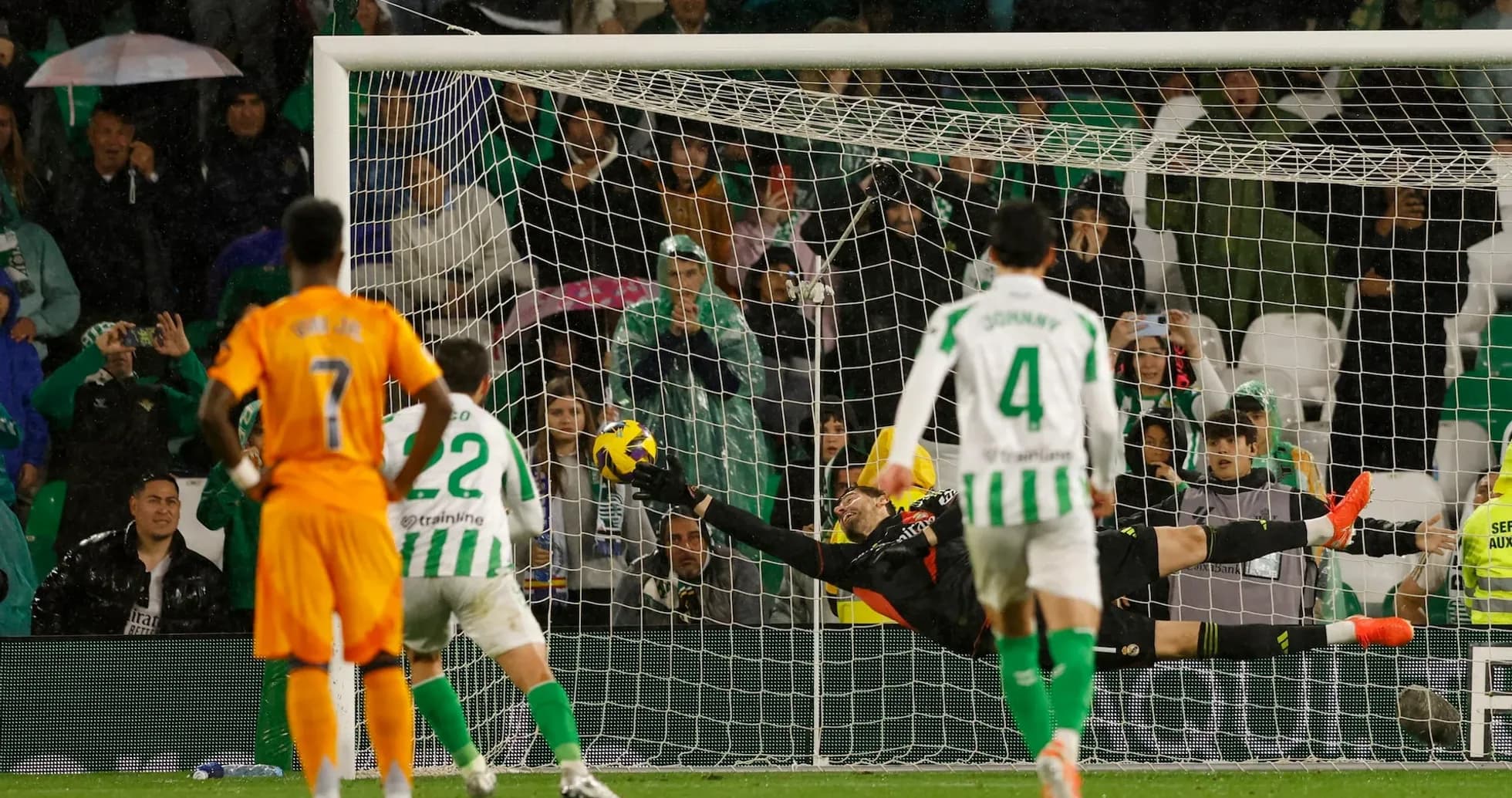
Set pieces and penalties could be crucial. Betis have a 100% record from the spot this season (2 from 2), while Madrid’s perfect 12 from 12 gives them a clear edge if the match becomes a story of marginal fouls in the box.
The verdict
On form and firepower, Real Madrid are deserved favourites. Their attacking numbers, Mbappé and Vinícius’ individual quality, and a 23‑win league campaign point towards an away (in name only) victory.
However, Betis’ resilience – only 7 defeats in 32 games – and their recent 2-1 home win over Madrid in 2025 suggest this will not be straightforward. Expect Betis to be competitive for long stretches, but Madrid’s superior depth and scoring power make them more likely to find a decisive moment, especially as the game opens up in the second half.
A tight Madrid win, with both teams on the scoresheet, looks the most logical outcome.