Life After Virgil van Dijk: Liverpool's Search for Successors
At Anfield, the search for life after Virgil van Dijk has already begun.
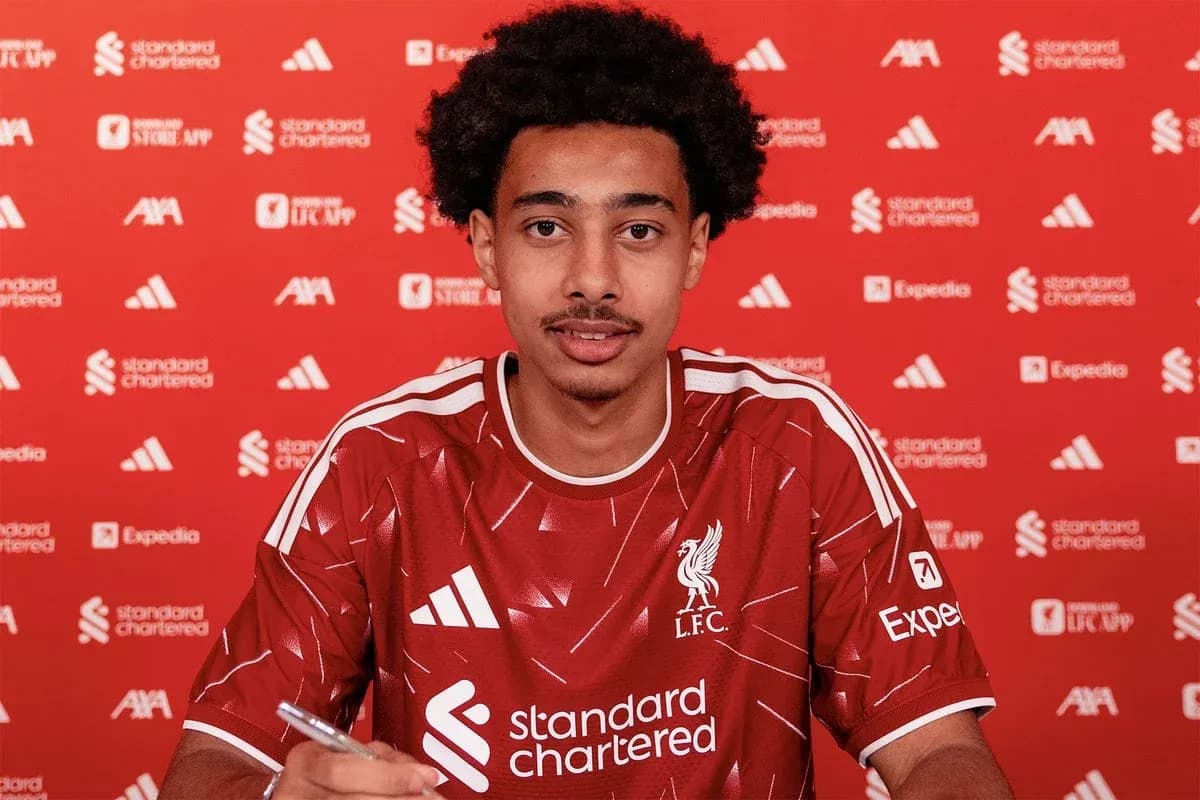
Liverpool’s recruitment team have moved early, with young defenders like Jacquet and Leoni earmarked as possible heirs to the captain’s throne at the heart of the back line. The idea is clear: don’t wait for a legend to fade before planning for what comes next.
But can anyone really step into Van Dijk’s boots?
Former Liverpool defender Stephen Warnock believes the answer is a cautious “maybe”. Speaking to GOAL, he underlined just how steep that climb will be.
“Possibly,” he said when asked if Jacquet and Leoni could eventually replace Van Dijk. “I think the hard thing is trying to replace, obviously, a player of Van Dijk's stature.”
That’s the crux of it. You don’t just swap out a generational centre-half and carry on as normal.
Warnock has seen enough, though, to understand why Liverpool are excited. Leoni, in particular, has arrived with a strong reputation from Serie A, where his performances in Italy drew plenty of admiring glances. Even after one game in red, the signs, Warnock noted, were “promising”.
Promise is one thing. Pressure is another.
“There will always become a pressure once you get to a certain level,” Warnock warned. As soon as a young defender strings together a few commanding displays, the comparisons begin. The talk grows louder. Is this the next Van Dijk? Is this the new leader of Liverpool’s defence?
“There will be more talk, talking about Van Dijk and can they be the heir to the throne, of taking over Van Dijk?” he said. That narrative will follow Jacquet and Leoni for years if they continue on this path.
The real test, in Warnock’s eyes, comes in the mid-20s, when a centre-back truly starts to understand the craft.
“It's just about how they progress from now until probably around about 26, 27, when you learn so much about the game and you get better at understanding,” he explained.
That’s when the position changes. It becomes less about raw talent and more about anticipation, timing, and control.
“And that's essentially what you have to do when you're a centre-half,” Warnock added. “You've got to read the game better, you've got to get yourself in better positions, and that's part of the process.”
So while the trajectory looks encouraging, he refuses to declare them guaranteed successors. Too many variables, too many pitfalls.
“So it's very difficult to say whether they're going to be the successors because they're on the right trajectory. But there's so many things that can come into place, like injuries and lack of form, the shirt being too heavy at times, where the club's actually at.”
That phrase – “the shirt being too heavy” – still matters at Liverpool. Some players grow with the weight of expectation. Others shrink.
Warnock also pointed to timing. When Van Dijk arrived from Southampton, the environment could hardly have been more perfect.
“When you think about when Virgil van Dijk came into the Liverpool team, it was almost him and Alisson that were the final two pieces of the jigsaw,” he said. Jürgen Klopp’s system was already humming, the pressing patterns drilled, the attacking trio in full flight. Van Dijk stepped into order, not chaos.
“And it slotted him perfectly into a great system, a great team,” Warnock recalled.
Jacquet and Leoni face a different landscape. This is not the ruthless, peak Klopp machine that steamrolled Europe. This is a Liverpool side feeling its way into a new era.
“At the moment, Liverpool are in a transitional phase and that's difficult to play in at times,” Warnock said.
That might be the biggest challenge of all. Van Dijk completed a puzzle. Jacquet and Leoni are being asked to help build a new one from scratch.