Liverpool's Tension and Frustration in Draw with Chelsea
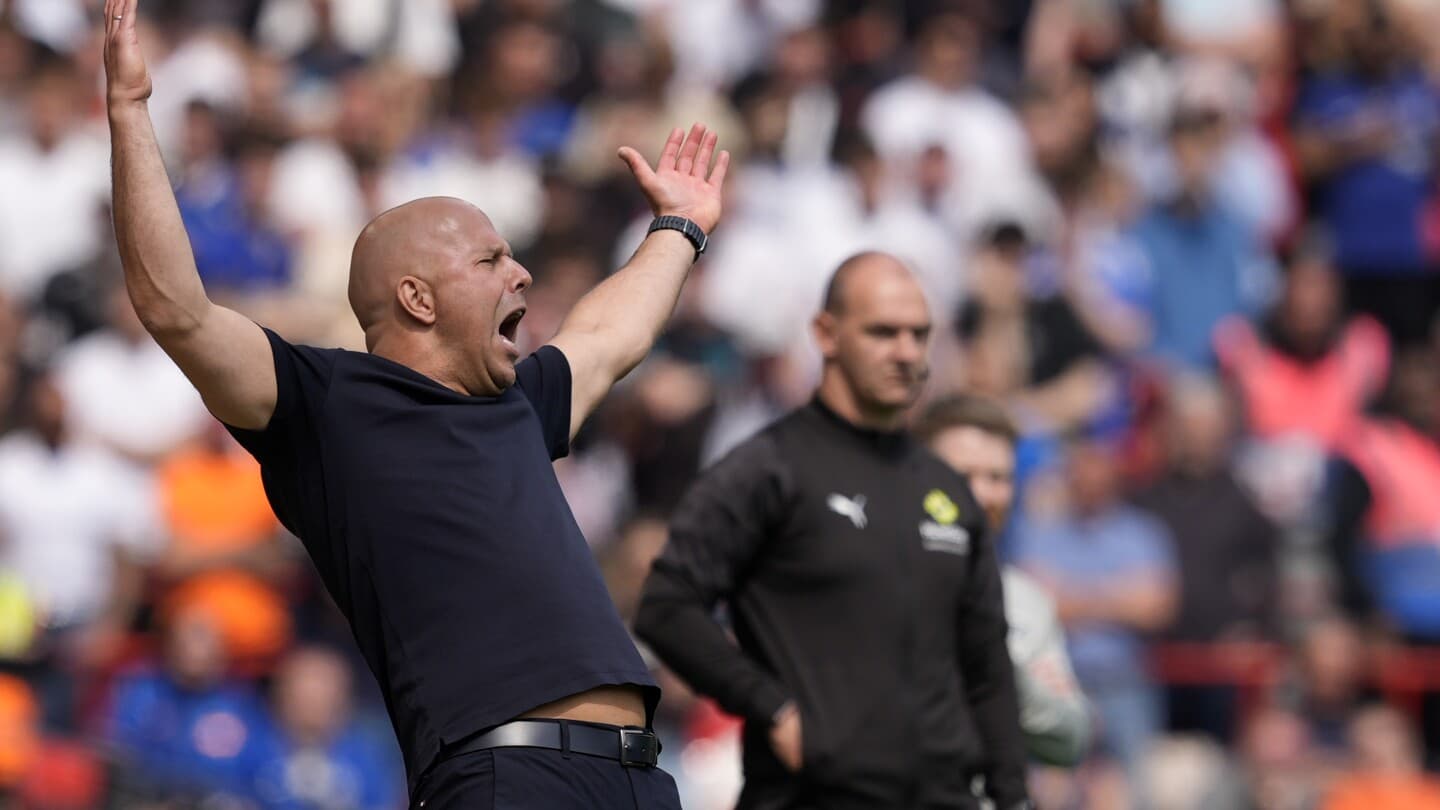
Anfield tension, Anfield frustration. Liverpool had Chelsea where they wanted them on Saturday, then let them walk away with a 1-1 draw that felt as restless as the boos that followed the final whistle.
Arne Slot’s side struck first, carved out chances for a second, rattled woodwork again, yet still came away with a point that did little to quiet an increasingly impatient home crowd.
Liverpool start fast, then lose their grip
Slot saw exactly what he wanted in the opening exchanges. Liverpool flew out, pressed high, and were rewarded with the breakthrough. They almost doubled it from a set piece, a routine that left Chelsea exposed and Anfield braced for 2-0.
It never came.
Instead, the game slipped from Liverpool’s grasp in the area Slot cares about most: control. Chelsea’s midfielders began to dictate, their “sixes” repeatedly finding pockets of space that Liverpool couldn’t shut down.
“We started off really well, scored a goal, got a big chance from a set piece where we were close to scoring a 2-0,” Slot told TNT Sports. “Then in quite a large phase of the game we struggled to control their sixes, they were constantly able to find them and set up an attack.”
The punishment arrived from a familiar source. Another set piece, another lapse.
“Unfortunately, like last week we conceded a set piece,” Slot said. “That makes it really hard in a top game to win a game of football if you have a negative balance in set pieces. Especially if you look at it and it’s such a sloppy goal, whatever word you want to use.
“It wasn’t a great cross and no header, nobody touched it and it went in the second post.”
The ball drifted through untouched, the kind of goal that infuriates coaches and energises opponents. Anfield groaned. Chelsea grew.
Tactical tweaks and fine margins
Slot refused to rip up his plan mid-game, but he did change the angles. The first half had exposed a structural issue: Liverpool wanted an extra man at the back, Chelsea enjoyed the spare man in midfield.
“They played with a lot of midfielders today, brought a lot of players towards the ball, and if you then go man to man, which we didn’t do, you have a chance to control them,” Slot explained. “But we kept plus one in the back for reasons I think is smart. That is why they constantly have a plus one and if these players have a plus one like Chelsea, they are able to play through them.”
So he adjusted.
“The second half we changed our setup in terms of pressing a little bit. Not a little bit, a bit, and that worked better than in the first half.”
Chelsea thought they had flipped the game completely with an early second-half strike, only for it to be ruled fractionally offside. That scare jolted Liverpool. From there, the hosts raised the tempo, pressed with far greater conviction and began to pen Chelsea in.
“Second half, apart from the third minute where they scored where they were fractionally offside, I saw a team that had a completely different intent and a completely different intensity in terms of pressing,” Slot said.
The pressure finally told in territory, if not on the scoreboard. Liverpool hit the post. They hit the bar. Virgil van Dijk went agonisingly close from another set piece, a mirror image of the goal they had conceded.
“We were a few times close, like so many times this season. Hit the post, hit the bar, but not enough to win and that is why it ended 1-1,” Slot said.
The story of their afternoon, and increasingly of their season: nearly, nearly, nearly.
Ngumoha, the ovation – and the boos
The most emotional moment inside Anfield had nothing to do with the goal. It came when Rio Ngumoha’s number went up.
The 17-year-old had been electric, direct, fearless on the ball. Every time he received it, he looked to take on his man. The crowd loved it. So when Slot substituted him, the reaction was instant and loud.
“I don’t think it was some of them, there were a lot that didn’t agree with that change,” Slot laughed. “Which I completely understand if you just look at how he played.”
Ngumoha, though, had already sent the signal.
“It does make sense that three minutes before he goes to the floor and to the ground and having problems with his muscles and then I ask him, he said ‘hmm, not sure if I can continue’ and the idea was maybe not to take him off,” Slot revealed. “But when he gave the signal he wasn’t completely ready to continue then it makes complete sense.”
Slot knew what was coming. A new fan favourite, withdrawn at 17 after a bright 65 minutes, in a game Liverpool were struggling to win. The boos were almost inevitable.
“I knew this would have been the reaction because he is such a popular figure and played a good 65 minutes,” Slot said. “As is so often in football people don’t know everything and that how it works. It is what it is. I’m the manager I need to make decisions. Sometimes people are happy with them, sometimes they don’t. Today clearly they weren’t. Maybe knowing now why makes more sense for everyone.”
Inside the dressing room, Rio Ngumoha’s impact is already clear.
“He is really good. He is only 17 and you see how he plays, every time he gets the ball he wants to take the one-v-one. He is fantastic,” Ryan Gravenberch said. “I hope he can keep going like this.”
Players feel the strain – and the noise
If the substitution sparked one wave of discontent, the final whistle unleashed another. A chorus of boos greeted the end of a game Liverpool had led, dominated in spells, and still failed to win.
Slot didn’t pretend to be surprised.
“That probably has to do with us not winning,” he said. “So a draw for the last five games we’ve won three, lost last week and today a draw, that is not what we want, we want to win all five.”
Again, he circled back to the same sore point.
“Last week we had a negative balance in our set piece, today again conceding a set piece and we were very, very close with Virgil to score one ourselves, so it completely makes sense if people are disappointed if we don’t win. Because that is what we want. We want to win. It should be like that. If Liverpool doesn’t win then no one can be happy with that.”
Gravenberch felt the mood too. For the players, the frustration cut both ways.
“Yeah, of course because we have to share the points. We wanted the three points but obviously they are a good team. They did very well here. I think at the end they deserved a point as well,” he said.
He knew Liverpool had chances to kill it.
“The one with Dom [Szoboszlai] was a good save from him and the other one from Dom on the post and I think if we are then a bit lucky this one would go in. But in the end we didn’t make it so a bit disappointed.”
What stung most for Gravenberch was the reaction at full time.
“To be honest we need them behind us,” he said of the fans. “What they do, okay, we don’t win, but I think we don’t really deserve this you know? Fans have to keep behind us for 90 minutes because when I think it was the second half we then went behind us we needed it. Hopefully the next few games they will do the same.”
A draw that asks awkward questions
Three wins, one defeat, one draw from the last five. On paper, it doesn’t scream crisis. Inside Anfield, it felt different. Set-piece frailties, missed chances, tactical tweaks that arrived after the damage, and a fanbase restless enough to boo a manager for protecting a 17-year-old’s muscles.
Liverpool are still building under Arne Slot. The ideas are clear, the intent obvious. But in games like this, against opponents like Chelsea, the margins are ruthless.
Hit the post, hit the bar, concede from a routine that should be cleared, and you hear it in the stands.
The question now is not whether Liverpool can play with intensity and bravery. They can. It is whether they can turn that into the one thing Anfield still demands every single week: wins.