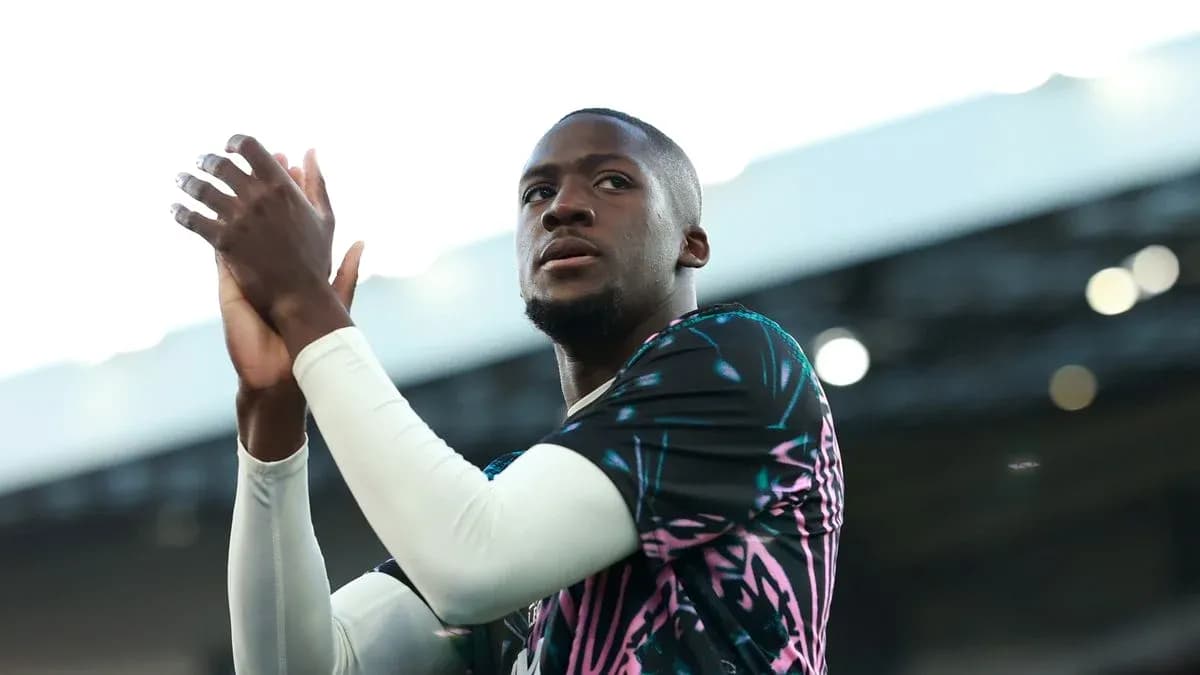
Liverpool's Defensive Dilemma: Replacing Ibrahima Konaté
Liverpool are braced for another painful goodbye. Ibrahima Konaté, Virgil van Dijk’s powerful partner for the past three years, is set to leave Anfield when his contract expires after talks over a new deal broke down.
No fee. No compromise. Just another cornerstone walking away.
Konaté will follow Andy Robertson and Mohamed Salah out of the club this summer, continuing a pattern that will alarm supporters and analysts alike. Add Trent Alexander-Arnold’s move to Real Madrid last year, and Liverpool are staring at a stark statistic: four of the defining players of the Klopp era, a combined return of just £10 million.
For a club that built its resurgence on smart trading, that’s a jarring comedown.
A hole next to Van Dijk
Konaté’s departure rips open the right side of Liverpool’s defence. Since arriving in 2021, the Frenchman has been the physical counterweight to Van Dijk’s authority, a defender who could step into midfield, carry the ball through pressure and dominate duels when games turned chaotic.
Top-level centre-backs are scarce. Top-level centre-backs who can live in a high line, handle a high press and still play are rarer still. Liverpool, with Richard Hughes and Arne Slot now shaping the rebuild, have to get this one right.
Four names stand out.
Jan Paul van Hecke – the familiar option
Jan Paul van Hecke at Brighton looks, in many ways, like the obvious play.
He’s already on Liverpool’s radar, with reports in the Dutch press linking him to Anfield. He’s comfortable in both a back three and a back four, a crucial detail for a side still searching for the best structure around a raft of expensive signings.
Van Hecke is a calm, assured, possession defender. Three goals and three assists in the Premier League this season underline his threat in the final third, but it’s his work under pressure that really fits Liverpool’s needs. He draws fouls at a rate almost identical to Konaté – 1.21 times per 90 minutes to the Frenchman’s 1.19 – a sign of a player willing to receive the ball in tight areas and ride the press.
Off the ball, he steps in aggressively. He sits in the 72nd percentile of Premier League centre-backs for interceptions per 90 (1.32), reading danger early rather than retreating towards his own box.
He is not as dominant in the air as Konaté, despite standing 6ft 3in, but next to Van Dijk – and with imposing youngster Jeremy Jacquet due to join the group in pre-season – he would still round out the unit rather than replicate the outgoing Frenchman.
Internationally, van Hecke has had to fight through traffic. With Matthijs de Ligt and Stefan de Vrij as competition, 10 caps for the Netherlands might not sound much, but he has still forced his way into their World Cup squad ahead of those two. He is expected to feature alongside Van Dijk in North America, and that familiarity only strengthens his case.
The timing, though, complicates things. A strong World Cup would inflate both his profile and his price. Liverpool either move quickly before the tournament or accept a more crowded market later in the window.
Brighton hold another card: van Hecke is entering the final year of his contract. That can lower the fee, but it also invites rivals. Tottenham have been circling, Chelsea are watching, and Brighton are thought to want around £50 million.
Joachim Andersen – the stop-gap with steel
If Liverpool decide they don’t need a like-for-like Konaté replacement, Joachim Andersen at Fulham offers something different: experience, aerial dominance and a proven Premier League body of work.
Once an unlikely Fantasy Premier League favourite at Crystal Palace, Andersen has grown into one of the division’s most reliable defenders. He wins his headers, he clears his lines, and he still has the composure to play, even if he isn’t quite as progressive on the ball as van Hecke.
He brings presence. Just a centimetre shorter than the Brighton man, Andersen sits in the top 10% of Premier League centre-backs for touches and aerial duels won. He is battle-hardened after six seasons in England and has 49 caps for Denmark to back that up.
Crucially, his profile allows him to cover Van Dijk as well as Konaté. The Liverpool captain has played more minutes than any other 34-year-old this season. He needs breathers. Andersen could step into that role without the club having to find two separate solutions.
Financially, he is the most accessible name on the list. Fulham paid £30 million for him two years ago, and at 29 he would command a reasonable fee without blocking the pathway of Jacquet or Giovanni Leoni, another young defender whose underlying numbers mirror Konaté’s.
That’s the pivot point. Liverpool may decide that Jacquet, Leoni and their existing options can grow into the role, with someone like Andersen providing cover and stability rather than a marquee arrival. If they go down that route, there are few safer bets.
Jarell Quansah – the one that got away?
Then there is the wildcard: Jarell Quansah.
On paper, the idea sounds faintly absurd. Liverpool sold him to Bayer Leverkusen for £35 million only last summer. Bringing him back a year later would be an admission that they misread both the market and their own talent.
On the pitch, it makes a lot more sense.
Quansah has exploded in Germany. At Leverkusen he has re-established himself as one of Europe’s standout young defenders and earned a call-up to England’s World Cup squad. Those who watched him emerge under Jürgen Klopp, partnering Van Dijk during the manager’s final season, will remember the raw materials: composure, range of passing, a willingness to defend space.
What’s changed is the polish. He was only dribbled past twice in the entire Bundesliga season. His pass completion sits at 90.3%, and he averages 0.55 successful dribbles per 90, numbers that speak of a defender who wants the ball and knows what to do with it.
The tension comes from his Liverpool exit. Under Arne Slot’s early tenure, his confidence visibly dipped. Being hooked at half-time in Slot’s first game in charge left a mark, and the club chose to cash in. With Konaté now heading for the door, that decision looks increasingly puzzling.
Liverpool protected themselves, though. The deal included a multi-tiered buy-back clause and pre-negotiated contract terms. Quansah can be re-signed this summer for £69.4 million.
There’s a catch. Reports in Germany suggest any return is more likely in 2025, when the clause drops to £52 million. Another year in Leverkusen’s refined, possession-heavy system would not harm his development. But when you’ve arguably let your best pure defensive academy product since Jamie Carragher leave, how long can you afford to wait?
Alessandro Bastoni – the dream move with a twist
Alessandro Bastoni is the glamour name. The kind of signing that changes the mood around a club overnight.
He’s also not a straightforward Konaté replacement.
Left-footed, elegant, and capable of stepping out to left-back, Bastoni looks more like a long-term Van Dijk successor than a direct plug into the right side of Liverpool’s defence. His ability to operate wider would help soften the loss of Robertson and cover any uncertainty around Kostas Tsimikas, while Milos Kerkez develops. But his stature in the game means he walks into any dressing room as a guaranteed starter in the centre.
If he arrives, Van Dijk almost certainly shifts across to the right.
On the ball, Bastoni is outstanding. In Serie A he ranks in the top 10% of centre-backs for assists, successful passes and accurate long balls. He sits in the top 5% for big chances created, overall touches and xG conceded while on the pitch. He doesn’t just defend; he dictates.
There was a moment this year when a move felt more plausible. After a red card against Bosnia and Herzegovina and the backlash that followed, his position with the Italian national team looked fragile and his future uncertain. Interest from Barcelona stirred the waters.
Inter, though, have held firm. President Giuseppe Marotta recently stated that Bastoni “has absolutely not expressed his desire to leave,” and all signs again point to him staying in Milan, the club he joined nine years ago.
If that stance softens, Liverpool must be ready. Bastoni would not solve every problem created by Konaté’s departure, but he would reshape the back line for years.
Liverpool now stand at a defensive crossroads. Konaté is going. Van Dijk is still elite but edging into the final stretch of his career. The academy has already produced one top-level centre-back they let slip away.
Do they buy the familiar, the stop-gap, the prodigal son, or the superstar?