Liverpool Dominates Galatasaray 4–0 in UEFA Champions League Clash
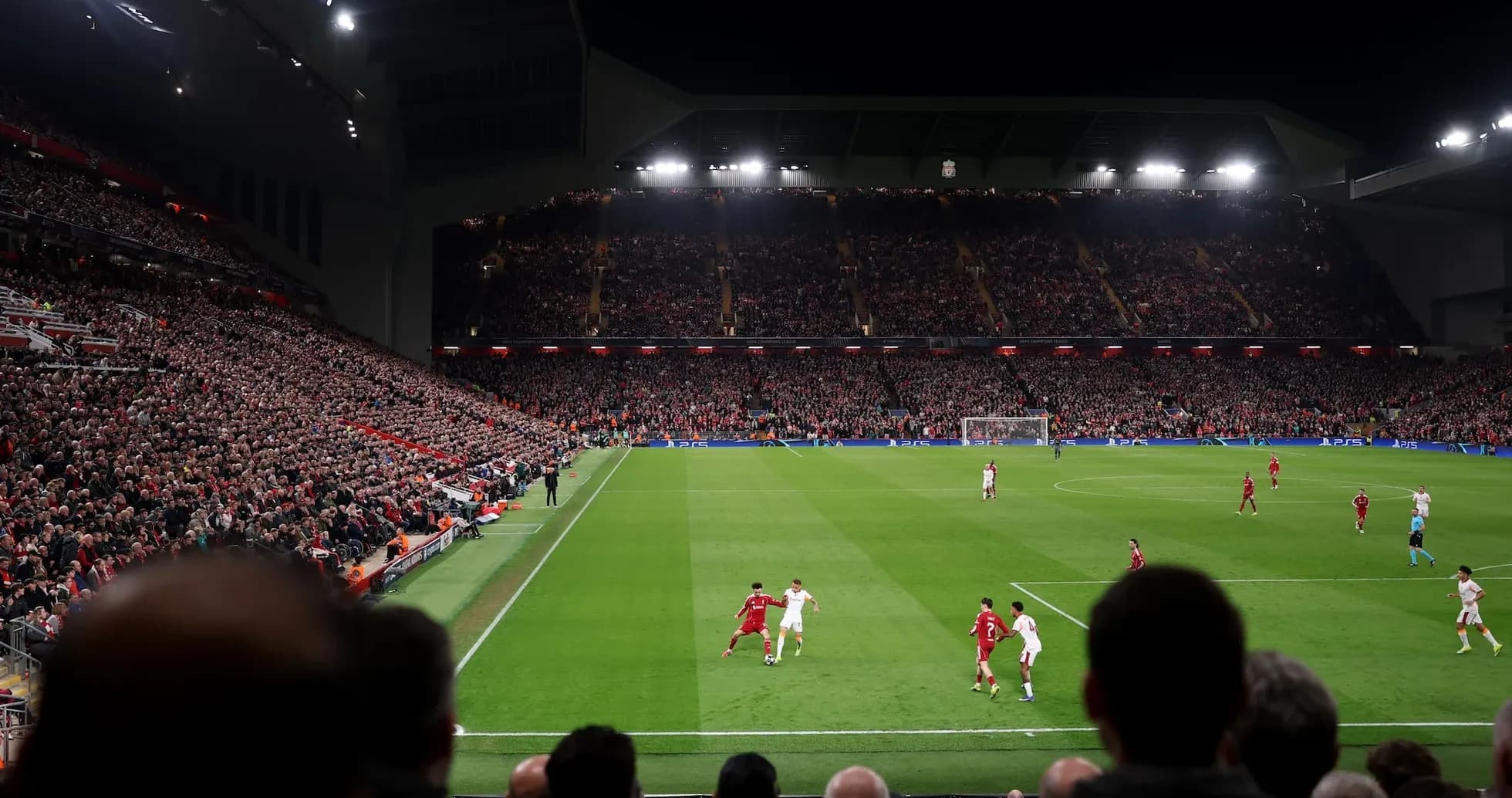
Liverpool 4–0 Galatasaray at Anfield, UEFA Champions League 1/8 final (in play, second half)
(Score reconstructed from events: 4 Liverpool goals, 0 Galatasaray; half-time 1–0.)
Goals
- 25' – Liverpool 1–0 Galatasaray D. Szoboszlai (assist: A. Mac Allister)
- 51' – Liverpool 2–0 Galatasaray H. Ekitike (assist: M. Salah)
- 53' – Liverpool 3–0 Galatasaray R. Gravenberch (unassisted)
- 62' – Liverpool 4–0 Galatasaray M. Salah (assist: F. Wirtz)
VAR:
- 57' – Disallowed goal for Liverpool after VAR: Goal cancelled.
Tactical overview
This was a one-sided tactical display, with Liverpool’s 4-3-1-2 overwhelming Galatasaray’s 4-2-3-1 in every phase.
- Possession: Liverpool 62% – 38% Galatasaray
- Total shots: Liverpool 32 – 4 Galatasaray
- Shots on goal: Liverpool 16 – 1 Galatasaray
- xG: Liverpool 5.02 – 0.18 Galatasaray
Liverpool played a high-possession, high-tempo game, compressing Galatasaray into their own half and using the double striker pairing (Hugo Ekitike and Mohamed Salah) with Florian Wirtz as the advanced midfielder to constantly attack the space between and behind the visitors’ back four.
Galatasaray tried to sit in a 4-4-1-1/4-5-1 low block out of possession, with Lucas Torreira and Mario Lemina as the double pivot in front of the centre-backs, but they were unable to control the half-spaces or protect the box against Liverpool’s volume and variety of attacks.
Liverpool’s structure and attacking patterns
Base shape: 4-3-1-2
- Back four: Jeremie Frimpong – Ibrahima Konaté – Virgil van Dijk – Miloš Kerkez
- Midfield three: Dominik Szoboszlai – Ryan Gravenberch – Alexis Mac Allister
- Advanced midfielder: Florian Wirtz
- Front two: Hugo Ekitike – Mohamed Salah
Key tactical points:
- Central overloads and half-space dominance
- With Wirtz operating between the lines and Mac Allister dropping to help build, Liverpool often formed a 2-3-3-2 in possession:
- 2: Konaté, Van Dijk
- 3: Frimpong narrow, Mac Allister central, Kerkez narrow
- 3 ahead: Szoboszlai (right half-space), Gravenberch (left half-space), Wirtz (central pocket)
- 2: Ekitike and Salah pinning the centre-backs and full-backs.
- This gave Liverpool constant numerical superiority against Galatasaray’s double pivot (Torreira–Lemina) and made it very difficult for the away side’s No.10 line (Sallai–Sara–Barış Alper Yılmaz) to screen passes.
- Verticality and third-man runs
- The opening goal at 25' from D. Szoboszlai, assisted by A. Mac Allister, reflects Liverpool’s vertical pattern:
- Mac Allister as the deeper playmaker finds a vertical lane into the interior.
- Szoboszlai attacks the right half-space, arriving from midfield rather than standing on the last line.
- Ekitike’s goal at 51' (assist M. Salah) shows the complementary movement of the front two:
- Salah dropping or drifting wide to receive and combine.
- Ekitike attacking the central channel, exploiting the space created by Salah’s movement.
- Relentless box occupation
- Liverpool had 22 shots inside the box out of 32 total attempts, underlining how often they were able to penetrate into prime finishing zones.
- The third goal at 53' from R. Gravenberch, unassisted, is consistent with the pattern of a central midfielder arriving late into the area after sustained pressure.
- M. Salah’s goal at 62' (assist F. Wirtz) underlines the threat of Wirtz receiving between lines and then releasing runs into the box.
- Wide play and full-back roles
- Frimpong and Kerkez provided width but also tucked in at times to form a compact rest-defense line of four behind the ball.
- Frimpong’s natural attacking profile helped overload the right side, especially when Salah drifted wide and Szoboszlai pushed up, creating a triangle that repeatedly targeted Ismail Jakobs’ flank.
- Pressing and counter-pressing
- With only 4 total shots conceded (1 on goal), Liverpool’s counter-press was effective:
- Immediate pressure on the ball after turnovers, led by the midfield three and Wirtz.
- Ekitike and Salah curved their pressing runs to block passes into Torreira and Lemina, forcing Galatasaray wide or long.
- The high xG (5.02) combined with Galatasaray’s minimal attacking output (xG 0.18) shows how Liverpool kept the game in the opponent’s half.
Galatasaray’s game plan and struggles
Base shape: 4-2-3-1
- Back four: Sacha Boey – Wilfried Singo – Abdülkerim Bardakcı – Ismail Jakobs
- Double pivot: Lucas Torreira – Mario Lemina
- Three behind striker: Roland Sallai – Gabriel Sara – Barış Alper Yılmaz
- Striker: Victor Osimhen
Key issues:
- Build-up under pressure
- Galatasaray completed 317 passes at 72% accuracy, compared to Liverpool’s 527 at 84%.
- Under Liverpool’s press, they struggled to find Torreira and Lemina cleanly; many sequences ended with forced long balls toward Osimhen, who was isolated against Van Dijk and Konaté.
- With only 2 shots inside the box and 4 total shots, their possession rarely progressed into dangerous zones.
- Defensive block and space between lines
- The 4-2-3-1 mid/low block left too much space between the front line and the double pivot.
- Wirtz repeatedly found pockets behind Sara and Sallai, dragging Torreira or Lemina out and opening channels for Szoboszlai and Gravenberch.
- Once the first line was broken, Galatasaray’s back four were constantly exposed to runs from Ekitike and Salah.
- Wide defending
- The full-backs Boey and Jakobs were pinned back by Liverpool’s full-backs and forwards.
- When they stepped out to press, the half-space behind them was attacked by Szoboszlai or Gravenberch, creating dilemmas for the centre-backs and Torreira/Lemina.
- Lack of transitions
- With xG at only 0.18, Galatasaray failed to exploit counter-attacking moments.
- Osimhen had limited service; Barış Alper Yılmaz and Sallai rarely received the ball on the run in space due to Liverpool’s strong rest-defense.
VAR and disallowed goal
- At 57', a Liverpool goal was ruled out after VAR: Goal cancelled.
- Tactically, this underlines Liverpool’s continued ability to break Galatasaray’s line even after going multiple goals ahead; the disallowed goal did not change the game’s direction but shows how often the visitors were being carved open.
Substitutions and their tactical impact
All substitutions are described using the required template.
Galatasaray
- At 46', L. Sane came on for V. Osimhen. - This shifted the reference point up front; Galatasaray likely moved towards using Leroy Sané’s mobility and wide threat instead of a central target striker, but without solving the build-up issue.
- At 46', N. Lang came on for S. Boey. - This change suggests a more aggressive wide presence, potentially moving to a more attacking right side. It also weakened the defensive stability on that flank, which Liverpool had been targeting.
- At 60', Y. Akgun came on for L. Torreira. - Removing Torreira, the more defensive midfielder, for Yunus Akgün tilted the team further towards chasing the game but left Lemina with more defensive responsibility in central areas against a dominant Liverpool midfield.
- At 73', E. Elmali came on for A. Bardakci. - A defensive change in the back line, possibly due to fatigue or performance, but it did not alter the overall dynamic given Liverpool’s control.
- At 80', M. Icardi came on for an unnamed player (player field null). - The intention was clearly to add another penalty-box striker, but by this point Galatasaray were already under heavy pressure and rarely able to deliver quality service.
Liverpool
- At 67', C. Jones came on for J. Frimpong. - This likely saw Liverpool adjust shape slightly, with Jones adding an extra midfield presence and possibly a more conservative approach on the right side once the game state was comfortable. It also underlines Arne Slot’s priority to control central spaces rather than continue to attack relentlessly down the right.
- At 74', C. Gakpo came on for M. Salah. - With Salah already on the scoresheet and Liverpool in command, Gakpo’s introduction maintained a mobile forward presence while managing Salah’s minutes. Tactically, Gakpo can drop and combine, helping to retain the ball and slow the tempo.
- At 89', F. Chiesa came on for H. Ekitike. - Fresh attacking legs late on, but primarily a rotation move with the tie effectively decided. Chiesa’s profile keeps the threat in behind, preventing Galatasaray from pushing up.
- At 89', T. Nyoni came on for R. Gravenberch. - This added energy in midfield and allowed Liverpool to see out the game while giving Nyoni exposure at this level.
- At 89', R. Ngumoha came on for F. Wirtz. - Removing Wirtz, the main between-the-lines playmaker, signalled a shift towards game management rather than further risk-taking in central areas.
Defensive actions and blocked shots
- Liverpool had 6 of their shots blocked by the Galatasaray defense.
- Galatasaray had 1 of their shots blocked by the Liverpool defense.
This mirrors the overall pattern: Galatasaray’s back line and goalkeeper were under sustained siege, forced into last-ditch interventions, while Liverpool’s defense was rarely stretched and could deal with the occasional attempt.
Goalkeeping and shot quality
- Liverpool: 16 shots on goal, xG 5.02, goals prevented 0.
- Galatasaray: 1 shot on goal, xG 0.18, goals prevented 0.
Galatasaray’s goalkeeper Uğurcan Çakır made 11 saves, which indicates that despite conceding four, he faced a huge volume of high-quality chances. On the other side, Alisson had only 1 save to make, reflecting Liverpool’s territorial dominance and the effectiveness of their pressing and structure in preventing dangerous shots.
Physical and disciplinary aspect
- Fouls: Liverpool 15 – 7 Galatasaray.
- No yellow or red cards were recorded in the data for either side (per instructions, this is not expanded on beyond noting the foul counts).
The foul distribution suggests Liverpool were more aggressive in counter-pressing and breaking up potential transitions, while Galatasaray committed fewer challenges, partly due to spending long spells in a deep block.
Verdict: Why Liverpool had the clear edge
Based on the match statistics and tactical patterns:
- Territory and control: 62% possession, 527 passes, and a high pass accuracy of 84% gave Liverpool full command of the tempo and territory.
- Chance creation: 32 shots (16 on goal, 22 inside the box) and xG 5.02 show sustained, high-quality chance creation from multiple zones.
- Defensive control: Conceding only 4 shots (1 on goal) and xG 0.18 underlines how effectively Liverpool suppressed Galatasaray’s attacking threats.
- Structural superiority: The 4-3-1-2, with Wirtz between lines and a highly dynamic midfield, outnumbered and outmanoeuvred Galatasaray’s 4-2-3-1 in central areas.
- Adaptation and depth: Late substitutions allowed Liverpool to maintain intensity and control while rotating key players without losing structural integrity.
Overall this season, these numbers fit the profile of a Liverpool side that dominates games through ball control, aggressive pressing, and heavy box occupation, while Galatasaray’s performance in this match reflects a team unable to progress play under pressure or protect its defensive third against elite-level attacking structure.