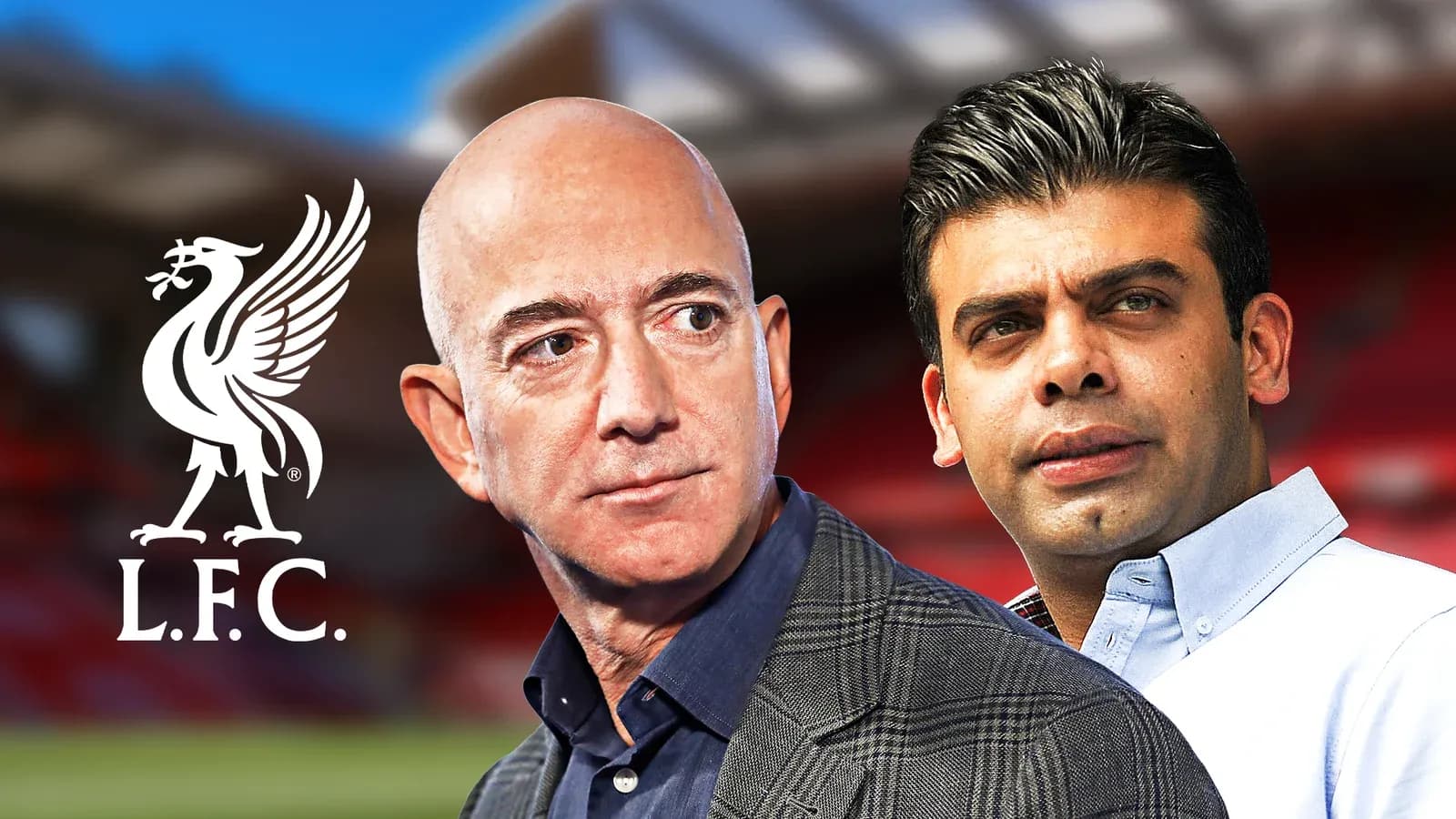
Liverpool Secures Investment from Jeff Bezos Consortium
Liverpool have sold around a third of the club to a heavyweight global consortium featuring Amazon founder Jeff Bezos, in a deal that propels the Reds into the financial stratosphere without loosening Fenway Sports Group’s grip on power.
The agreement, led by entrepreneur Amit Bhatia, values Liverpool at roughly £6bn ($6–7bn) and hands the group close to a 30 per cent stake. FSG remains firmly in charge: majority ownership and day-to-day control stay in Boston.
Bezos, whose fortune Forbes estimates at over £207bn ($280bn), is the headline name in the syndicate. This is his first step into sports ownership. He will not sit on Liverpool’s board, with Bhatia instead taking the role of vice-chair.
For Liverpool, it is less a rescue act and more a calculated upgrade.
Super-rich backing, same Liverpool model
FSG framed the move as a strategic play rather than a financial necessity. In a statement, the owners said the investment “supports Liverpool's long-term growth ambitions by bringing together experts from across global business, technology, and investment,” stressing that the consortium will work with the club’s leadership “to evaluate opportunities that enhance the club's objectives on and off the pitch.”
The message is clear: expect evolution, not revolution.
Mike Gordon, FSG president, underlined that point. Liverpool, he said, has “always been built by thinking beyond one season and making decisions with the club's long-term interests in mind,” and that approach continues to attract “respected investors and business leaders around the world.”
As talks progressed, FSG concluded that Bhatia and his partners “shared our long-term philosophy and appreciation for what makes Liverpool special,” Gordon added, insisting their experience will “complement the strong foundation already in place.”
Bhatia called the group “proud to be investing in Liverpool,” a line that hints at prestige as much as profit.
No transfer war chest, no change in football philosophy
Supporters scanning the small print for an immediate transfer splurge will be disappointed. The club’s stance is blunt: this deal does not create a separate or new transfer budget.
Liverpool’s sporting operation will continue to set transfer policy and budgets within the existing financial sustainability framework. The club insists the transaction does not alter its recruitment strategy or football philosophy.
Sky Sports News reporter Vinny O’Connor described the agreement as “a minority investment and a long-term partnership,” with no change to the club’s leadership or daily operations. Liverpool, he stressed, were “not seeking investment out of financial need,” but were drawn by the calibre of the people involved.
The pressure, then, is not to spend wildly, but to grow smarter and bigger.
Who is Amit Bhatia – and who stands behind him?
Bhatia, 46, is a British Indian entrepreneur with an investment banking background and deep roots in global business. He runs AyBe Capital, a multi-asset investment firm with interests across technology, media, property and real estate, consumer retail, and health.
He is married to Vanisha Mittal Bhatia, daughter of Indian steel magnate Lakshmi Mittal, underlining the financial firepower and networks around the new vice-chair.
Bezos needs little introduction. The Amazon founder built the e-commerce giant from a Seattle garage in 1994 and has since expanded his portfolio to include aerospace company Blue Origin and venture capital firm Nash Holdings, the ownership vehicle for The Washington Post.
Now his name sits alongside Liverpool’s on a share certificate.
A new era of scale, not a new regime
Strip away the numbers and the noise, and one thing stands out: this is one of the richest deals football has seen, yet it leaves the existing hierarchy intact.
Liverpool gain access to some of the world’s most powerful business minds and deepest pockets, while FSG keeps the wheel. There is no takeover saga, no boardroom clear-out, no overnight identity shift.
The club has chosen to bolt on global capital and expertise to a model it believes already works.
What that means for Liverpool over the next decade – in stadium expansion, commercial reach, technology, and competitive muscle – may prove far more significant than any single transfer window.