Liverpool's Recruitment Crisis Leaves Fans Furious
Liverpool’s title defence was supposed to be the launchpad for a new era of dominance. Instead, the mood around Anfield has curdled into open fury at a transfer operation supporters now see as reckless one year and paralysed the next.
Twelve months ago, the club’s committee threw money and reputation at the market. Florian Wirtz and Jeremy Frimpong arrived as freshly crowned Bundesliga champions. Hugo Ekitike was plucked from Newcastle in what felt like a pointed, almost spiteful move. Then came Alexander Isak, at the time arguably the Premier League’s most complete centre-forward.
Rival fans were spooked. Liverpool were being handed the title before a ball had been kicked.
Reality tore that script up. The season never matched the swagger of the window.
Now the pendulum has swung violently the other way. The same structure that once splurged is now selling without replacing, trimming without a plan. Even Stefan Bajcetic has been moved on. Behind the first-choice midfield three, the depth chart looks worryingly thin.
Mohamed Salah’s departure was telegraphed months in advance, yet there is still no elite replacement in sight. Six months, at least, to plan for life without a generational goalscorer, and Liverpool are scrambling around late in the window, batting names like Bradley Barcola, Yankuba Minteh and Ismaïla Sarr around as if drawing from a hat.
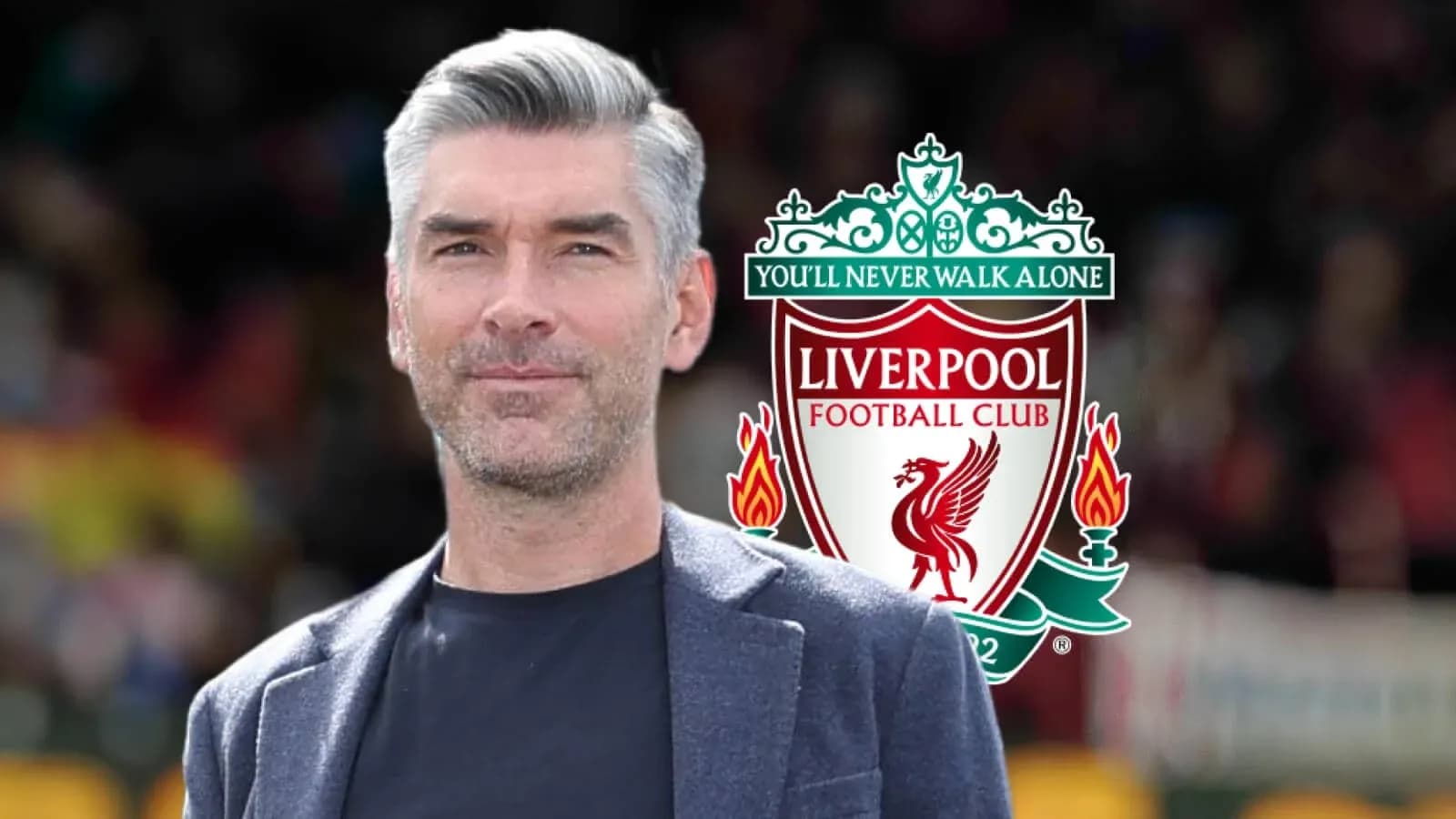
The question from supporters is brutal and simple: what exactly has Richard Hughes been doing?
The new sporting director, along with the club’s transfer committee, is being hammered by fans who see the basics of squad building being ignored. The glaring need for a holding midfielder has been obvious to anyone watching Liverpool’s evolution under Andoni Iraola, where full-backs attack like wingers and defend like afterthoughts.
Who protects the centre-backs? Who locks down the middle when opponents run through a stretched side? From gamers on eFootball and FC to ex-players, pundits and even the club captain, the consensus is the same: Liverpool need a defensive midfielder and two wingers. They have neither.
One lifelong supporter in Mumbai summed up the feeling: if this were any other high-paying job, Hughes and his team “would have been fired” for failing to address the most basic requirements of the role. Another, from Limerick, described a club “flapping around” in the market, with the season already underway and the squad still short in key areas.
The Newcastle game has become a reference point for the anxiety. A vibrant, energetic side ran through Liverpool’s midfield and exposed a back line left horribly exposed by adventurous full-backs. Those issues weren’t new; they were a continuation of last season’s flaws. That, more than the result, is what scares supporters.
Arsenal, Manchester City, Chelsea, Spurs, even Aston Villa are seen as moving smartly, refreshing and upgrading. Liverpool, by contrast, look static, caught between eras, their “proverbials in their hands”, as one fan put it. This is not how the club has operated for most of the last decade, when they were the model of shrewd, data-led recruitment.
There is praise for the likes of Victor Muñoz, seen as a classic Liverpool pick-up: good value, high upside, low immediate pressure. But those are the finishing touches of a functioning squad, not the foundations of a title challenger. Right now, Muñoz feels like the exception, not the rule.
The mood has shifted from anger at the manager to something more resigned. One fan who admits to having shouted at Jürgen Klopp through the television says he won’t be directing the same fury at Iraola when opponents slice through Liverpool’s midfield this season. In his eyes, the coach has been “handicapped” by a committee that has left him short in vital zones in the final days of the window.
The scenarios being sketched out are stark. Either Iraola produces something close to a miracle, channelling a blend of Pep Guardiola, Sir Alex Ferguson and Klopp to conjure a title push from an unbalanced squad. Or Liverpool drift into a long, frustrating cycle: Spurs-like, Wenger-era Arsenal-like, always close, rarely complete.
For now, the calls are clear and loud: fix the structure, fix the recruitment, or watch a team that “strolled to the league the season before last” slide into a fight just to stay in the Champions League places.
Villa and Chelsea: who’s really winning these deals?
While Liverpool fans rage at inactivity, Aston Villa supporters are staring at a very different problem: their club is doing plenty of business, but the direction of travel has them deeply uneasy.
The pipeline between Villa Park and Stamford Bridge has become one of the stories of the window. Out of the Midlands, and into Chelsea’s rebuild, have gone Morgan Rogers and set-piece specialist Austin MacPhee. Emi Martínez could yet follow.
Rogers’ fee was huge, far beyond his current output, but Villa fans know what they are losing: a game-changer on his day, English, and still under a long contract. The “English premium” might have inflated the price, but it also underlines the value of what Chelsea are buying.
MacPhee’s exit has flown under the wider radar, but not among Villa supporters. As set-piece coach, he turned dead balls into a weapon. Youri Tielemans’ goal in the Europa League final stands as a neat example of his influence. Players sprinting to him in celebration after well-worked routines told its own story.
Now he’s gone. Chelsea gain the brains behind one of Europe’s most dangerous set-piece units.
And then there is Martínez. The move hasn’t happened, but with Zion Suzuki arriving and Chelsea’s current goalkeeping situation a running joke, Villa fans are braced. Losing the man FIFA has crowned the world’s best goalkeeper two years running, at just 33, would be a seismic moment. For Chelsea, it would be transformative. For Villa, it would feel like ripping out the spine of a Champions League-chasing team.
In the opposite direction, the deals feel far less convincing. Alejandro Garnacho is seen by one supporter as another Jadon Sancho scenario waiting to happen: big talent, big noise, questionable output. Villa have already moved on from one misfiring winger in Moussa Diaby Guessand and still have Leon Bailey blowing hot and cold. The appetite for another gamble on a wide man is low.
Then there is Nicolas Jackson. Signed by Chelsea for £32m, now valued at £65m in this merry-go-round of modern accounting. Villa fans are asking the obvious question: why are they paying top dollar for players Chelsea are happy to move on, while selling their own stars to a direct rival?
The fear is clear. In trying to smash through the glass ceiling and cement themselves among the Premier League’s elite, Villa risk arming the very club they are trying to overtake. Financial rules – FFP, PSR, whatever acronym comes next – will be wheeled out as justification, but supporters see a more basic truth: you don’t strengthen rivals with your best assets and pay them handsomely for their cast-offs if you want to stay at the top table.
Unai Emery retains huge credit for the transformation he has overseen. That buys patience. It does not, however, erase the unease. If Martínez follows Rogers and MacPhee out of the door, the mood could turn quickly.
And somewhere in the background, another thread tugs at Villa’s story. Manchester United’s managerial succession talk has already drifted towards Emery as a future candidate: a serial winner, a coach who makes teams more than the sum of their parts, a manager who might look elsewhere if he feels his project is being stripped around him.
If Villa keep selling and Chelsea keep climbing, how long before that speculation becomes something more concrete?
United: cautious optimism amid the chaos
At Old Trafford, the emotional spectrum is as wide as ever, but not every Manchester United fan is drowning in doom.
There is excitement at a midfield finally overhauled after years of patchwork fixes. There is also realism about what that means: disruption, inconsistency, and some ugly afternoons while new partnerships bed in. The defeat to Hull underlined that. The pieces are there, but the puzzle isn’t solved.
Michael Carrick is learning on the job at elite level, and his use of players like Tielemans is under scrutiny. Asking the Belgian to operate in a double pivot when his legs and instincts suit a more advanced role feels like an avoidable misstep. Use him as Bruno Fernandes’ rotation option, keep both fresh, and the structure makes more sense.
Recruitment needs remain. A left-back and a back-up striker before the window shuts would give this squad a more coherent shape. Even then, expectations among the more grounded United support are modest: a decent season, some progress, a likeable group to get behind, Rashford restored to something like his best. Trophies? Maybe not. But a direction of travel that doesn’t feel like a permanent loop.
For fans hitting 40 and wrestling with the weight of time, as one letter-writer put it, the plea is simple: give us something to feel alive about on a Saturday again. Not 1990s dominance. Just moments. Just a team that looks like it knows where it’s going.
The money, the risk, and those left behind
Beyond the club-specific angst, a wider unease runs through the modern game. The Saudi Pro League’s money continues to test the moral compass of players and supporters alike. For every N’Golo Kanté, driving a modest car and pouring wealth into others, there is a Jordan Henderson, whose choices still provoke anger and disappointment.
The argument that players from poverty-stricken backgrounds are simply securing their futures is understood. But when they are already multi-millionaires, the question of “how much is enough?” refuses to go away.
And then there are the players who never make it. The ones who don’t get the Saudi offer, the Champions League nights, or even a solid professional career. American football’s numbers are stark: a tiny fraction of high school and college players ever reach the NFL, and a horrifying proportion of those who do suffer serious brain damage. Football’s own churn is less documented but no less ruthless.
For every Raheem Sterling crashing a Lamborghini, there are countless others – the nearly-men, the academy cast-offs, the ones who went all in on the dream and were spat out by the system. Some rebuild their lives. Many don’t.
The machine keeps turning. The windows keep opening and closing. Clubs panic, fans rage, agents cash in, and the game marches on.
The real question, as this chaotic summer shows, is who will still be standing proudly when the dust settles – and who will be left wondering how it all slipped away.