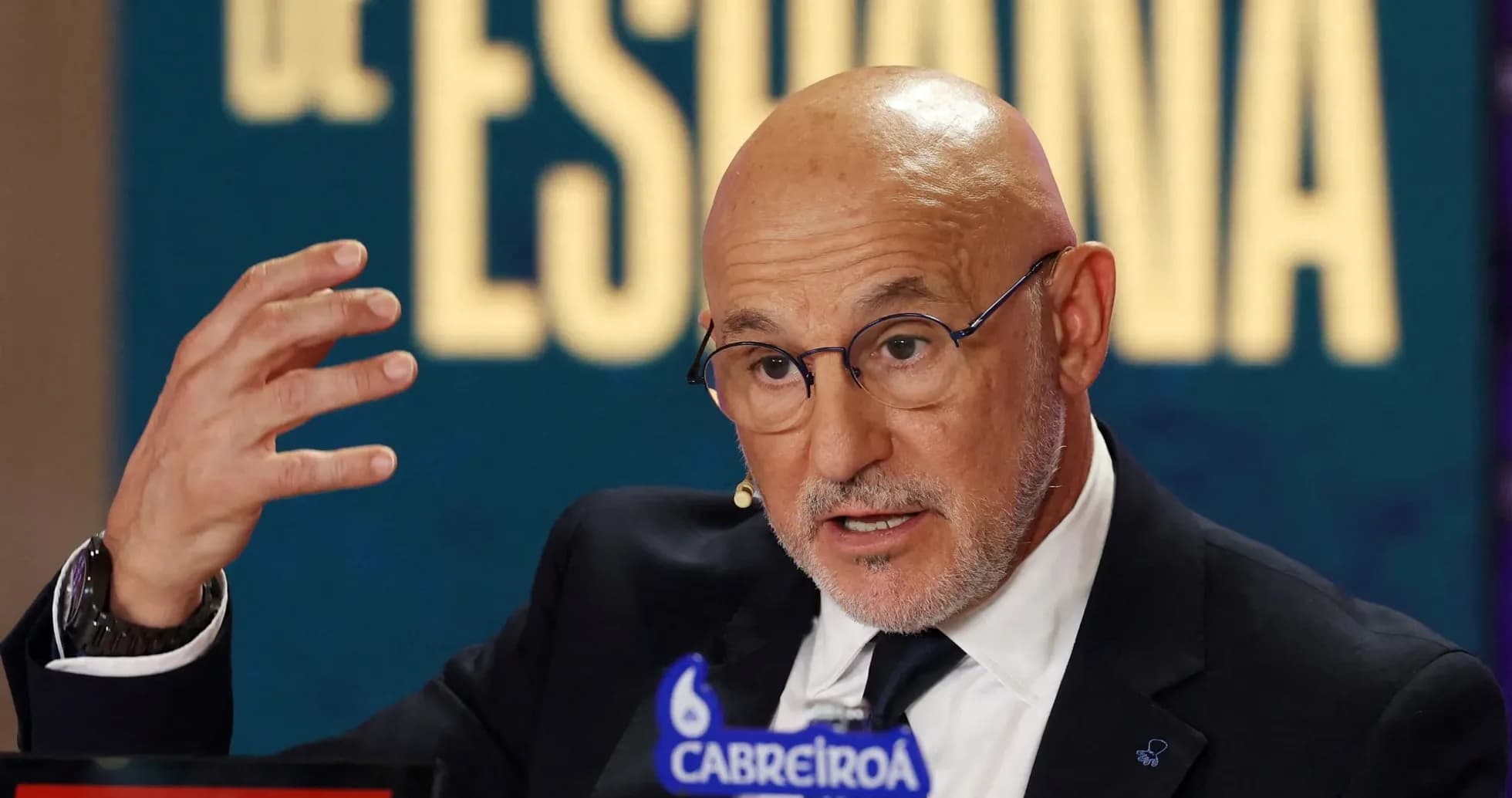
Luis de la Fuente Prioritizes Spain Badge Over Club Rivalries
Spain boss Luis de la Fuente has drawn a hard line before a ball is even kicked in the World Cup: the crest on his chest comes first, and every club badge – including those of Real Madrid and Barcelona – trails behind.
His 26-man squad, unveiled with the calm of a man who knows exactly what he wants, has a striking look. Eight Barcelona players. Not a single one from Real Madrid. For the first time, the European champions will go to a World Cup without a representative from the capital’s dominant club.
In Spain, that is never just a detail. It is an argument.
A squad that lights up El Clásico fault lines
The numbers are stark. Barcelona’s Joan Garcia, Pau Cubarsi, Eric Garcia, Gavi, Pedri, Dani Olmo, Lamine Yamal and Ferran Torres all make the plane. Seven others are drawn from the Premier League. Dean Huijsen and Dani Carvajal headline the Real Madrid absentees, left watching from home as Spain chase a second world title, 14 years after their 2010 triumph in South Africa.
Selection in this country is never neutral. It lives in the bars of Madrid and the peñas of Catalonia, in old grievances and new conspiracies. De la Fuente knows that. He also knows he cannot pick a team to please everyone.
So he did not bother trying.
“For me, the greatest team there is – the very greatest – is the Spanish national team,” he told reporters over breakfast at an event organised by RTVE and EFE. No caveats. No softening. Just a clear message to those who see betrayal in every omission.
“I don’t look at where players come from or their background. What matters are Spanish players who are proud to represent their country’s national team and to be part of a united nation.”
The implication was obvious: if Real Madrid are not represented, it is not because of politics. It is because, in his eyes, others are better suited to what Spain need right now.
Selection on the line, job on the line
De la Fuente framed the entire list as a football decision, pure and simple. Of course, every coach says that. The difference lies in how much they are prepared to stake on it.
“The day I make a mistake, fail to make the right choice, or act in a way that might be beneficial just to get a result, I’m putting my job on the line,” he said.
He knows the risk. Spain go into the tournament as European champions and among the favourites. Any stumble, any flat performance, and the absence of a single Real Madrid player will be dragged out as Exhibit A.
The group stage offers little room to hide. Spain open in Group H against Cape Verde, then take on Saudi Arabia and Uruguay. On paper, it is manageable. In reality, a slow start would feed every doubt, every suspicion that this is a squad tilted too far towards one club and one idea of how the game should be played.
Managing risk, managing bodies
The debate over crests and colours runs alongside another concern: bodies and minutes.
Lamine Yamal, Nico Williams and Mikel Merino all arrive on the back of fitness issues. They are central to Spain’s attacking and midfield structure, yet still edging back towards full sharpness.
“We’re in contact with all the clubs,” De la Fuente said. “We know that these players are in good physical shape; each one is making good progress in their recovery process. I’m very optimistic; I think they’ll be available for the first match.”
Optimism is one thing. World Cups are another.
“If we have to take a risk, mate, we’ll take it in a World Cup,” he added, letting a flash of dressing-room realism break through. “But… our view goes beyond the first match and also the second. So, if we have to wait a little longer, we’ll wait.”
It is a delicate balance: push too hard, lose a player for the tournament; hold back too long, and you risk dropping points while your best weapons sit on the bench.
Yamal’s moment
At the heart of it all stands Lamine Yamal, the 18-year-old winger who has already become a symbol of Spain’s new era. Young, fearless, and expected to carry a heavy slice of the attacking load.
De la Fuente spoke about him with the admiration of a coach who knows he has something rare on his hands.
“Yamal is absolutely thrilled and raring to go,” he said. “He’s a very young lad, just 18, but he has a remarkable sense of maturity and knows that this is his moment.
“You have to seize the moment. And he knows this is his moment.”
The message to the teenager was clear: this is not a rehearsal. This is the stage.
The badge above the rivalry
Strip away the noise, and De la Fuente’s stance is brutally simple. The national team sits above every club, every rivalry, every grievance. The Spain badge outranks the white of Madrid and the blaugrana of Barcelona.
He has built a squad that reflects his convictions and his footballing taste, not the balance sheet of El Clásico politics. If it works, he will be the coach who trusted his eye, backed his Barcelona core, managed his injured stars, and guided Spain towards another star on the shirt.
If it fails, he knows exactly which decisions will be replayed and which omissions will be thrown back at him.
For now, he has made his choice. The World Cup will decide whether Spain made the right one.