Luka Modric: Defying Age and Expectations at 40
Luka Modric looked finished that night in Leipzig.
He had dragged Croatia to the brink of the Euro 2024 last 16, scored what felt like the decisive goal, and still walked off the pitch with a stare that belonged to someone who had just seen the end. A rebound from his own saved penalty had put Croatia ahead against an Italy side that barely resembled the Azzurri of old. It should have been the moment that extended his international story.
Instead, Mattia Zaccagni’s 98th‑minute equaliser ripped it apart.
By the time Modric stood for the Player of the Match photo, the award felt cruel. Croatia were out. Italy were through. The camera caught a man who knew this was not how his international career was supposed to close.
No one wanted it to end like that. Not his teammates. Not the fans. Not even the opposition.
In the press room afterwards, Italian journalist Francesco Repice gave voice to what so many felt. He thanked Modric for “everything you have shown, not just tonight but in your career” and begged him to “never retire”. It was emotional, unvarnished, and entirely appropriate for a player who had given so much to the game.
Modric, then 38, didn’t hide from the truth. “I’d like to keep playing forever,” he said, “but there probably will come a time where I’ll have to hang up my boots. I’ll keep playing on for now, but I’m not sure for how much longer.”
That was supposed to be the beginning of the end.
It wasn’t.
Milan, the boyhood dream that became a heartbeat
A year later, Modric is 40 and still bending matches to his will.
When he left Real Madrid after 13 years and a mountain of trophies, the move to AC Milan looked romantic more than rational. This was the club he had loved as a child, seduced by the elegance of Zvonimir Boban. The narrative wrote itself: one last dance in red and black, a graceful farewell tour in Serie A.
Modric had other ideas. He arrived in Milan insisting this was not a nostalgia trip. He believed he could help revive the Rossoneri, not just decorate them. Against the doubts of pundits and the logic of age, he was right.
There were questions from the start. Did Milan really need him after signing 24‑year‑old Samuele Ricci? How many top‑level minutes could a 39‑year‑old midfielder truly deliver in a league that punishes fading legs?
The answers came quickly. Ricci himself had no complaints about sitting behind Modric in the pecking order. “He’s the strongest player I’ve ever played with,” the Italian said, stunned by the Croat’s humility and relentless drive in training.
The Italian press watched the same thing and shook their heads. “If he really is 40,” wrote journalist Alberto Polverosi, “let’s clone him!” It sounded like a joke. It was also a fair reflection of how indispensable he had become.
Kaka, who knew Modric from their time together at Real Madrid, stripped away the mystery. This wasn’t a miracle of sports science. It was mentality.
He called Modric a 40‑year‑old “force of nature” and explained why. Most players, Kaka said, lose a little edge after winning everything. Not Modric. “Lukita is crazy. He still wants to pass on his knowledge, he calls his team-mates, he’s always ready to fight. He has energy and personality.” It was a portrait of a veteran who refuses to behave like one.
Massimiliano Allegri saw the same thing every day. The Milan coach leaned on Modric for control, leadership, tempo. Training, dressing room, matchday – the Croat set the standard. His presence lifted the squad and, as Kaka put it, raised the level of the entire league.
There was a catch.
The fracture that exposed a dependence
Milan didn’t just benefit from Modric. They became addicted to him.
On April 26, in a 0-0 draw with Juventus, the cost of that reliance was laid bare. Modric suffered a fractured cheekbone. It sounded manageable. It wasn’t. He couldn’t start any of Milan’s final four league games.
Without him, the structure fell apart.
Three defeats from those four matches dragged Milan from third to fifth. Champions League football slipped through their fingers. A season that had promised a return to Europe’s elite ended with the club staring at the consequences of building too much around a 40‑year‑old genius.
Allegri paid with his job. Sacked for failing to secure a top‑four finish, he left behind a team that had soared with Modric and sagged without him.
The situation has thrown Modric’s club future into doubt. He has spoken warmly about Milan, about the city and the shirt, but there is a pull from the past. Reports in Spain suggest Real Madrid are keen to bring him back to the Bernabeu in some role if he decides this summer is the moment to finally stop playing.
He is not giving much away. Not yet.
One last dance, behind a mask
What feels certain is this: the World Cup ahead is expected to be his final major tournament with Croatia.
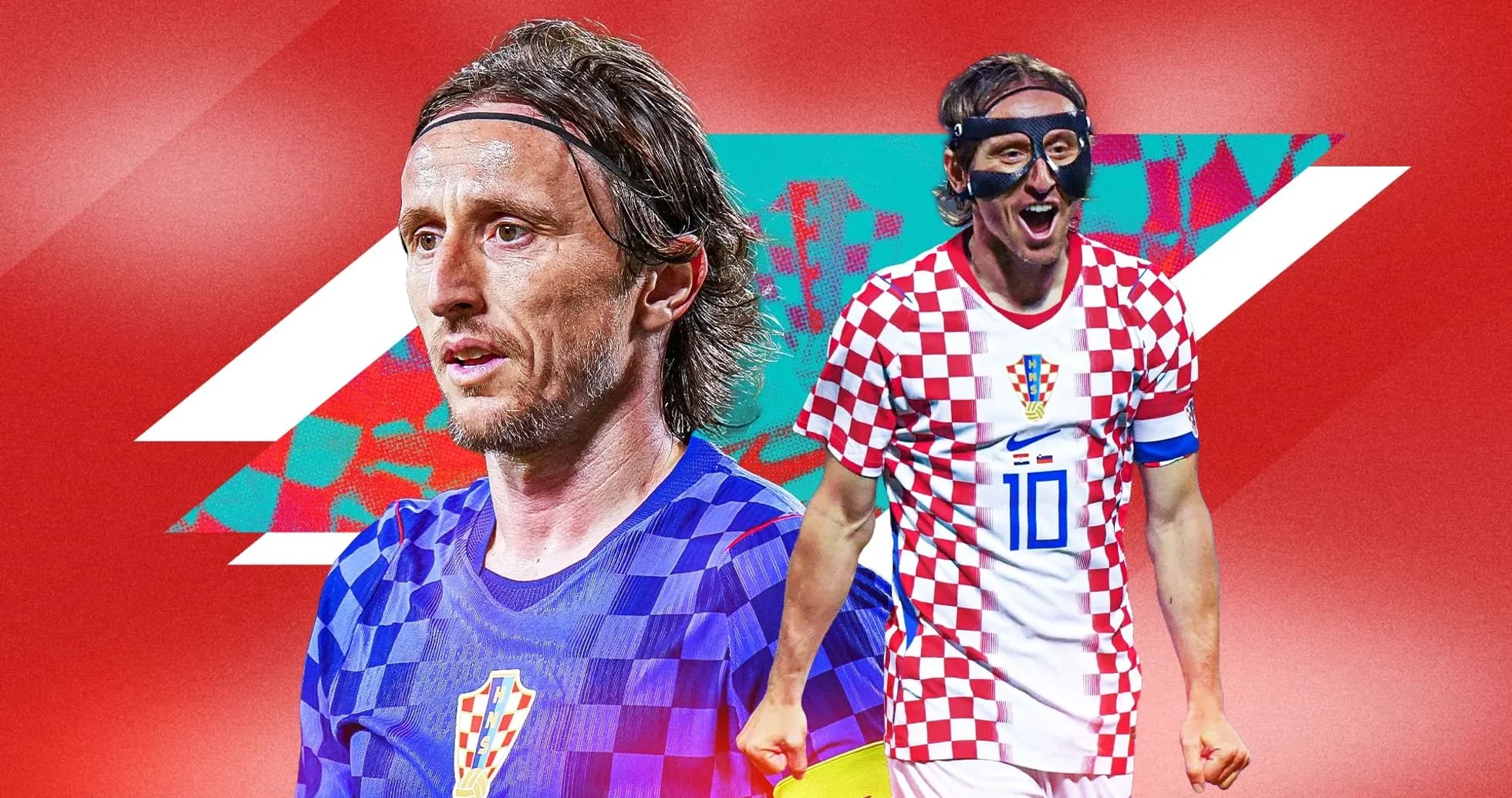
It is not the farewell stage you would script. Modric will have to play with a protective mask, a legacy of that fractured cheekbone. In heat and heavy conditions, the mask will be more than a cosmetic inconvenience. It will be uncomfortable, restrictive, a constant reminder of time and risk.
For most players, it would be another reason to ease off. For Modric, it sounds like a challenge.
He has spent his career pushing back against predictions and prejudices. Too small. Too slight. Too old. He has heard it all and turned every doubt into fuel. “I never really cared what anyone else said,” he said recently. “It only further motivated me.”
So now comes the next test: a masked Modric, 40 years old, carrying a nation again.
Who dares write him off? Not in England, where memories of underestimating Croatia – and Modric in particular – are still raw. They have seen what happens when you assume his story is over.
He has been proving people wrong for two decades. The mask won’t change that. The only real question is how much longer he wants to keep doing it.