Manchester City's Community Shield Performance: A Deviation from Maresca's Blueprint
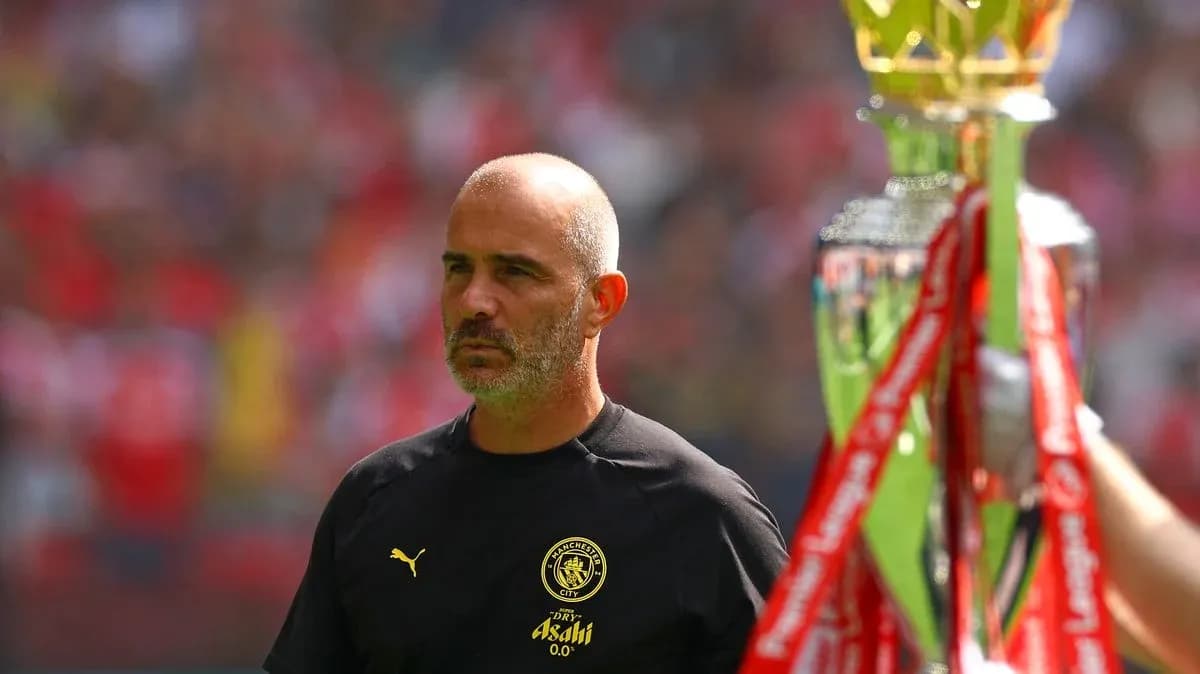
Manchester City looked nothing like a Maresca team at Wembley. Not in structure. Not in rhythm. Not in control.
After a pre-season that had sketched out a clear idea of what Enzo Maresca wants, the Community Shield performance against Arsenal felt like someone had taken an eraser to the blueprint. The patterns that had emerged on the Asia tour disappeared. In their place: a disjointed, oddly assembled side that never came close to its potential.
Yes, Arsenal are by far the strongest opponents City have faced this summer. That matters. But this was more than just the level of opposition. This was a City side that suddenly looked less than the sum of its parts, even with four of their best players thrown straight into the starting XI days after returning from holiday.
Selection shocks and mixed messages
Erling Haaland, Elliot Anderson, Nico O’Reilly and Jeremy Doku all started despite having only a handful of training sessions behind them. On paper, it looked like a manager going all-in to win his first piece of silverware. Why else rush them back when others had banked more minutes and more time absorbing Maresca’s demands?
Maresca’s explanation afterwards told a different story. This was about Bournemouth, not about the Shield.
“Sometimes players prefer to start doing the proper warm up and start from the beginning,” he said. The plan, he insisted, was always to hook them after 45 to 60 minutes. Start them, get them into a normal routine, then get them off. The priority: fast-tracking them for the Premier League opener and the early weeks of the season.
In other words, the line-up that puzzled so many City fans wasn’t purely about Arsenal. It was about August and September.
That logic made sense in theory. On the pitch, it dragged City into problems.
Anderson out wide, Kovacic exposed
Anderson’s afternoon summed it up. Days after Maresca had been crystal clear that the former Nottingham Forest midfielder is at his best as a No.6 or No.8, he was pushed into a loose right-sided role that didn’t suit him at all. It didn’t help Mateo Kovacic either, left to patrol midfield as the lone holding player and repeatedly swamped.
There were flashes from Anderson. Two excellent deliveries from the right – one for Haaland, one for Doku – hinted at his attacking quality. But they were only flashes. The experiment never looked natural, either for the player or for the system.
Just as jarring was the absence of Matheus Nunes. All summer, City have treated him as their first-choice right-back, confident enough in that plan to park any move for direct competition in the transfer market. Yet at Wembley he was nowhere to be seen, and Abdukodir Khusanov endured a difficult afternoon as part of a back line that never truly settled.
Those two calls alone tilted the game away from City. They made Arsenal’s life easier and Maresca’s job harder, and they left supporters wondering why the coach had veered away from his own pre-season logic.
The evidence of the last month suggests this is not what Maresca wants his City to look like. With Anderson restored to a central role and Nunes back in the side, the team should carry a very different balance and authority.
Grealish returns to the stage
Then came another twist: Jack Grealish.
After spending last season on loan at Everton, missing the summer tour and with City still open to moving him on before the window shuts, Grealish was not expected to be a central figure at Wembley. Yet there he was, introduced at half-time.
Those minutes might have been more valuable for someone like Rayan Ait-Nouri in terms of building a future role. Instead, Grealish got the stage – and used it. Any club weighing up a move for the £100m winger will have watched closely and will not have been discouraged by what they saw.
It felt less like a tactical decision for the long term and more like a shop window cameo that happened to be wrapped inside a major curtain-raiser.
A flunked first test – but not the full story
As a first major examination of the post-Pep era, this was a stumble. The defeat, and the manner of it, opened up fair questions about how quickly Maresca can impose his ideas and whether those ideas will stand up to the demands of a Premier League and Champions League campaign.
The performance didn’t look like a natural extension of his pre-season work. It looked like a deviation. A one-off plan that backfired.
That’s why the panic swirling around one poor 90 minutes may be overblown. So many of Maresca’s choices at Wembley were either fitness-driven or uncharacteristic of what he has shown so far that they are more likely a snapshot of a manager juggling short-term readiness with long-term structure than a preview of the season to come.
The Community Shield has always been a deceptive gauge. This one feels no different. The real verdict on Maresca’s City won’t be written at Wembley – it starts at Bournemouth.