Manchester City's New Era: Can Enzo Maresca Replace Guardiola?
For the first time in 10 years, Manchester City walk into a new season without Pep Guardiola prowling the technical area.
His exit shuts the door on the most dominant era the club has ever known: six Premier League titles, one Champions League, and a decade in which City bent English football to their will.
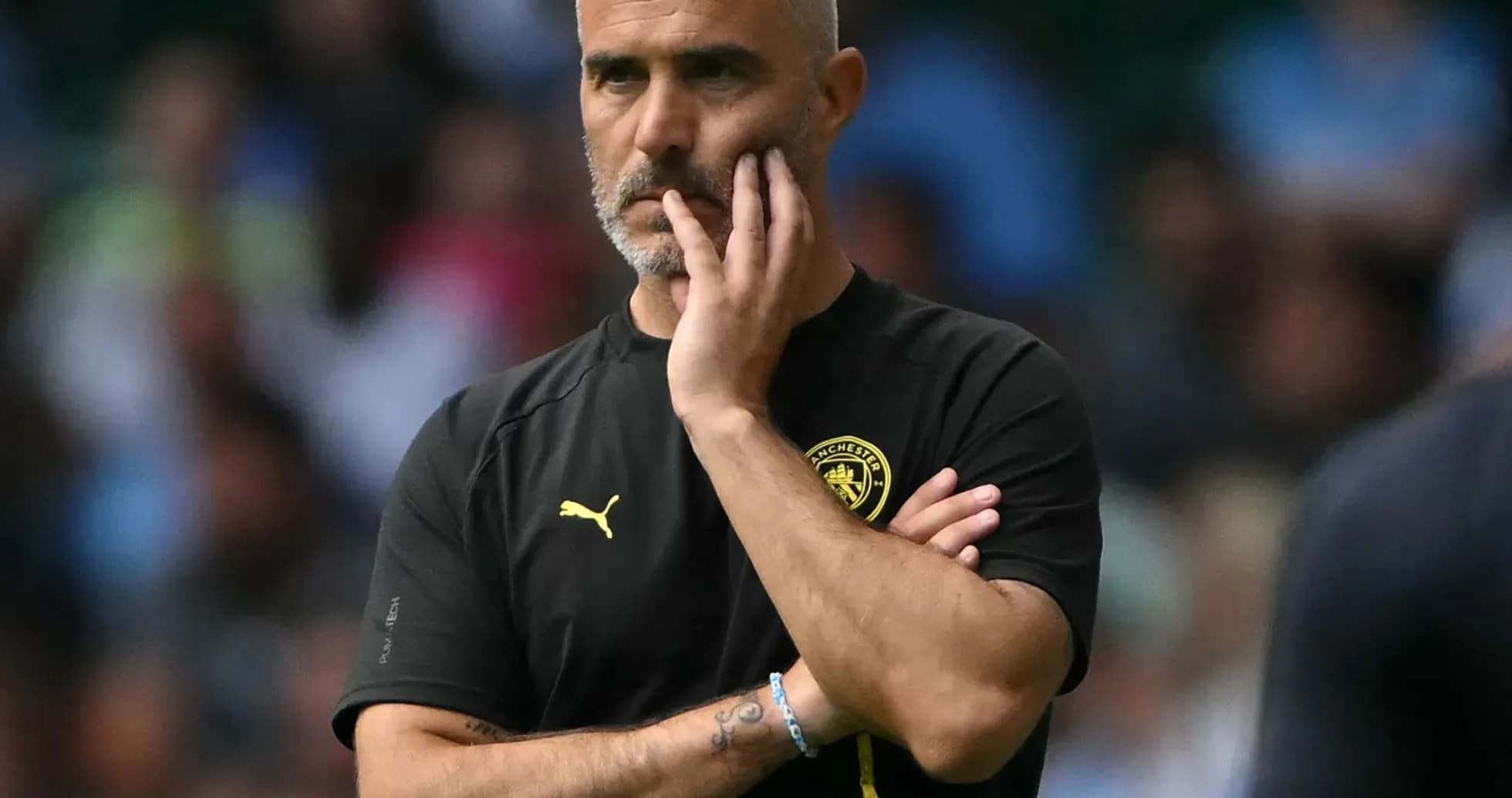
Now it’s Enzo Maresca’s turn.
The Italian steps into the glare with a squad still led by Erling Haaland and stacked with elite talent, but also into the shadow of a legend. City begin their league campaign at home to Bournemouth on Sunday, and the questions hanging over the Etihad are as big as the expectations.
Can Maresca follow a giant?
This is not just any succession. For 10 years, the club has been built in Guardiola’s image – from academy to recruitment to the way the full-backs receive the ball on the half-turn.
It’s why the comparisons with Manchester United’s post-Sir Alex Ferguson collapse have come thick and fast. When a club is so deeply tied to one man’s vision, the aftermath can be brutal.
Maresca, though, is not an outsider parachuted into chaos. He was on Guardiola’s staff during the treble season, then carved out his own path at Leicester and Chelsea. City’s hierarchy see him as continuity, not revolution. The brief is clear: keep the positional play, the control, the structure – but add a signature of his own.
That is the tightrope. City are expected to look familiar with the ball, yet Maresca cannot simply cosplay as Guardiola. He needs his own voice in the dressing room and his own solutions when games tilt against him.
There is risk. He has a reputation for clashing with players and staff, and this is a squad used to one dominant authority. The margin for error is tiny at a club that finished runners-up last season and still demands an immediate title push.
And the early evidence was brutal. His first competitive match, the Community Shield, ended in a 3-0 dismantling by Arsenal. For a fanbase already anxious about life after Pep, it was a jolt.
Life after Rodri: an impossible hole?
If losing Guardiola is seismic, losing Rodri is something close to sacrilege in footballing terms.
For years he has been City’s metronome and safety net rolled into one – dictating tempo with his passing, snuffing out danger with immaculate positioning, and anchoring everything around him. This summer he helped drive Spain to the World Cup title and took home the Golden Ball. Then he left for Barcelona.
There is no like-for-like replacement on the market. City know it.
They have tried to re-arm the midfield by bringing in England international Elliot Anderson from Nottingham Forest for a reported £116m ($153m). He offers energy, pressing, and the ability to surge from box to box. He is a powerful addition, but not a pure holding midfielder.
City are also expected to move for 18-year-old Ayyoub Bouaddi from Lille, a highly rated prospect but still raw and untested at this level.
Strip it back and the truth is stark: there is probably no better holding midfielder in the world than Rodri. He cannot truly be replaced. Maresca may have to spread his responsibilities across multiple younger players, adjust the structure, and hope the collective can mask the loss of a singular talent.
Can Maresca cure City’s late-game chaos?
City did not lose last season’s title purely on quality. They bled it away through poor game management.
Seventeen points were dropped from winning positions. For a side that once strangled games to death with the ball, that is an extraordinary leak.
Maresca has a reputation for being more pragmatic than Guardiola in certain moments. That could help. A tweak in risk profile, a more conservative approach when leading, small structural shifts – all might tighten City up.
But the personnel has changed in ways that complicate that ambition. John Stones, Bernardo Silva and Nathan Ake have all departed this summer, stripping away experience, versatility and calm decision-making in high-pressure phases.
Whether the new arrivals can deliver the same control in the final 20 minutes of matches is not a theoretical debate. It is one of the defining tactical questions of City’s season.
Is Haaland enough to carry a title charge?
As long as Erling Haaland is fit, City possess a weapon most clubs can barely comprehend.
His movement, his power, his finishing – when the team clicks, he looks unstoppable. He remains the focal point of everything City do in the final third.
But last season was a warning. Building a title bid around a single, central source of goals can be fragile. When service to Haaland dried up, City’s threat often vanished with it. Opponents crowded the middle, cut off the supply lines, and suddenly the champions looked blunt.
Omar Marmoush has arrived as support. He is a useful forward, offers work-rate and flexibility, but he is nowhere near Haaland’s level. He is depth, not a co-star.
Maresca has to diversify the attack. Rotations from midfield, more goals from wide areas, different patterns when Haaland is double-marked – City cannot afford to be so dependent on one man, however extraordinary.
Will a World Cup hangover drag them down?
As if transition and key departures were not enough, City’s pre-season has been chopped up by the World Cup.
A significant chunk of the squad went deep into the tournament, including Haaland and Jeremy Doku, with six first-team players involved in the final week. Maresca has had fewer bodies on the training pitch than he would like, at precisely the moment he needs time to imprint his ideas.
The Community Shield told its own story. Arsenal looked sharper, fresher, more cohesive. City looked heavy-legged and short of rhythm.
“I don’t know if it was physical condition, we had many players at the World Cup,” Maresca admitted afterwards. “After the first goal the reaction was very good, but after the second goal it was more complicated.”
Those are the realities he walks into: a squad in flux, a reduced pre-season, and a fanbase that has forgotten what genuine uncertainty feels like.
On Sunday, Bournemouth arrive at the Etihad. The Guardiola era is over. The questions are loud. Now we find out whether Maresca can keep City on the throne, or whether a decade of dominance is finally about to crack.