Manchester United's Defensive Woes Cost Them Again
Manchester United let it slip. Twice.
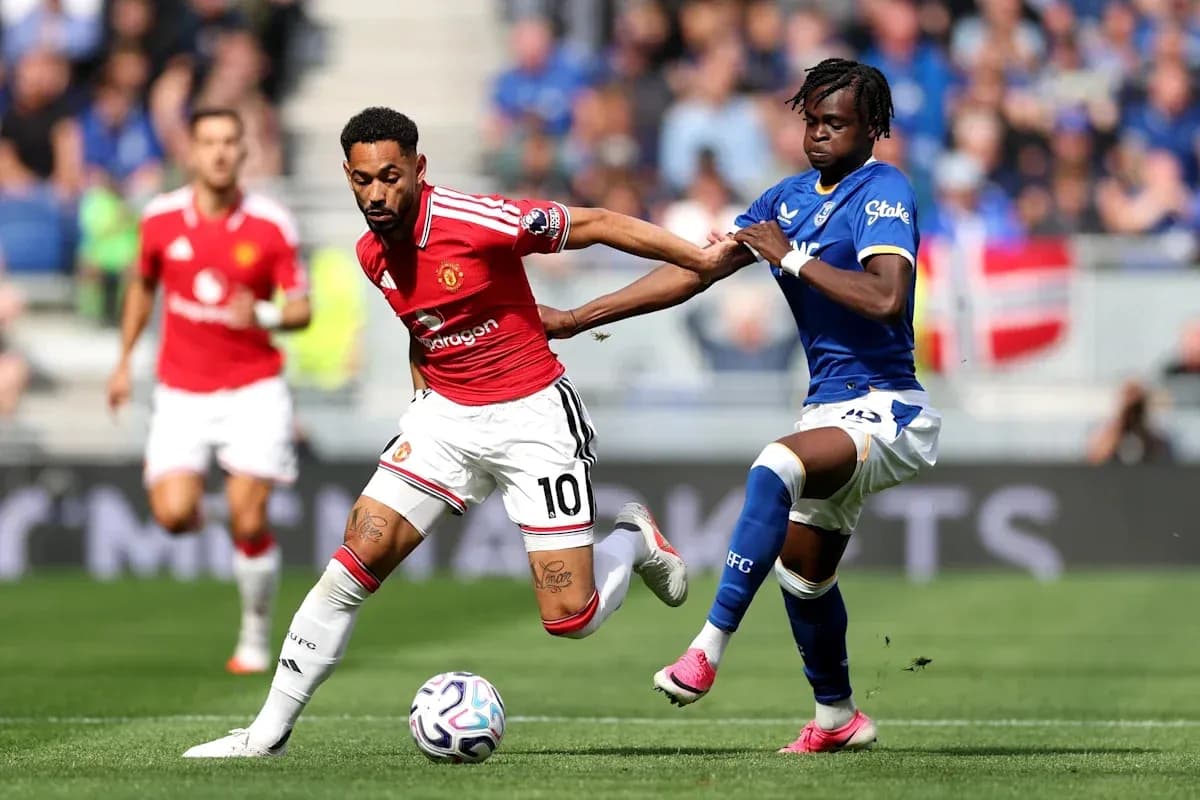
Michael Carrick’s side walked out of Goodison Park with a 2-2 draw that felt a lot like a defeat, after once again losing control of a game they had in their hands and watching another long‑range rocket rip into the top corner in stoppage time.
They did plenty right. They just did not finish – not attacks, not phases of pressure, not the match.
Everything but the finish
United’s football for long stretches was sharp. The first half had purpose and structure, and twice they found ways to strike after restarts to edge themselves in front. The patterns were there, the combinations clicked, and three creative forwards stitched together some impressive attacking moves.
But there was a glaring hole where a ruthless No 9 should be.
United moved the ball well into the final third but lacked a true presence in and around the box. No one consistently attacked the six-yard area, no one dominated the penalty spot. The build-up was neat; the final action was missing.
Benjamin Sesko’s return to fitness at least offered a glimpse of what they lack. His late header from a Luke Shaw cross in the 88th minute looked like the winner and showed exactly the kind of penalty-box instinct this side has been crying out for. Bryan Mbeumo’s potential return to a central striker role could offer another route, while Amad’s absence from right wing duty continues to be felt. Shea Lacey may still be a step away from being ready, and Matheus Cunha on the right does not appear to be part of Carrick’s plans.
The attacking puzzle, though, is only half the story. United have now conceded two goals in each of their opening three league matches. Hull City, Ipswich Town and now Everton have all put two past them. That is not an early-season quirk; it is a pattern that demands a tactical rethink until the squad regains some balance with returning personnel.
Back four on the brink
The numbers are stark: six goals conceded in three games, and this time against an Everton side that has hardly been free-scoring.
There were, oddly, individual steps forward. Luke Shaw delivered his best performance of the campaign so far at left back. He threw himself into key blocks, overlapped Marcus Rashford with energy and delivered several dangerous crosses, one of which Sesko buried late on.
Yet even Shaw’s improved display came with a costly lapse. On 83 minutes, with United 1-0 up, he drifted too far inside, leaving Tyrique George unmarked on the left. George took the invitation, hammered a shot high into the near-post top corner and dragged Everton level. Arne Lammens got a hand to it and might feel he could have done better, but the ball still ripped into the net.
Shaw was not alone in his inconsistency. Harry Maguire, Lisandro Martinez and Diogo Dalot all fell short of the required standard. As a unit, they allowed Everton far too many looks at goal.
Maguire was fortunate when Thierno Barry headed over from close range in the 42nd minute after losing his man – a chance that should have punished United. In first-half stoppage time, Dalot’s attempted clearance from the edge of the box went straight to Jarrad Branthwaite, who bailed United out by firing directly at Lammens. Later, a mis-hit Dalot cross in midfield left Shaw and Martinez scrambling to recover against Brennan Johnson before they eventually managed to block his effort over the bar.
The bigger concern came with game management. Protecting a 1-0 lead for much of the second half, United retreated. They stopped pressing with conviction, sat deep and invited Everton to play. The home side dominated the ball, wave after wave, while United seemed content to soak it up rather than kill the contest.
That passivity opened the door for the spectacular. George took advantage first. Then, deep into stoppage time, Everton kicked it off its hinges.
Carrick’s response to the equaliser was to change both fullbacks, introducing Noussair Mazraoui on the left and Leny Yoro on the right. The reshuffle only added to the chaos. In the 90th minute, Mazraoui lost George at the back post, allowing him another crack at the near post that Lammens saved, with the flag eventually bailing United out for offside.
The warning went unheeded.
Five minutes later, with virtually the last attack of the game, Hayden Hackney glided past Yoro far too easily on the flank and rolled the ball inside to Kiernan Dewsbury-Hall. Mazraoui swung a desperate clearance at Dewsbury-Hall’s ball, only to slice it straight to Ainsley Maitland-Niles on the edge of the box. Maitland-Niles unleashed a stunning strike, a Puskas-level hit, that flew into the top corner and salvaged a point for Everton.
Carrick’s changes at fullback did not work. The uncomfortable question is whether keeping Dalot and Shaw on would have changed anything, or whether this back line, in any combination, is simply too fragile right now.
Matthijs de Ligt is edging towards his first appearance since November 2025 and could soon offer another option in central defence. Yet there is no guarantee that one returning centre-back fixes a system that keeps leaking chances. Ayden Heaven is another name who could come into the conversation for more minutes, but the broader issue remains: whoever plays, United are finding it almost impossible to shut teams out.
Structural flaw, not just bad luck
The defensive problems are no longer a subplot. They are the story.
United’s midfield looks more modern and more comfortable on the ball. The front line, even with its lack of penalty-box teeth, still carries plenty of creative threat. There are positives in the way they build play and move teams around.
But the balance of the squad feels off. The summer’s attention fell heavily on reshaping the midfield. The fullback areas, by contrast, look like they were left largely untouched – and they are now the most obvious weakness.
Shaw still offers quality, but he no longer has the recovery pace to sprint his way out of trouble when United commit bodies forward. Dalot faces a similar problem on the opposite flank. Every time they are caught high, the centre-backs are exposed, dragged into wide channels and forced to defend huge spaces in foot races they do not always win. Better sides will target those areas relentlessly.
United can talk about progress in possession and flashes of attacking fluency. They can point to Sesko’s impact and the promise of more goals once the forward line fully clicks. But if the back four continues to creak like this, all that good work will keep evaporating in the final minutes.
That is the reality Carrick takes into United’s first Champions League match of the season: a team that can score, a midfield that can control, and a defence that, right now, cannot be trusted to hold the line when it matters most.