Manchester United’s £150m Midfield Rebuild: One Big Question Remains
Manchester United tore up their attack last summer. This year, they’ve ripped out the heart of the team.
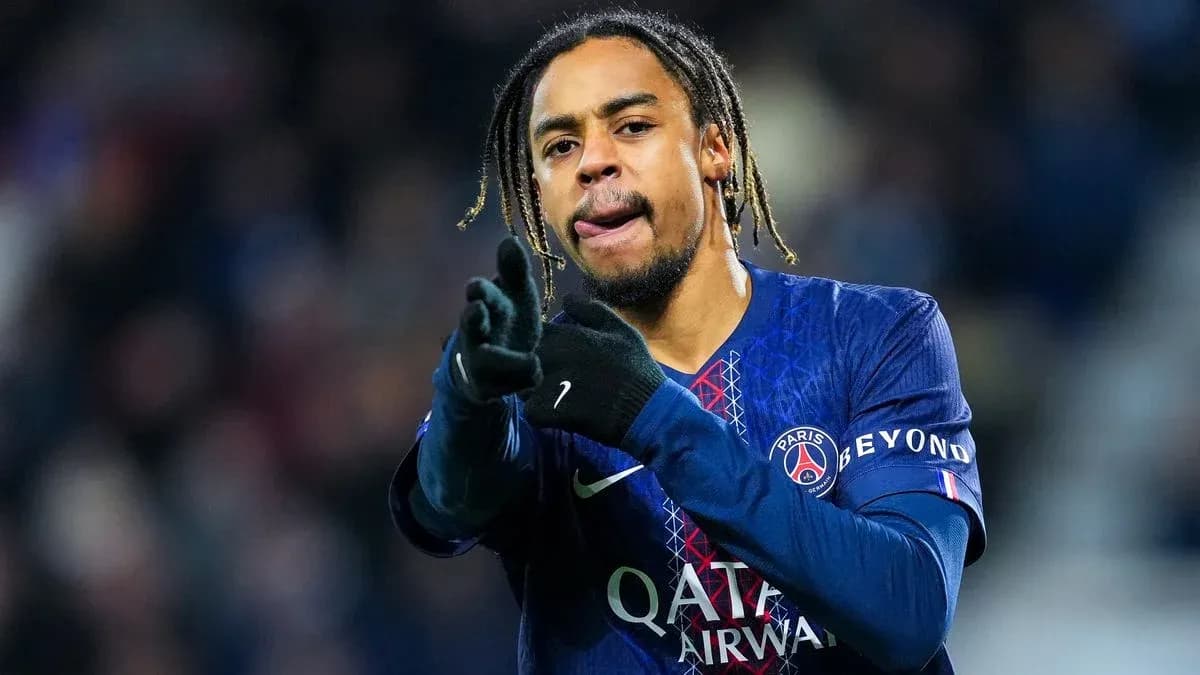
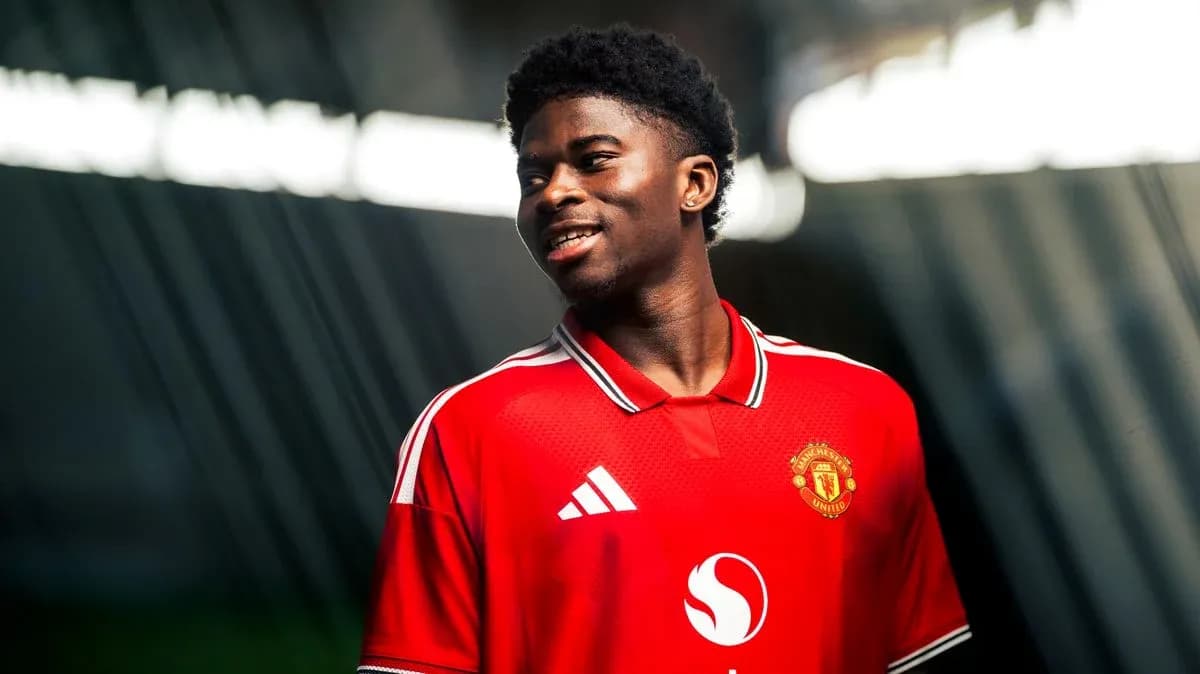
With Carlos Baleba’s arrival on Tuesday, United have now spent more than £150million on a brand new midfield, adding the Cameroon international to Andrey Santos and Youri Tielemans. The message from Old Trafford is blunt: this is where the next version of United will be built.
Baleba’s deal, worth up to £70m, also tells a story of timing and risk. Brighton once wanted north of £100m for him when United were circling in 2025. Back then, he looked like the next Moises Caicedo-level windfall on the south coast. An underwhelming 2025/26 campaign has dragged that price down and turned what was once a sure-fire mega sale into a calculated gamble.
United have decided it’s a gamble worth taking.
The profile United have been chasing
For years, United have chased a true anchor in midfield and kept coming up short. Casemiro arrived with pedigree but ended up playing higher and higher up the pitch in his final season. Manuel Ugarte brought bite but also his own limitations. The balance was never quite right.
At his peak, Baleba looks like the answer to that imbalance. He can sit, he can cover ground, and he can let others play. He gives Michael Carrick the option to flip between systems without ripping out the core of the team every time.
The numbers from his breakout 2024/25 season at Brighton back up the eye test. He completed 79 tackles in the league, joint 25th in the Premier League and just behind Casemiro and Bruno Fernandes. That alone doesn’t capture his impact.
Per Fotmob, he ranked 14th in the league for interceptions per 90 minutes, averaging 1.6. Among United players, only Harry Maguire bettered that figure. Baleba hit the same 1.6 per 90 last season as well, though his total interceptions fell from 46 to 29 as his overall level dipped.
Rio Ferdinand has seen enough to be convinced.
“He brings that ability to get around the pitch, that physical prowess,” the former Champions League-winning centre-back said on YouTube. “I think his duels power is great, his press resistance, and I think more so than most of the others.
“He can beat the press with the ball but his vertical ball progression with the ball especially... is an asset to this team now and he can do it with real pace. I think he complements every other one of those midfielders he's coming into the team with. Whoever he plays with, he complements them.”
That is the theory. A midfielder who can win the ball, carry it and punch passes through the lines, all while freeing up the technicians around him.
But theory is one thing. Last season is another.
The shadow of 2025/26
Any conversation about Baleba comes with a caveat. His 2025/26 season simply wasn’t good enough for a player who had been valued in nine figures.
Critics will not let that go easily. Nor should they. United are paying elite money for a player who must prove that his dip was the blip, not the benchmark.
Brighton boss Fabian Hurzeler offered some context as the campaign unfolded. The United interest, he suggested, seeped into Baleba’s head.
“For sure, when a young boy reads there is interest from Manchester United with a big, big offer, it might affect him deep, deep (down),” Hurzeler said early in the season. “That’s also part of the development to understand that when you play well, there comes a big offer, there comes a big club who wants to have him.
“But then to keep pushing, to be humble, stay here in Brighton, and try to make the next step with the team and that’s something we have to keep on working with him and therefore I can’t give you a clear answer if it’s really affected him or not. But for sure, he’s a young boy and we need to understand he’s not a machine that if you click on then he always runs and off then he stops. We need to understand his feelings, his emotions, where he comes from, and that’s our responsibility.”
Baleba’s season was also cut up by the Africa Cup of Nations. He disappeared to AFCON in December, lost rhythm and returned to a Brighton side that was evolving without him. That particular disruption won’t be in play this time.
Even in a stuttering year, he still logged 1,662 league minutes. The season before, in 2024/25, he racked up 2,673. Durability, at least so far, sits firmly in his column.
A new engine room, but how robust?
If Baleba is the battering ram and the metronome, the rest of United’s midfield rebuild looks more delicate.
Tielemans, Kobbie Mainoo and Santos all arrive at this season with relatively light workloads behind them. That can be spun as a positive: fresh legs, fewer miles in the tank. It can also be read as a warning.
Tielemans played 1,863 minutes for Aston Villa last season, his year broken up by two separate injury lay-offs. Mainoo totalled 1,654 minutes, used sparingly before Carrick’s appointment. Santos managed 1,255 league minutes for Chelsea, although he edged ahead of Mainoo when all competitions are counted.
Three talented midfielders, none of them tested week after week across a brutal Premier League season. Now they must adapt to new surroundings, new partners and the expectation that United’s midfield finally stops being a problem.
Baleba’s workload stands out against that backdrop. His ability to absorb minutes could be the hinge on which Carrick’s plans swing. If he stays fit, he can set the platform and allow rotation around him. If he doesn’t, the entire structure begins to look fragile.
There is an immediate complication. Baleba arrives injured. United fans will need to wait before they see him patrolling the Old Trafford pitch. The club knows that, and Carrick will be wary of rushing a player whose physicality and intensity are central to his value.
Carrick, control and the next step
For Baleba, the move comes with a clear reference point in the dugout.
“I cannot wait to work with Michael Carrick; his experience and knowledge of the game make him the perfect coach to help me to reach the highest level,” he said after sealing the transfer.
Carrick, the former United midfielder who made a career out of subtle control, now has a player whose profile he knows intimately: a deeper midfielder with the legs to cover space and the composure to play through pressure.
Baleba has already shown he can do the dirty work. He has already shown he can carry the ball and punch it forward at speed. The question is no longer about talent. It’s about consistency.
United have spent big to build a new midfield from scratch. They have their ball-winners, their passers, their prospects. On paper, it fits.
Now Baleba has to prove that last season was the exception, not the start of a trend — because if he doesn’t, this expensive rebuild risks being remembered not for what United fixed, but for the one hole they still couldn’t fill.