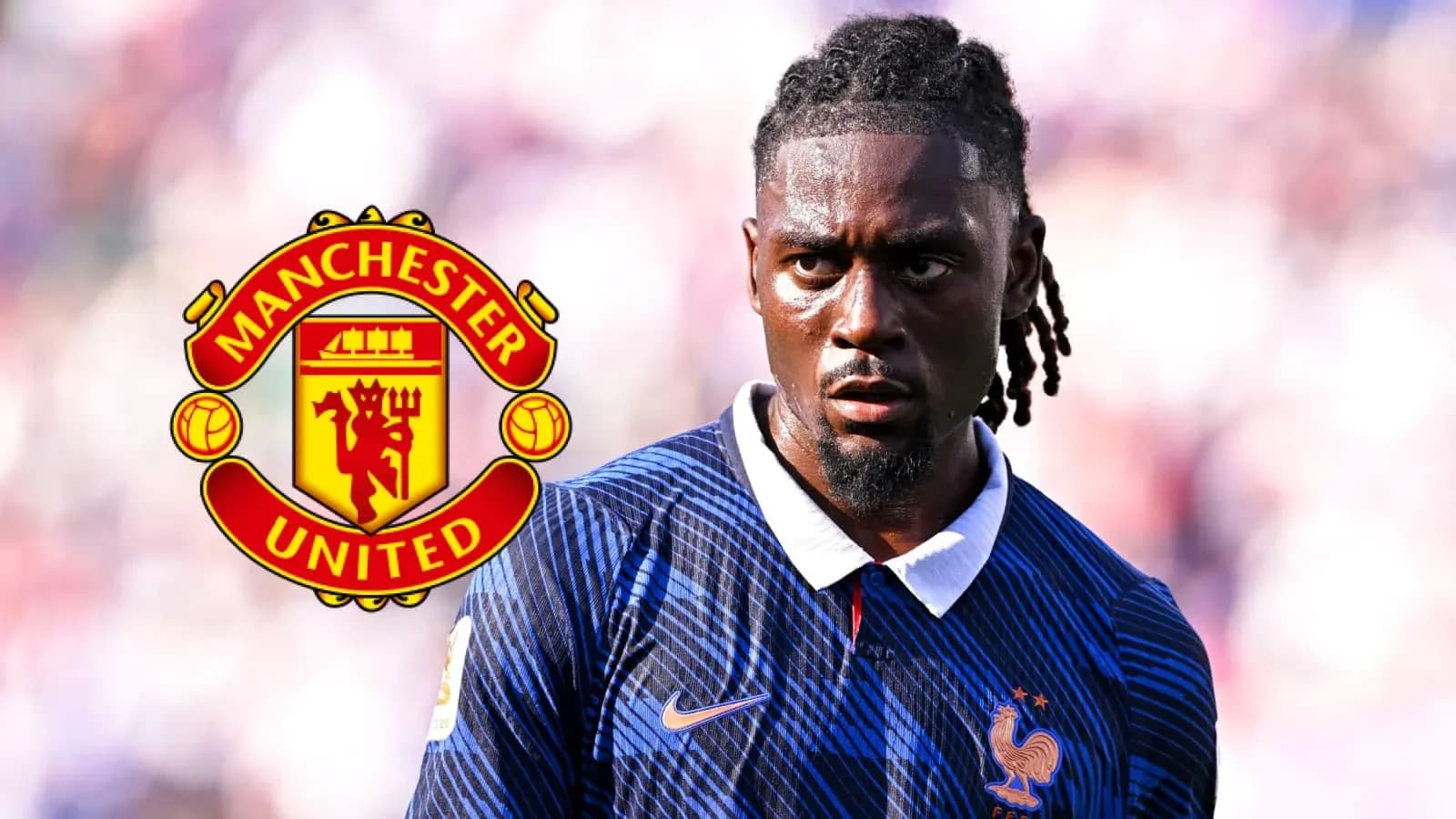
Manu Kone: The Miscast Midfielder Manchester United Needs
Manchester United’s midfield rebuild has moved quickly, decisively, and with a clear idea in mind. But if the final piece of that plan is Manu Kone as a pure holding midfielder, they are about to miscast a very good player.
Andrey Santos and Youri Tielemans have arrived to soften the blow of Casemiro’s exit and Manuel Ugarte’s serious injury. On paper, the numbers add up again. Premier League experience? Ticked off. Fresh legs? Ticked off. The squad list looks healthier.
The structure doesn’t.
United still lack one thing: a specialist who lives in front of the back four. Michael Carrick, now the manager tasked with solving the problem, desperately needs a version of the player he once was.
Carrick never flew into tackles like a traditional destroyer. He dictated, screened, and occupied that crucial strip of grass between defence and midfield. He is proof that there are many ways to be a defensive midfielder – and that is exactly where the danger lies with Kone.
A midfielder mislabelled
Kone has been one of France’s standout performers at the World Cup, the kind of global stage that can distort reputations in both directions. This time, it has simply shone a light on what he already is: a powerful, modern central midfielder entering his prime.
At 25, with three seasons in the Bundesliga at Borussia Monchengladbach and two in Serie A with Roma, Kone is no longer a project. Roma see him as a cornerstone. He arrived on deadline day in the summer of 2024 and immediately gave their midfield a jolt of energy.
Not by sitting. By running.
His first Serie A season was defined by those surging, territorial carries. Kone would collect the ball, turn, and thunder up the pitch, brushing off challenges and dragging his team into the opposition half. He played like a No 8, not a No 6.
The second year in Italy complicated the picture. Gian Piero Gasperini walked through the door, bringing with him that familiar, high-octane, man-to-man system honed at Atalanta. Many assumed Kone would be a natural fit, a pressing machine unleashed in midfield.
Gasperini saw something else.
He often asked Kone to drop into the defensive line during build-up, to plug gaps, to help structure possession rather than constantly break lines with the ball at his feet. The runs were still there, but they were rationed. His impact became more understated, more positional than explosive.
He still had a good season. Just not the kind of season that screams “anchor”.
That is the crux for United. Kone can operate deeper. He can “do a job” there. But if you chain him to the centre circle, you strip away the very thing that makes him stand out.
United’s habit of getting it wrong
This is not a new problem at Old Trafford. The club has form when it comes to miscasting midfielders.
The Fred–Scott McTominay double pivot became a symbol of tactical compromise: two energetic, willing players asked to occupy roles that did not maximise their strengths. The partnership never looked natural, and United have been scrambling to correct the balance ever since.
Casemiro, for a time, felt like the answer. He produced big performances, big moments, and leaves with his reputation intact. Yet the ideal version of that signing would always have been Casemiro five years younger than the 30-year-old who arrived in 2022.
Ugarte was the next attempt, his elite tackling numbers at PSG in Ligue 1 treated as a direct translation to England. It has not worked that way.
Now Santos and Tielemans are through the door, both clearly intended as part of the midfield rotation rather than as a lone sentinel. That is where Kone enters the conversation. United appear to see him as the player who can sit deepest and glue everything together.
He can, on occasion. But it comes at a price.
Last season, even in a more restrained role under Gasperini, Kone still ranked in the 78th percentile among Serie A midfielders for the average distance of his progressive carries. That is with the handbrake half on. Allow him to roam box-to-box and you unlock something far more dangerous.
Strengths, flaws, and the price of potential
Kone is not a complete midfielder. If he wants to become a true all-court No 8, one weakness stands out: his finishing.
Four goals in 82 games for Roma tell the story. In the final third, he often lacks conviction, the kind of cold, decisive edge that turns a good midfielder into a headline-maker. Gasperini said as much in December, when Kone scored his first goal of the 2025–26 campaign, noting that if he found more goals, he would already be at another level – and probably at another club.
Since that strike, he has played 22 times for club and country and scored only once more. The numbers reinforce the idea that he is not an attacking midfielder by trade, and they feed the lazy assumption that he must therefore be a defensive one.
He is neither. He is a central midfielder who can defend, carry, and compete, but who still has clear areas to refine.
That raises the obvious question: what is a fair fee for a player whose output in goals and assists is modest?
The current market makes that almost impossible to judge. Elliot Anderson delivered fewer than 10 goal contributions last season and still commanded £116m when he joined Manchester City. Spurs paid £85m for Mateus Fernandes, another all-round midfielder United considered before backing away.
Roma will not sell Kone cheaply. They rejected around £38m from Inter last year and, after his World Cup displays, are expected to demand £50m or more. Any club paying that needs to be crystal clear about what they are buying.
And what they are not.
The details that still need work
Kone’s game without the ball, when his side are in possession, also needs sharpening. Too often last season he failed to drift into the right pocket to offer a passing angle, or he moved in a way that blocked a team-mate’s lane instead of opening one.
As a lone defensive midfielder, those details are unforgiving. Positional awareness in that role is non-negotiable. One step too high, one shuffle too wide, and the whole structure bends out of shape.
United’s 4-2-3-1 does offer a compromise. In a double pivot, Kone could share duties with Tielemans or Santos: one sits, one goes. Rotate the roles, keep the opposition guessing, and you might get the best of both worlds.
The balance would have to be exact. Not one fixed holder and one permanent runner, but a genuine partnership. When Tielemans roams, Kone stays. When Kone surges, Tielemans locks the door. Simple in theory, far harder in the chaos of a Premier League midfield.
The template already exists. With France at the World Cup, Kone has operated alongside Adrien Rabiot and Aurelien Tchouameni, both comfortable anchoring when required so that he can switch between pressing, carrying, and supporting the attack. At Roma, Bryan Cristante often provided that security, even if the Italian himself pushed on at times.
Give Kone that kind of platform and you see the full range of his game. Deny it, and you get a diluted version.
The Premier League question
United are not alone in circling. Atletico Madrid have been linked. Arsenal’s name has surfaced. Liverpool’s interest, first registered during his Bundesliga days, has never fully disappeared.
Each destination offers a different answer to the same question: what is Manu Kone?
At Arsenal, the presence of Martin Zubimendi as a fixed anchor could free Kone to play in the same way Declan Rice did when he first arrived – nominally a holding midfielder, actually a force driving forward from deeper areas. But Arsenal’s gaze appears to have shifted towards Bruno Guimaraes.
Liverpool might be the more realistic alternative. They, too, are searching for a No 6, yet if Andoni Iraola settles on a 4-2-3-1, Kone could dovetail with someone like Ryan Gravenberch, again in that shared-responsibility pivot.
Wherever he lands, one truth cuts through the noise. Kone is a high-level midfielder with obvious qualities and clear flaws, but with time on his side to close the gaps.
If this is the summer he crosses into the Premier League, someone will be getting a serious player.
The only question that matters now is whether that club understands he is not the lock on the door, but the one who runs through it.