Matt Crocker Leaves U.S. Soccer for Saudi Arabia Role
Matt Crocker is walking away from U.S. Soccer on the eve of its biggest moment in a generation, trading a central role in the 2026 World Cup project for a powerful post in Saudi Arabia.
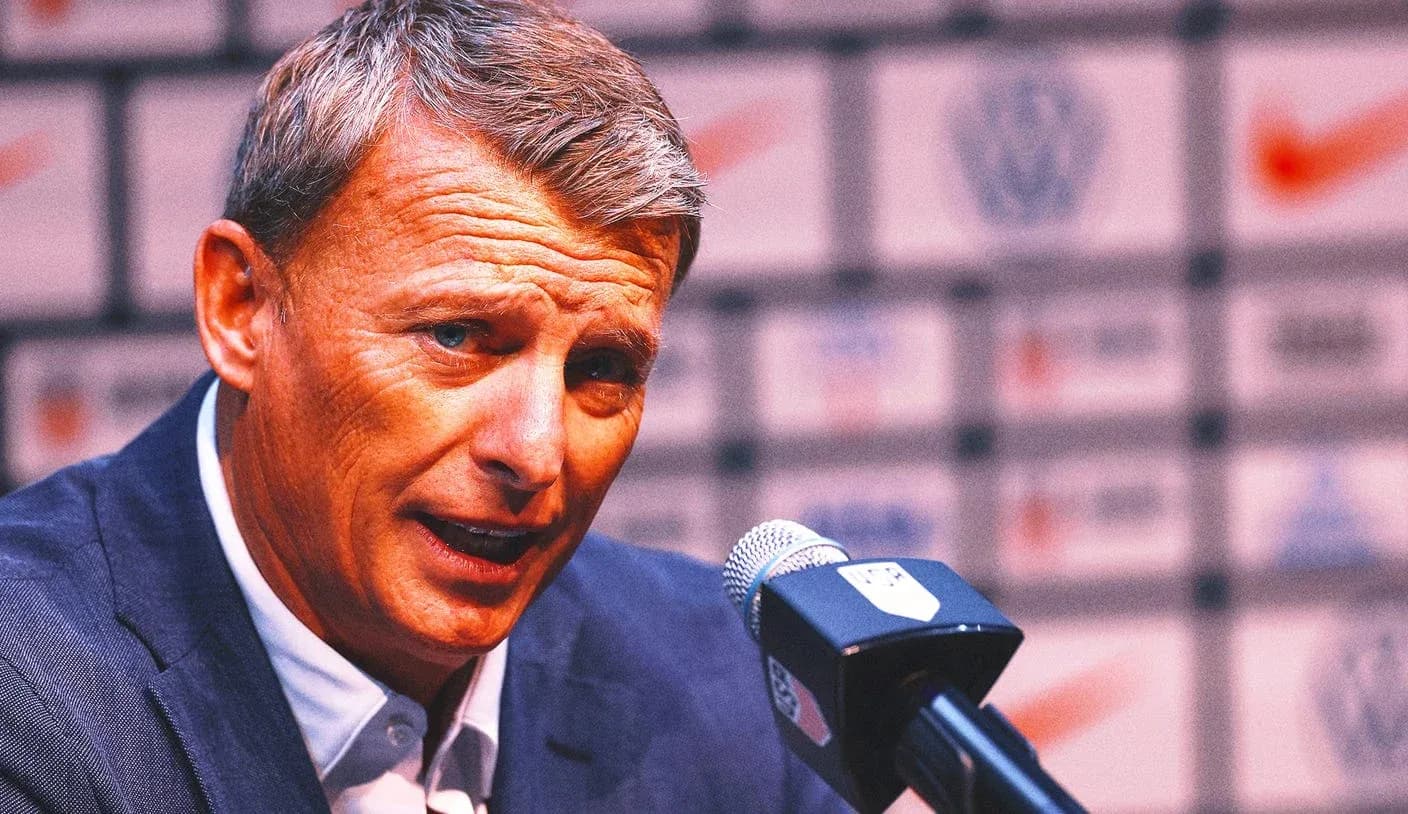
The move is immediate. There is no farewell tour, no gentle glide to the finish. Multiple sources confirmed on Monday that the federation’s sporting director is departing to take a similar position with Saudi Arabia, a nation already gearing up to host the men’s World Cup in 2034.
Inside U.S. Soccer House, the response has been swift. Assistant sporting director Oguchi Onyewu, head of women’s development Tracey Kevins and COO Dan Helfrich will share Crocker’s responsibilities through the World Cup, which the United States will co-host with Canada and Mexico this summer. The handover lands just weeks before Mauricio Pochettino’s side opens its campaign against Paraguay on June 12 in Los Angeles.
Helfrich insists the timing won’t derail anything.
“I anticipate zero impact on World Cup preparation as a result of Matt's decision,” he said on Monday. “Mauricio and his staff have full control of the preparations for this summer's tournament, and we have full confidence in them. This transition in no way impacts those plans, which have been long-established.”
The federation has already launched what Helfrich called “a thoughtful and comprehensive search for a successor,” casting its net both in the U.S. and abroad. Onyewu, a two-time World Cup defender who was in the frame when the job went to Crocker three years ago, now steps back into the spotlight as a key figure in the interim structure.
Crocker’s brief, turbulent reign
Crocker arrived from Southampton in 2023 and wasted little time reshaping the federation’s on-field leadership. Hired after Earnie Stewart left for PSV Eindhoven, the Cardiff-born executive inherited a men’s program without a coach and a women’s side reeling from its worst World Cup showing.
The men’s bench was empty, Gregg Berhalter stuck in limbo after the very public fallout involving Gio Reyna’s family. Crocker eventually brought Berhalter back, only to dismiss him a year later in July 2024, days after the U.S. became the first Copa América host ever to crash out in the group stage. It was a ruthless decision, but one that underlined the urgency around 2026.
On the women’s side, Crocker’s biggest swing hit cleanly. In the wake of the U.S. women’s early exit at the 2023 World Cup in Australia and New Zealand, he landed Emma Hayes from Chelsea. The impact was immediate. In just her 10th match in charge, Hayes led the USWNT to Olympic gold in Paris, beating Brazil in the final and restoring the program to the summit of the women’s game.
Those two hires defined Crocker’s tenure: one that ended in a brutal reset, another that delivered a fifth Olympic title and a surge of optimism.
A résumé built for World Cups
Crocker’s next destination explains why Saudi Arabia pushed so hard. He has now helped steer two federations toward home World Cups. His time with England’s Football Association as head of development, his work at Southampton, and his central role in U.S. Soccer’s 2026 blueprint formed a portfolio tailor-made for a nation preparing to host the world in 2034.
His fingerprints are also on the bricks and mortar of the American project. Crocker played a major role in the planning and design of the Arthur M. Blank U.S. Soccer National Training Center near Atlanta, a $228 million complex that opens next month. The facility will serve as the U.S. men’s base before their final two pre-World Cup friendlies: Senegal on May 31 and four-time champion Germany on June 6.
Saudi Arabia, meanwhile, is reshaping its own technical structure. Long-serving technical director Nasser Larguet, in post since 2002, is expected to depart this month, clearing the path for Crocker’s arrival as the kingdom accelerates its preparations for 2034.
“If you're going to compete at the highest levels in the sporting world, you expect that team members will have other opportunities,” Helfrich said. “Soccer in our country and the federation overall are in a better place than several years ago when Matt joined, and we're grateful to him for those contributions.”
A World Cup subplot in waiting
The story may not end with Crocker’s exit. It could twist again on the field this summer.
Several plausible routes exist for a U.S.–Saudi Arabia showdown at the 2026 World Cup, turning the former U.S. sporting director into an off-field figure at the heart of an unlikely narrative.
If Pochettino’s side wins Group D and advances to the round of 16, the Saudis could be waiting in Seattle on July 6. If both teams finish second in their groups and then win in the new round of 32, they would meet in Atlanta on July 7. If each nation scrapes through as a third-place finisher and survives its first knockout game, the collision point becomes July 4 in Philadelphia.
There is a more glamorous path too. Should both countries top their groups, they would be set on a quarterfinal course for July 10 in Los Angeles. In theory, the 16th-ranked United States and No. 61 Saudi Arabia could even cross paths in a semifinal or the World Cup final itself on July 19 in East Rutherford, New Jersey.
History says that is a long shot. The Green Falcons have reached the knockout rounds only once in six previous World Cup appearances, back in 1994—the last time the United States played host.
But this summer, as the U.S. walks into a home World Cup without the sporting director who helped build the runway, the sport has a habit of throwing up exactly these kinds of storylines.