Matt Crocker Leaves U.S. Soccer for Saudi Arabia Role Ahead of World Cup
U.S. Soccer’s carefully built World Cup project has just lost its chief architect.
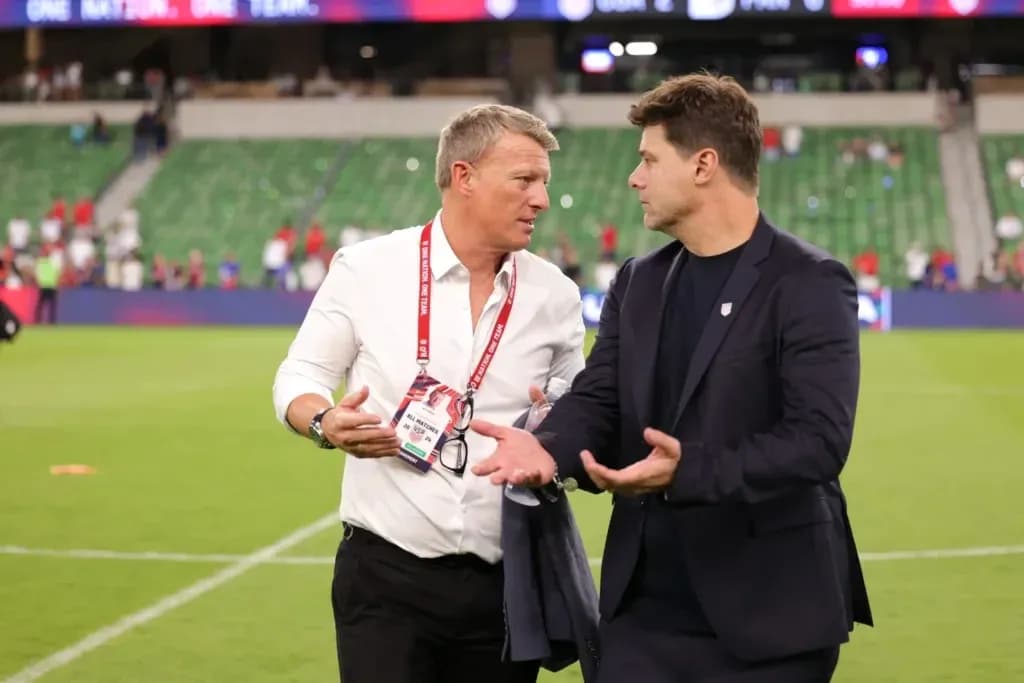
Matt Crocker is stepping down as the federation’s sporting director with immediate effect to take a similar job with Saudi Arabia, multiple sources confirmed on Monday, leaving a major hole at the top of the organization just months before the United States hosts the 2026 FIFA World Cup alongside Canada and Mexico.
The timing is jarring. The U.S. men open their World Cup campaign on June 12 against Paraguay in Los Angeles. Yet the federation insists the plan is intact.
Power vacuum, rapid response
With Crocker gone, U.S. Soccer has moved quickly to spread his responsibilities across a small internal committee. Assistant sporting director Oguchi Onyewu, head of women’s development Tracey Kevins and COO Dan Helfrich will collectively assume his duties in the run-up to the tournament.
Helfrich, who now becomes a central figure in the transition, pushed back on any suggestion that the World Cup buildup could be derailed.
“I anticipate zero impact on World Cup preparation as a result of Matt's decision,” he said Monday in an exclusive interview. “Mauricio and his staff have full control of the preparations for this summer's tournament, and we have full confidence in them. This transition in no way impacts those plans, which have been long-established.”
The message is clear: the technical and logistical work for 2026 is already baked in. The coaches run the football side; the machine keeps moving.
Crocker’s brief but decisive tenure
Crocker arrived in April 2023 from Southampton, then in the English Premier League, stepping into the role vacated by Earnie Stewart. Stewart, a three-time World Cup participant and National Soccer Hall of Fame inductee, had left to become director at Dutch club PSV Eindhoven. The Welshman from Cardiff barely paused to adjust.
He took over as U.S. Soccer’s chief on-field executive and immediately set about reshaping its two flagship programs. His legacy will be defined by two high-profile hires that changed the federation’s trajectory.
On the women’s side, he secured Emma Hayes, prising one of the most respected managers in the global game away from Chelsea. Hayes did not take long to justify the move, guiding the U.S. women’s national team to a fifth Olympic gold medal at the 2024 Summer Games in Paris. It was a statement of intent after a turbulent period for the program.
On the men’s side, Crocker landed Mauricio Pochettino in September 2024. The Argentine arrived with heavyweight credentials from Chelsea and Paris Saint-Germain, and his appointment signaled U.S. Soccer’s willingness to operate at the very top end of the coaching market.
Those two decisions alone underscored why Crocker had been so coveted when he was hired. Now they form the spine of what he leaves behind.
Onyewu back in the frame
The reshuffle also brings Oguchi Onyewu back into a conversation he knows well. The former U.S. defender, who represented the national team at the 2006 and 2010 World Cups, was a serious candidate for the sporting director role before Crocker ultimately got the job three years ago.
This time, he will not just be an outsider interviewing for the position; he will be one of the key figures holding the fort while U.S. Soccer determines its future structure. His playing pedigree and growing front-office experience make him a natural part of any succession talk.
Helfrich confirmed the federation is not standing still.
He said U.S. Soccer has already launched “a thoughtful and comprehensive search for a successor” and stressed the scope of that search will be wide. “I anticipate we will look both domestically and globally in that process,” he said.
The hunt will unfold against the backdrop of a home World Cup and a sport that has never had more attention in the United States. Every decision will be magnified.
A project built to outlast one man
Crocker’s departure will sting, not least because of its abruptness and the lure of Saudi Arabia’s growing football project. Yet the structure he helped put in place is designed to be bigger than any one executive.
The U.S. women are Olympic champions again under Hayes. Pochettino has been given the keys to a men’s side that believes it can make a genuine impact on home soil. The competitive calendar is locked in, the preparation windows mapped out, the World Cup opener against Paraguay already looming on the horizon.
U.S. Soccer now has to prove something it has often preached: that its long-term vision can survive sudden change at the top.