Mauricio Pochettino's Future with US Men's Soccer: A 2030 Commitment?
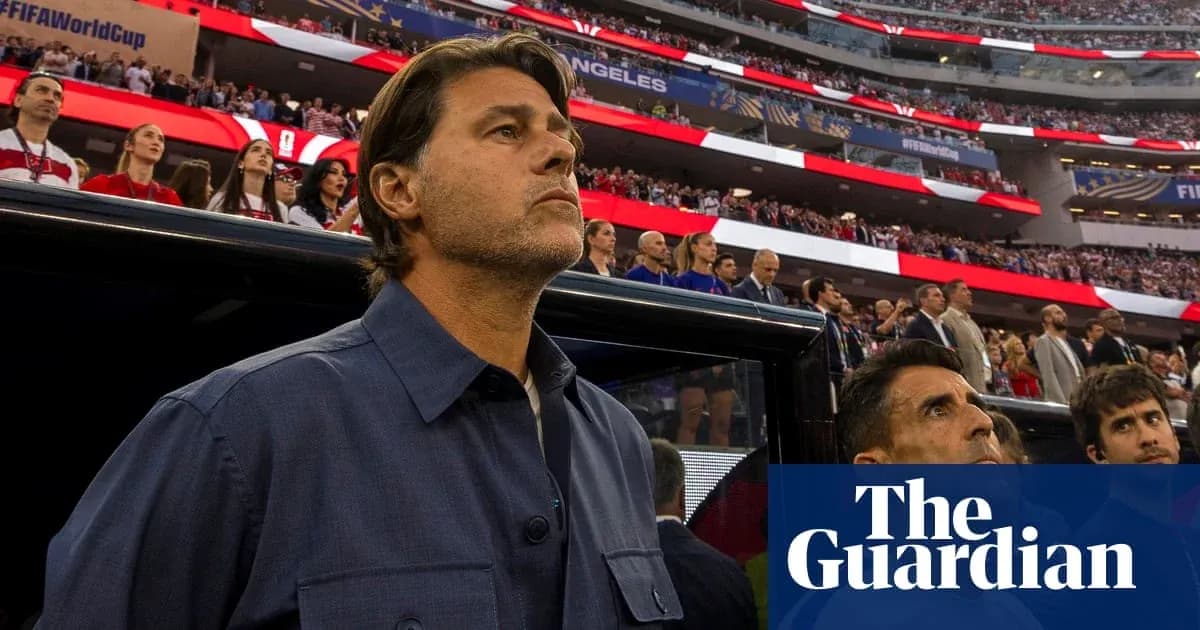
Mauricio Pochettino has been handed the keys to the future of US men’s soccer. Now the country waits to see if he wants to drive it all the way to 2030.
Multiple sources have confirmed that US Soccer has put a contract extension on the table that would keep the Argentinian in charge through the 2030 World Cup. It is a bold offer, one that underlines how firmly the federation has tied its ambitions to a coach who, less than two years ago, had never worked in the international game.
This is not a sudden move. Talks have been rumbling in the background for about three months, according to one source familiar with the negotiations. Pochettino and US Soccer CEO JT Batson have both acknowledged those discussions in recent weeks, even as speculation swirled about the coach’s future and reports emerged of conversations with Milan.
Pochettino batted away questions about the Serie A club with his usual caution. Batson did not. He admitted the federation had fielded “many inquiries” from teams interested in prising Pochettino away, and painted a picture of a coach fully invested in the American project.
“[Pochettino], and the entire team, has been incredibly transparent [through] the entire process,” Batson said in May. “He had standing offers from other places to come [when we hired him initially], and he wanted to be here. He’s a big believer in what we’re doing at US Soccer. He’s a big believer in soccer in America, and he’s a big believer in this men’s team.”
For now, though, Pochettino is in no rush to sign anything. He has been clear: no decision until after the World Cup. His current deal already places him among the highest-paid coaches in the sport, with publicly available figures listing his salary at around $4m a year, heavily boosted by performance bonuses. The Athletic first reported the existence of the extension offer; the stakes have only grown since.
Because on the field, the World Cup has changed the conversation.
Pochettino’s 22-month spell in charge has not always run smoothly. Performances have swung, selections have been debated, and the learning curve of a club coach stepping into the international arena has been obvious at times. But on the biggest stage, his team have delivered something US fans are not used to: a group phase that left no room for argument.
The US stormed through their group with their best-ever showing at a World Cup’s opening stage. They brushed aside Australia. They handled Paraguay. Top spot secured with authority. Only a narrow, hard-fought defeat to already-eliminated Turkey put any kind of blemish on the record, and even that came wrapped in context and caveats rather than crisis.
Next Challenge
Now comes Bosnia and Herzegovina in the last 32. By reaching the knockouts, Pochettino’s side have already ticked off a major benchmark. Two more wins, and they would match the nation’s best finish of the modern era. That possibility alone gives the extension offer a different weight. This is no longer just about continuity. It is about whether Pochettino wants to attach his name to the defining years of American soccer’s rise.
For a long time, the assumption around the program was simple: he would leave when the World Cup ended. A coach of his profile, with his résumé from Tottenham Hotspur and beyond, seemed destined to return to the churn of elite club football. Yet as the tournament has unfolded, his public stance has shifted from polite distance to genuine openness.
“We told the federation we are open,” Pochettino said at a media roundtable this week. “But we don’t want to distract when all the energy needs to be with my players ... If the American people start to show passion in our sport too, why not be here being part of something that can create a legacy? For me, the most important legacy is the connection between the national team and the fans.”
That word again: legacy. It hangs over everything US Soccer is trying to build. The federation has not been shy about its intent. It hired a coach with Champions League pedigree. It poured $250m into a vast new training facility in Atlanta, Georgia. It has positioned itself as a federation ready to act like a heavyweight, not just host one World Cup and hope the afterglow lasts.
Pochettino sits at the center of that vision. His tactical demands, his intensity, his reputation for developing players – they all feed into the story US Soccer wants to tell about itself in the run-up to 2026 and beyond. An extension through 2030 would make him not just the architect of a cycle, but the defining figure of an era.
Yet the decision is not one-sided. The same qualities that make him attractive to the US – his status, his success, his familiarity with the European elite – ensure he will never be short of alternatives. Milan’s interest may not be the last phone call his representatives receive once this World Cup is over.
For now, the equation is brutally simple. Win, and the clamor for him to stay grows louder. Go deeper into the tournament, and the idea of walking away from a team on the rise becomes harder to justify. Fall early, and the federation’s bold offer might start to look like a question rather than a statement.
Pochettino has always talked about connection: between players and coach, team and supporters, ambition and reality. The World Cup has given him a platform to prove that those words mean something. The contract on the table tests how far he is willing to carry them.
The next 90 minutes against Bosnia and Herzegovina will shape the immediate narrative. The next few weeks will decide something bigger: whether Mauricio Pochettino chooses to turn a promising chapter in US soccer into the defining story of his own coaching career.