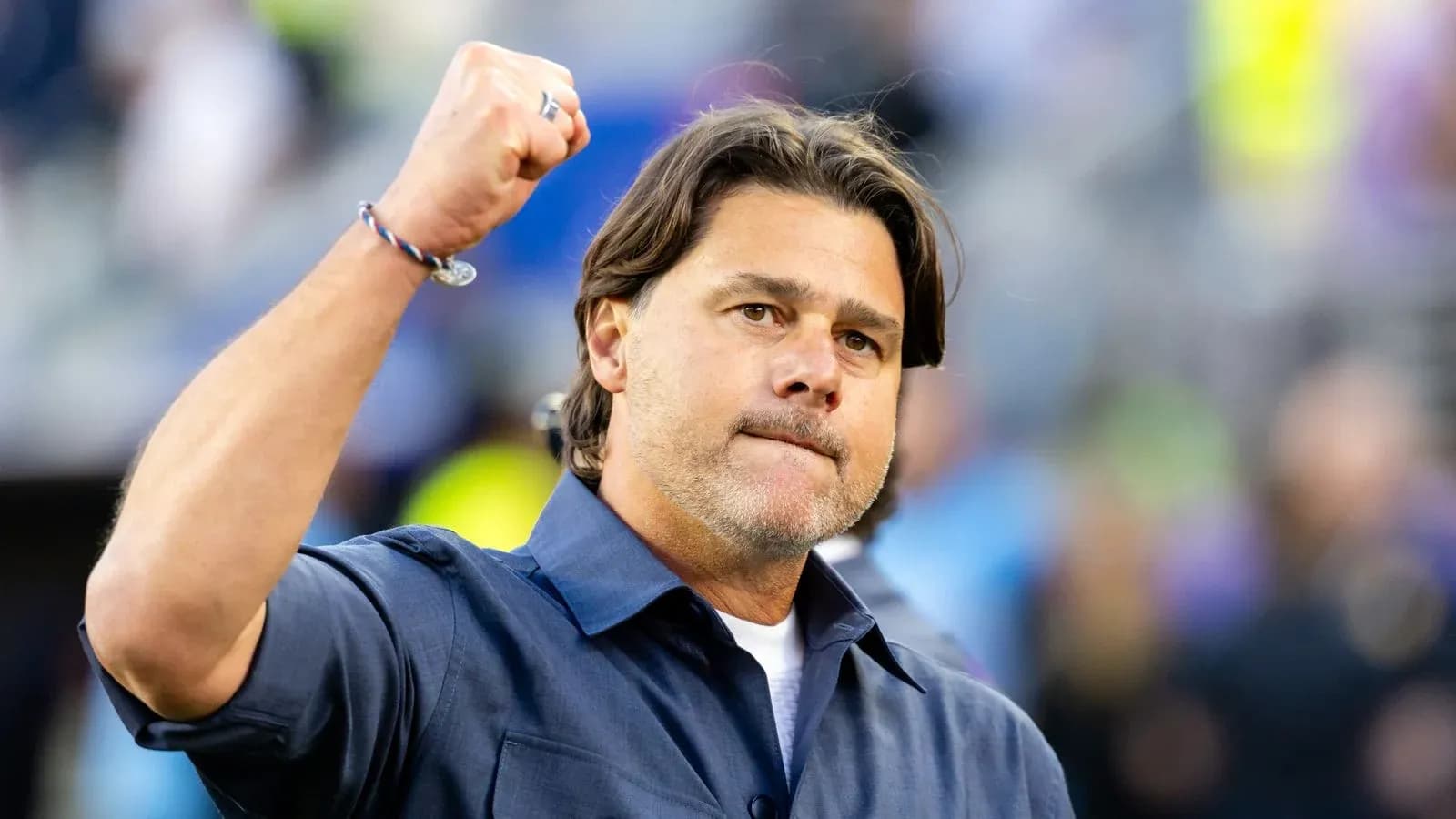
Mauricio Pochettino's Journey with the USA: Growth and Style
Mauricio Pochettino walks into the room and it feels like he has never been away. Hugs, jokes, holiday stories. The same warmth, the same easy charm. Only his summer has been a little different.
He has just taken the USA to the last 16 of a home World Cup, only to see the dream smashed apart by Belgium. On paper, that is the headline. In reality, it barely scratches the surface of a few weeks that spun between politics, pressure, fashion and footballing obsession.
There was Donald Trump. Of course there was Donald Trump. There was a presidential pep talk in the dressing room. There was Trump and FIFA, and the strange saga of Folarin Balogun’s suspension being suspended. Somewhere in the middle of all that, Pochettino’s navy touchline outfit turned him into an unlikely style reference point.
Then, just when the rumour mill started turning and Europe’s biggest clubs circled, another twist: Pochettino signed on for four more years with the USA. A decision that raised eyebrows and, in his mind, sharpened his purpose.
‘We are much better coaches now’
Ask him what he has taken from the World Cup and he doesn’t talk about results first. He talks about growth.
“We are much better coaches now,” he says, without hesitation. The tournament has clearly lit something in him. It has reinforced his hunger to keep evolving, to live in the details.
He goes into the grind of international management: less time with players than at a club, fewer training sessions, the difficulty of transmitting complex ideas to a group that drops in and out from all over the world. For him, the margins are brutal.
“Everything needs to be perfect,” he says. Every decision, every meeting, every tweak.
At times, the whole thing must have felt chaotic. A home World Cup, a president who relishes the spotlight, a nation expecting a deep run. Pochettino, though, sticks to the line that Trump’s involvement was support, not a distraction. He chooses his words carefully, but he does not hide from the storm around Balogun.
He admits the “politics and manipulation” around the striker’s eligibility overshadowed the build-up to the Belgium game. The anger, the noise, the accusations. Pochettino insists his role was simple.
“If you pay attention to the noise, you become crazy,” he says. FIFA’s decision landed the day before the match. “When the letter arrived the day before the game confirming Balogun was available, the decision was straightforward.”
Balogun played. The USA went out. The debate raged on.
Balogun, Monaco and a move that never happened
Balogun has been back in the headlines since, for very different reasons. His proposed move from Monaco to Everton collapsed late on Deadline Day. Pochettino has kept his distance.
He has not spoken to the striker yet, deliberately. He knows how raw a failed move can feel. The coach would have liked to see Balogun in the Premier League, testing himself in England, but for now the forward remains in Monaco.
Pochettino just hopes he can reset, find rhythm, and come back into camp in a good place.
The touchline suit that took off
World Cups create unexpected storylines. Pochettino’s navy look on the touchline became one of them.
He has always cared about how he presents himself, but even he seems amused by the reaction. Social media clips, fashion breakdowns, and then the moment Wayne Rooney appeared wearing the same ensemble.
“I saw him. He looked good on him, like a top coach,” Pochettino laughs.
It was that kind of summer. Football, politics, pressure, and a manager turning into a style reference.
Four more years with the USA – but unfinished Premier League business
Once the World Cup dust began to settle, the speculation started. Pochettino to this club, that club, the next project. The links did not last long.
The announcement came: he was staying with the USA until 2030.
If he sees out the deal, that would be six years away from club football. For some, that sounds like the closing chapter on his Premier League story. He rejects that idea instantly.
“I have the ambition,” he says. “My dream now is to be in the USA for four years, but after that, why not? We are still young, and I think coming back is always my goal; to win the Premier League, to be in the Premier League and to build a project with the possibility of winning.
“I love the football here. I think to have the chance again is one of my wishes and I hope that happens.”
He does not talk like a man finished with England. He talks like someone pressing pause, not stop.
Spurs, the call that never really came
The sense of unfinished business is strongest at Tottenham. Eighteen months ago, Pochettino spoke openly about wanting to return one day. Back then, Spurs were struggling under Ange Postecoglou. Since then, Postecoglou has gone, Thomas Frank and Igor Tudor have come and gone, and the club flirted dangerously with relegation.
So, did the call ever come? Did Spurs seriously ask him to come back and rescue them?
“Always I say, one day, why not?” he replies when the idea of a return is raised.
Pressed on whether it was a genuine option this time, his answer is firm. “People talk and maybe we receive some approach, but it never was close.” Not this time.
Other jobs flickered into view. AC Milan, at one stage, looked like a realistic landing spot.
“We were not open during the World Cup to talk with different clubs that were interested,” he says.
Were there clubs interested? “Yes, always,” he replies, as if that is just part of the landscape. “Yes, always have different, you know, options,” he adds with a hint of mischief.
Did any of those options tempt him, even briefly? “We never gave the opportunity to be close. We always closed the door before it got close.”
For now, his focus is fixed on the USA project.
Spurs’ spending spree and a different era
Talk turns back to Tottenham as a club, and how they have changed since he left. It is rarely dull at Spurs, and he smiles at the idea.
“They are investing like other clubs,” he says. He understands the logic. After a couple of chaotic seasons, the strategy has shifted. Big money on players who already know the Premier League, fewer gambles, fewer long-term projects.
It is a far cry from his own era, when he pushed Spurs to the brink of glory in the league and in Europe on a far tighter budget. Mention the £300m the club have splashed out recently and he offers a playful grin, joking that he can’t quite imagine what £300m looks like.
Will this new approach work?
“You never know,” he replies. “We need time to see if that works or not.
“Like in all the games, when you make a decision like a coach that can work well or not. I think it’s a different strategy and a different way to operate. I always wish the best for Tottenham because it’s in my heart.”
That last line lands heavily. Whatever comes next, Spurs remain part of him.
Chelsea, Xabi Alonso and the new direction
Chelsea, too, have taken a different path since Pochettino’s short spell in charge. The title on the office door has changed from head coach to manager. The transfer strategy has shifted again, this time towards players ready to impact the Premier League immediately rather than long-term projects under Xabi Alonso.
Pochettino avoids direct comparisons but he recognises the ambition.
Buying this profile of player, he says, naturally brings expectation. “Buying players like this you can expect to fight, to be a contender for the Premier League.”
Chelsea’s defeat to Arsenal has already served up a sharp reminder of how far they still have to go, but Pochettino is quick to defend Alonso’s start.
“Of course they are disappointed after the defeat against Arsenal, but I think we need to give time to Xabi’s first season after three games in the Premier League,” he says.
“I think we need to give time, and of course for Tottenham the same.”
The message is consistent: big projects need patience, even in a league that rarely offers it.
Arsenal and Arteta’s grip on the league
Ask Pochettino who sets the standard right now and he does not hesitate.
“For Pochettino, Arsenal are very much in pole position.” That is how he sees the landscape. And he is even more emphatic when it comes to the man in charge.
“Mikel [Arteta] is the best coach in the Premier League today,” he says. “Knowing what he needs to do, it’s going to be tough to beat them.”
It is a striking endorsement from a coach who once pushed Arsenal’s rivals to the brink of a title. Now, from across the Atlantic, he watches a league he still loves, a league he still wants to conquer, and a rival he believes everyone else must chase down.
For the next four years, his world is red, white and blue. After that, the question hangs in the air: which Premier League club will hand him the project he still craves?