Mauricio Pochettino's Expanded Role with USMNT: From Coach to Architect
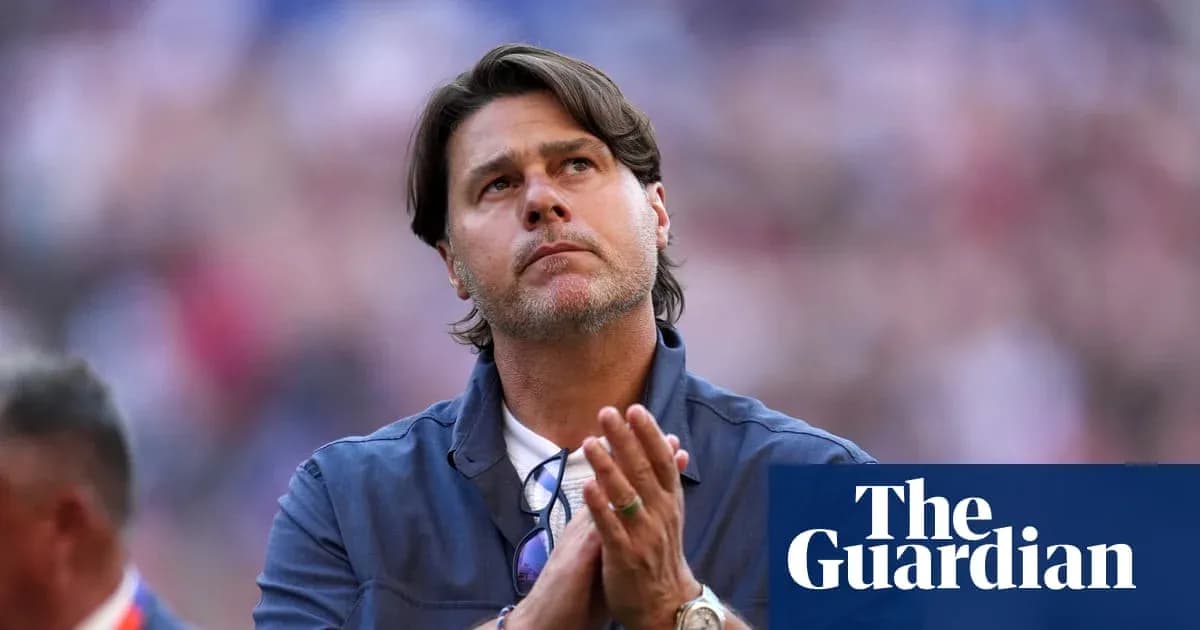
Mauricio Pochettino is back on the grass, but his job with the US men’s national team now stretches far beyond the touchline.
Two months after a bruising World Cup exit on home soil, the Argentine is not packing his bags or slipping quietly away. He has doubled down. The coach many inside US Soccer initially viewed as a short-term World Cup specialist is staying for another cycle – and being handed more power than any USMNT coach before him.
From short-term fix to long-term architect
When Pochettino arrived in 2024, the brief was simple: squeeze everything out of a golden generation at a home World Cup. Somewhere along the way, the relationship changed. Talks over a longer deal picked up, and by August, both sides committed to a contract extension.
Now the horizon looks very different. Four friendlies against Peru, Chile, Mexico and Canada in late September and early October will mark the start of this new chapter, but they are merely the warm-up act. The real assignment is brutal in its scope: qualify for the 2030 World Cup and, at the same time, help reshape how the sport functions in the United States.
Pochettino has been open about why he stayed. For him, this is about more than another tournament run or another knockout tie.
He has called it a chance to “have a lasting impact on the sport in the country that has welcomed us so warmly – and for that impact to extend beyond results on the field.” US Soccer’s announcement backed that up with a notable twist: Pochettino will now play a leading role in youth development and coaching education, and will advise on collaboration with the professional leagues and several other structural areas.
No USMNT coach has ever been granted this kind of reach. Technical directors and executives have traditionally set the course; the head coach has worked within those lanes. Pochettino will help redraw the lanes themselves.
He will not have to wait long to start. US Soccer is in the middle of a major restructuring and is hiring two new director roles to oversee the men’s and women’s senior and youth programs. Pochettino said on Monday he has already told the federation he is ready to help with those appointments – but with a caveat. “It can’t [just] be my guy,” he joked, stressing that the process has to serve the long-term vision, not just his own preferences.
Then he stepped back and framed the scale of the project.
“This is the future of the USA,” he said. “We want to try to perform in the World Cup and to create something special with the fans. And now it’s about being a part of the legacy that the federation wants to create – becoming one of the most powerful countries in soccer. That is a dream, no? It’s amazing. If we can be part of that, we are so excited and so happy.”
Olympic stage and a crowded 2028
The calendar only intensifies that ambition. The US will appear at the Los Angeles Olympics in 2028, a rare chance to put a young, star-laden squad in front of a global audience on home soil again. It has also been widely reported that the US could feature in Copa América that same summer, a demanding double bill that would test the depth and alignment of the entire system Pochettino is helping to shape.
For a coach obsessed with pathways and development, those tournaments are not just events. They are benchmarks for whether the new structure actually works.
Balogun’s deadline day collapse
The summer transfer window, by contrast, offered little drama for the USMNT player pool. Gio Reyna’s move to Strasbourg, Sebastian Berhalter’s switch to Middlesbrough and teenager Zavier Gozo’s jump from MLS to Crystal Palace stood out, but many of the World Cup squad stayed where they were.
Folarin Balogun expected to be an exception. After a breakout World Cup, the Monaco forward looked set for a big-money move to the Premier League. Everton pushed late, talks advanced, and then, right at the finish line, everything fell apart.
Everton pointed to a potential fitness concern. Monaco disputed it. Balogun did too. The move died on deadline day, leaving a 25-year-old striker suddenly stuck and frustrated when he had seemed on the verge of a major step.
Pochettino knows that particular kind of chaos well from his club career. On Monday, he made it clear that Balogun will not go through it alone.
“Yes, it’s difficult because you cannot influence that decision,” he said. “You need to support what they are doing with the people making the decisions. In some special cases, like Flo’s, I will call in the next few days. I wanted to give him a little bit of space after that situation in Everton. I want to know from him what happened. But we are always offering our support, and that’s it. I think he’s an important player for us, he was an important player in the World Cup and I hope that he can find being in Monaco, or in another place, his best place to perform in the best way.”
For the US, Balogun’s club future is not just a side note. It is central to how sharp their attack can be in this next cycle.
The delicate dance with dual nationals
If Pochettino’s expanded role is about structure, one of his most sensitive day-to-day tasks remains persuasion.
The USMNT has built much of its modern rise on dual nationals choosing the Stars and Stripes. That recruitment battle is only getting fiercer, and the latest case sits at the heart of Europe: Augsburg center-back Noahkai Banks.
Banks, 19, holds eligibility for both Germany and the US. He will not be in this month’s 26-man roster. He has been clear that he has not yet decided his international future, saying he wants to make a choice by “the next international break, or at the latest by the international break after next.” In Germany, reports say new national team coach Jürgen Klopp has even scouted him in person.
The tug-of-war is obvious. Pochettino’s response is to keep the lines open without overstepping.
“We are in contact with all the potential dual nationals,” he said. “I think it’s important for us, of course, because that is the human connection that is so important. Even if they, like in that case, Noki, didn’t change his mind and is waiting still, no decision, and of course we cannot consider him for the next camp … But the organization is working with all the dual nationals and players with the possibility to make a decision. That human connection is important because if one day they feel that they can defend and they want to fight and to be part of our national team … Of course, if they deserve it, and we consider that they deserve to be involved, of course we are going to call [them up].”
It is a careful balance: show how much they are wanted without promising caps, underline the pathway without closing the door if they hesitate.
The next few windows will reveal who buys into that message. And as Pochettino settles into his dual role – touchline manager and long-term architect – those decisions, from Balogun’s next move to Banks’s international allegiance, will help define whether the US can turn lofty talk of “legacy” into something real by the time Los Angeles 2028 and the 2030 World Cup arrive.