Melchie Dumornay: The Rising Star of Women's Football
When Amandine Miquel paused midway through Melchie Dumornay’s first season at Reims and calmly said her teenage star was “at 30 per cent of her level”, it sounded outrageous.
Then you watched Dumornay play.
The talent was obvious, the ceiling clearly high, but the idea that this whirlwind of power and technique was operating at less than a third of her capacity felt almost absurd. Year by year, though, the numbers, the performances and the trophies have dragged that quote out of the realm of exaggeration and into something else entirely.
It now feels like a warning.
A bold detour to Champagne country
Before Dumornay ever set foot in Reims, people in Haiti had already decided her future. When she turned 18, the question followed her everywhere: “So who is it? Paris Saint-Germain or Lyon?”
The answer stunned them. She chose neither.
“I know that it might disappoint some people in some way that I'm moving to Reims,” she admitted at the time. It sounded like a step down from the glamour her talent seemed to demand. But she saw something others didn’t. “People who know football will understand my decision. For the other people, it's okay. I will prove them wrong in the future."
Reims, a modest club in France’s Champagne region, offered something PSG and Lyon could not guarantee a teenager: minutes, freedom, and the right to make mistakes. Miquel put it bluntly. Dumornay knew she would be in a strong league, “but she would still be an important player and not just a substitute”.
That bet paid out quickly. Across two seasons, she played 39 games and scored 23 goals. The raw numbers told one story. The way she bent games to her will told another. Reims had become a launchpad, not a compromise.
The superclubs came calling again. This time, she was ready.
Lyon, the World Cup and a stage that finally fits
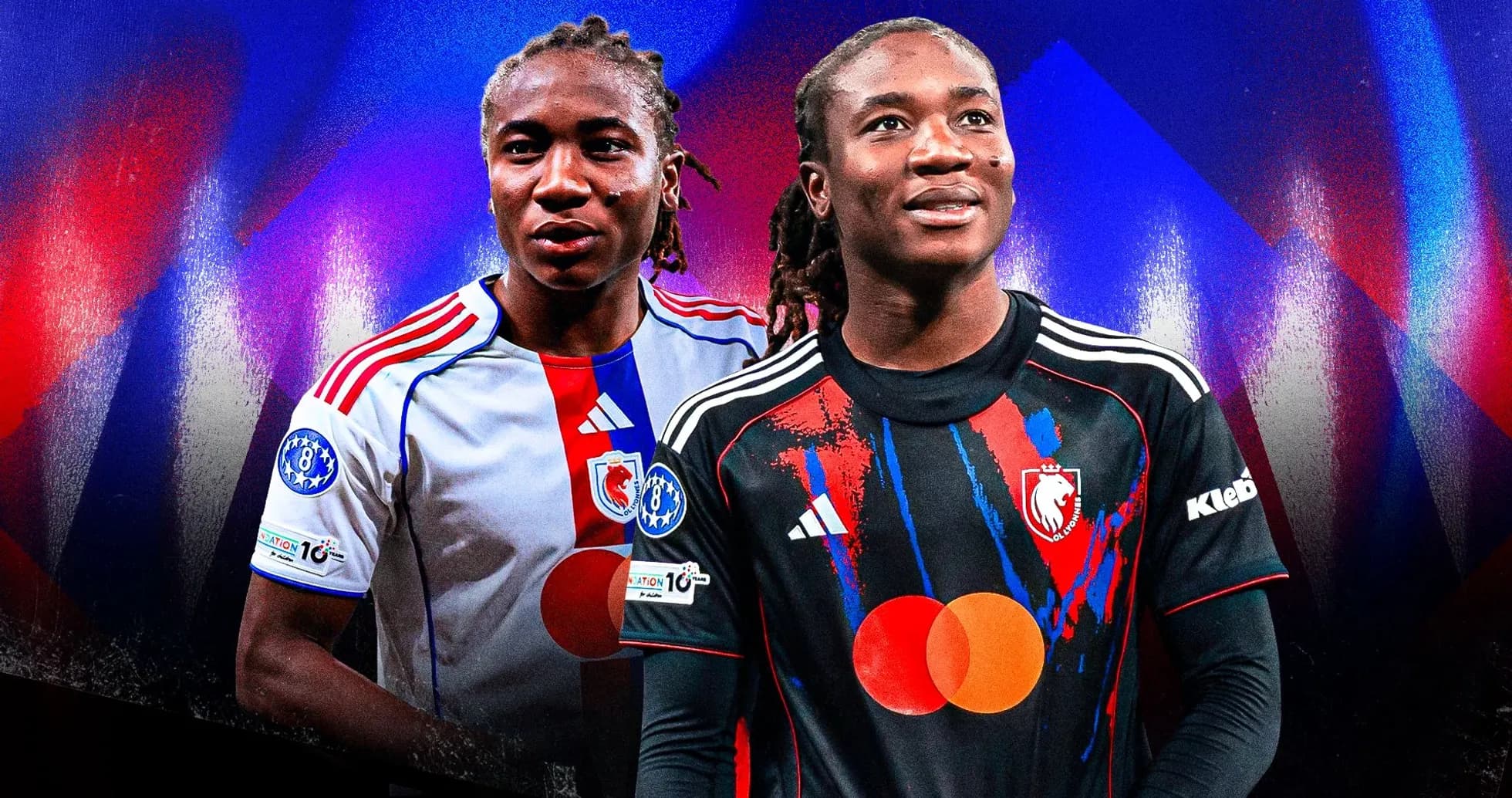
Lyon had always been the dream. Eight-time European champions. The dominant force in French women’s football. Dumornay had already trialled there before turning 18. For her, OL was not just another move; it was the destination.
She arrived in the summer of 2023 with one more statement already made on the international stage. In the play-off tournament for the Women’s World Cup, she scored both goals in Haiti’s 2-1 win over Chile, dragging a nation into the tournament for the first time in its history. On paper, Haiti had no business troubling a group containing European champions England, Asian champions China and Euro 2017 runners-up Denmark.
On the pitch, they refused to bow. They lost all three games, but they competed in every one of them – and Dumornay, still only 19, stood out every time she stepped onto the grass in Australia.
Against England, she was so electric that BBC Sport readers voted her Player of the Match despite Haiti’s 1-0 defeat. On a field full of European stars, the teenager from Port-au-Prince stole the gaze.
So when she finally pulled on a Lyon shirt, there were few doubts left about whether she belonged at that level. The only question was how quickly she would bend this new, star-studded environment to her rhythm.
Setback, then lift-off
Her Lyon career did not start with fireworks. It started with ice packs and frustration.
An ankle injury forced her to miss more than three months, a long, unwanted pause for a player used to constant upward motion. For some, that kind of early setback at a superclub can linger, especially in a squad packed with world-class talent.
Dumornay treated it as a delay, not a derailment.
When she came back in the 2023-24 season, she didn’t just ease herself in. She hit the decisive phase of the campaign at full tilt: five goals and five assists in 11 appearances after her return. The numbers were sharp, but the timing was even sharper.
Her most devastating work came in the Champions League semi-final against PSG. Across two legs, she delivered two goals and two assists as Lyon overpowered their domestic rivals 5-3 on aggregate. In a tie loaded with pressure and history, she played like someone who had been there for years, not months.
The final against Barcelona told a different story. Lyon, so often the standard in Europe, fell short. Dumornay led the line but managed only one shot as Barca delivered a controlled, polished performance. No dramatic rescue act this time, no crowning moment.
Yet even in defeat, the picture was clear. At 20, in her first season at OL, she had already become a key figure and had collected two trophies. She had taken a serious injury, shrugged it off and come back as a match-winner in the biggest games.
“I always believed that if I'm in Lyon, I would progress every day,” she told GOAL before the 2024-25 season. “That's what's happening.”
She wasn’t exaggerating.
A new role, an even bigger problem for opponents
The last two years have pushed Dumornay into a new bracket. At times, she has not just been one of the best players in the world. She has looked like the best.
Ask Ingrid Engen. The Lyon defender, who faced Dumornay with Barcelona in that 2024 UWCL final, didn’t sugarcoat it. “I must say, it's nice to have her as a team-mate,” she admitted. “She's definitely a threat and someone I really had to try to manage as well as possible in that game. She's very difficult to manage because she has this strength, she has the power, she has the technique - she has it all, really."
Under Jonatan Giraldez, the former Barca coach who took over at Lyon this season, Dumornay has shifted again. The move is subtle on paper, dramatic on the pitch.
Previously, she often occupied the spaces of a classic No.9, higher up, closer to the box. Now, she has dropped back into midfield, operating as a No.10 or even a touch deeper. It is, crucially, where she has always wanted to be. “Because I want to be everywhere,” she has said.
The change suits her perfectly. It also suits Lyon.
From midfield, she touches the ball more than ever, both in the league and the Champions League. Every extra touch is a new decision, a new angle, a new problem for defenders. The rise in her key passes reflects that. She no longer just finishes moves; she starts them, shapes them, then arrives to finish them anyway.
Giraldez understands the equation. “We know that Melchie is one of the best players in the world,” he said earlier this season. “We have to find her as many times as possible."
He went further this week. “A No.9 only gets the chance to do very specific things. I think she's very capable of doing different things."
So Lyon have given her the canvas. She is painting all over it.
Only the beginning
Right now, the formula is brutally simple: the more Dumornay sees the ball, the greater Lyon’s chances of winning. This is a squad stacked with elite players, but she is operating at a level that invites Ballon d’Or conversations.
And still, that old comment from Reims hangs in the air.
Miquel’s 30 per cent estimate came four years ago. Since then, Dumornay has grown, adapted, led a nation to a World Cup, become a decisive figure at the biggest club in Europe and reshaped her own game without losing any of its edge.
Yet Giraldez, preparing for another shot at European glory in Oslo, is adamant. “This is not the top,” he said ahead of Saturday’s final.
That is the most ominous part for the rest of Europe. Lyon already have a midfielder who can dominate games, break lines, hurt teams in the final third and drag her side through the tightest moments. Haiti already has a superstar who has turned improbable dreams into reality.
If this is still not the peak, if this is only the beginning, then the real question is no longer whether Miquel was right about that 30 per cent.
It’s how frightening Dumornay will look when she finally gets close to 100.