Morgan Gibbs-White's Absence Highlights Nottingham Forest's Summer Challenges
Morgan Gibbs-White could barely bring himself to look. As Aston Villa shredded Nottingham Forest’s Europa League hopes, the Reds’ No.10 sat hunched on the bench, head buried in his hands, living every blow without being able to throw one back.
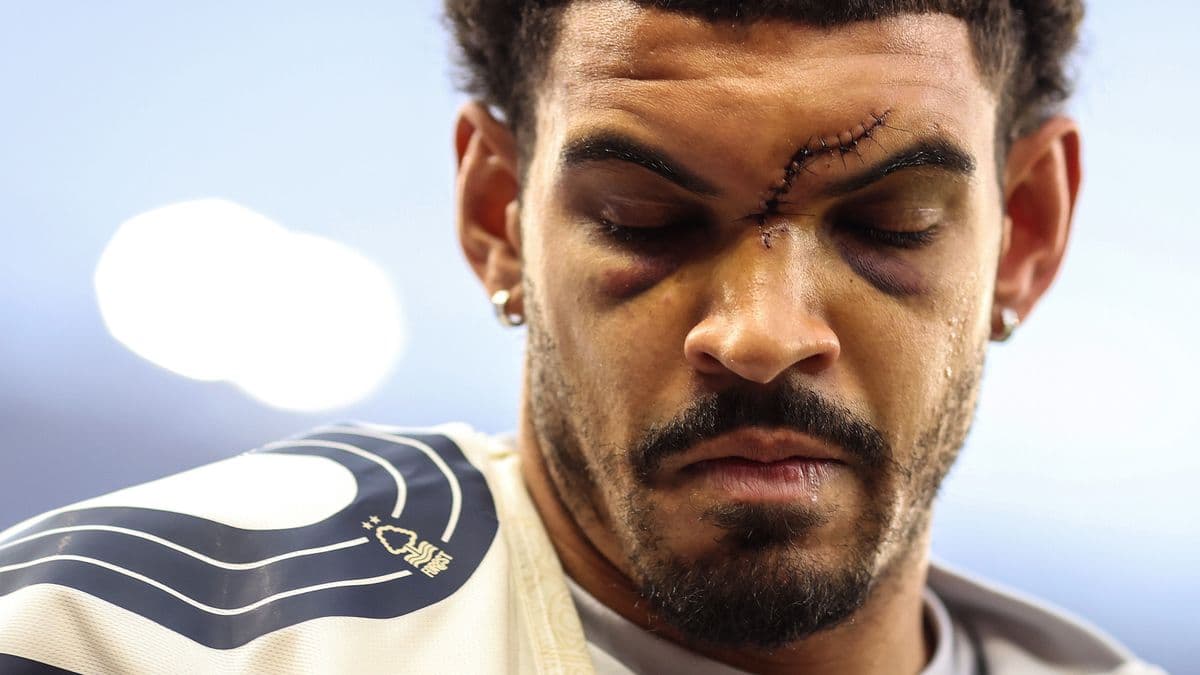
Forest’s European run ended with a thud on Thursday night, a 4-0 defeat that felt as brutal as the gash across Gibbs-White’s forehead. The playmaker, still carrying the scars from a sickening collision with Chelsea goalkeeper Robert Sanchez on Monday, watched on helplessly at Villa Park – battered, bruised, bloodied, and missed more than ever.
He wore the damage like a badge. Multiple stitches, two black eyes, and a reminder of the way he has hurled himself into Forest’s survival fight. That kind of commitment can’t be coached. It certainly can’t be replaced overnight.
And that was the problem.
A void they couldn’t fill
Without Gibbs-White, Forest looked stripped of their nerve and imagination. This wasn’t just about losing a clever No.10. It was about losing their heartbeat.
Vitor Pereira’s side arrived in Birmingham already stretched. Ibrahim Sangare, Ola Aina, Callum Hudson-Odoi and Dan Ndoye were all missing. Murillo, another pillar of this team, could only make a brief appearance. The absences stacked up, and Villa picked them off.
Would Gibbs-White’s presence alone have changed a 4-0 scoreline? That’s impossible to say. The gulf in available resources told in the end. But the way Forest laboured without him – no spark, no craft, no voice to drag them up the pitch – hammered home a more important truth.
This is what life without Morgan Gibbs-White looks like. And it isn’t pretty.
Transfer reality closing in
Forest already had a glimpse of this future 12 months ago. Back then, a move to Tottenham Hotspur loomed large. The club stared at the possibility of losing their talisman, and for a while it felt inevitable. When the deal collapsed and Gibbs-White instead signed a new contract at the City Ground, it was as significant as any incoming transfer.
That decision helped anchor a turbulent season. His form in recent weeks, in particular, has been nothing short of season-defining. Goals, assists, big performances when the pressure has been suffocating – he has almost single-handedly hauled Forest towards safety.
And that is exactly why the suitors will circle again when this campaign ends. The interest hasn’t gone away. It won’t.
The same is true for Murillo and Elliot Anderson. Both are young, both are gifted, both have become central to how Forest play. The likelihood is that at least one of that trio moves on this summer. Financial realities and ambition tend to collide at clubs in Forest’s position.
If that happens, nights like this one at Villa Park become more than a painful memory. They become a warning.
A crucial summer, and a brutal lesson
Forest’s collapse against Villa underlined the stakes. They didn’t just miss Gibbs-White’s tricks between the lines. They missed his leadership, his edge, his refusal to accept the inevitable.
Without him, there was no one to knit attacks together, no one to demand the ball in tight spaces, no one to lift heads after the first and second goals went in. The team looked ordinary. He makes them look like they belong on this stage.
That is what the recruitment team must grapple with in the coming months. How do you plan for the possible departure of a player who feels, in every sense, irreplaceable? How do you reshape a squad so heavily reliant on one man’s personality and talent?
To get back to challenging for European football, Forest cannot afford to get this window wrong. The margin for error is slim. The evidence was there in claret and blue on Thursday night, as Villa exploited every weakness and exposed every gap.
Gibbs-White sat there, stitched up and sidelined, watching his team dismantled. Forest’s future, and their transfer strategy, may have been laid just as bare.