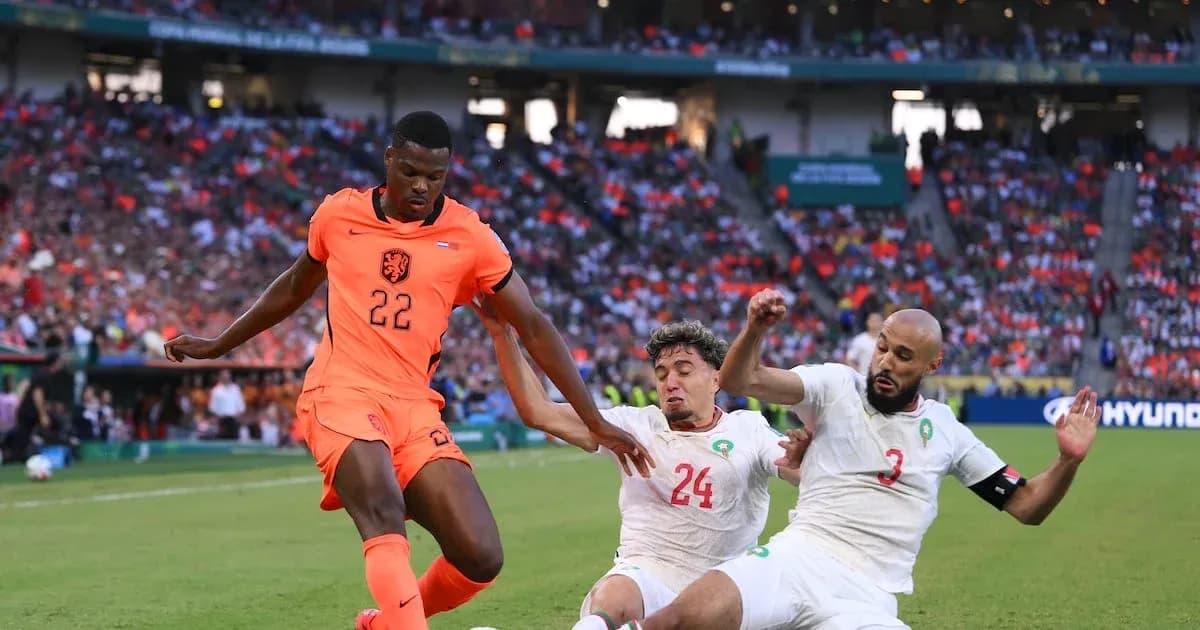
Morocco Triumphs Over Netherlands in Thrilling Penalty Shootout
Morocco’s players chased Ismael Saibari in wild, zigzagging lines, then disappeared in a heap of limbs and noise. Somewhere at the bottom, Saibari surfaced for a second, arms raised, before being swallowed again by the pile. Morocco had done it. Again. Another European power bent, another World Cup run still alive.
Across the pitch, Dutch players stood frozen. Some stared at the penalty spot, others at the grass. Bart Verbruggen, heroic for so long, walked slowly back towards the tunnel. A bleak night for Europe’s supposed heavyweights had just opened a wider lane for Africa’s best.
Gakpo’s grief, Gakpo’s goal
Earlier, the bundle of bodies had been orange.
When Cody Gakpo thrashed the ball into the net in the 72nd minute, the Dutch bench emptied. Substitutes, staff, defenders from the other end of the pitch – they all sprinted to him. It was celebration, yes, but it was something deeper too. It was solidarity.
Gakpo had chosen to play after the announcement that he and his partner had lost their unborn son. As he walked back towards the centre circle, he pointed to the sky, tears visible, and Denzel Dumfries wrapped an arm around him. For a moment, the stadium shrank to a single player and his grief.
In another universe, that goal wins it. The story writes itself: redemption, resilience, football as balm. But the game does not exist to tidy up human pain. It goes where it wants, and it can be vicious.
This time, it turned on the Netherlands.
Koeman’s gamble
Ronald Koeman will feel the glare now. He chose caution on a night that begged for courage.
His side had been loose but lethal in the group stage: seven goals past Sweden and Japan, three more against Tunisia. Nobody scored more. Yet when the stakes rose, he tore up the familiar 4-3-3, left Tijjani Reijnders out and rolled out a back five designed to smother.
The result was a match stripped of the attacking duel many had expected. Morocco, technically assured and patient, were handed 70% of the ball. The Netherlands sat deep, waited, and waited some more. They barely flickered until just before half-time, when Micky van de Ven hammered a shot that Yassine Bounou tipped over.
By then, Verbruggen had already been called into action, bailing his team out with sharp stops as Morocco probed. The pattern hardened after the break: Morocco on the ball, the Dutch in retreat, Koeman clinging to his plan.
He would later insist he had it right, and on paper Morocco are a different level of opponent to those they had shredded earlier in the tournament. For a few minutes, it looked like he might even be vindicated.
Hydration break, game-changer
Midway through the second half, Morocco were in control, the tempo theirs. Then came one of those FIFA hydration breaks that always felt destined to decide something important.
Koeman used it to roll out his old emergency weapon. Wout Weghorst replaced the ineffective Brian Brobbey. Within seconds, the entire match flipped.
Verbruggen launched long, Weghorst flicked on, and suddenly Crysencio Summerville was tearing into space. As he was challenged, he hooked the ball across for Gakpo. One touch, one ruthless finish. The Dutch had landed the punch they had waited all night to throw.
For a while, it looked like a reprise of their rope-a-dope run to the 2010 final. Morocco had the ball, the Netherlands had the lead. The tension ratcheted up, the tackles bit harder, and the clock became the Dutch ally.
A spiky tie with history in the air
This was never just a tactical chess match. It was spiky from the first whistle.
Jan Paul van Hecke took three heavy knocks in the opening period alone, his head bleeding after the third collision. Challenges carried an edge, little afters and lingering looks. In the stands, the mood was no softer.
Local fans gleefully revived an old grievance: twelve years to the day since the Netherlands beat Mexico in the last 16 with a late penalty after Arjen Robben’s infamous tumble. Every Dutch touch in the early stages drew boos, whistles and reminders of that night.
On the pitch, Morocco initially lacked their usual fluency, frustrated by Koeman’s low block. Verbruggen saved acrobatically from Neil El Aynaoui and Achraf Hakimi in quick succession, but the African side could not quite find their rhythm.
Then Hakimi took charge after the interval. He surged inside on underlapping runs, testing the Dutch line, and Van de Ven had to produce a crunching, last-ditch tackle to stop one break. Still, the Netherlands had no real control. They simply had their shape and, after Gakpo’s goal, their lead.
Diop’s late strike, Morocco’s surge
The pressure finally told in the first minute of added time.
Chemsdine Talbi, on as a substitute, shifted the ball onto his right foot wide on the flank. He whipped in a glorious cross, the kind defenders dread – too high for the near post, begging to be attacked at the back. Issa Diop rose, met it cleanly and powered his header home.
The roar from Morocco’s end was immediate and immense. They had what they deserved. Dutch shoulders slumped. Koeman’s cautious blueprint, seconds from vindication, lay in pieces.
Extra time never truly escaped that moment. Morocco held the psychological edge, the Netherlands looked drained. Verbruggen still had one more big save in him, denying Soufiane Rahimi brilliantly in the only real chance of the additional 30 minutes, but the game had drifted towards the one place both sides knew would define them: the penalty spot.
Penalties and a sliding-doors touch
The shootout became a study in nerve and tiny margins.
Both teams missed one early. Then came the moment Koeman would later point to as the turning point. Verbruggen guessed right on Rahimi’s penalty, got down and appeared to have saved it. For a heartbeat, the Dutch thought they were ahead.
The ball, though, had other ideas. It spun off his trailing heel and squirmed over the line. A fingertip away from a different story.
Quinten Timber then dragged his kick horribly wide, a grim, scuffed effort that seemed to carry the weight of the occasion in every misstep of his run-up. Hakimi clipped the post with his own attempt, keeping Dutch hope flickering, but Bounou and Saibari closed the door.
Bounou, the penalty specialist, stood tall. Saibari, the man chased across the grass by half of North Africa, delivered. Morocco 3–2, the Netherlands out.
Canada wait next. Morocco stride on, shoulders broad, while Europe’s giants glance at each other and wonder: is this Africa’s World Cup to tear apart?