
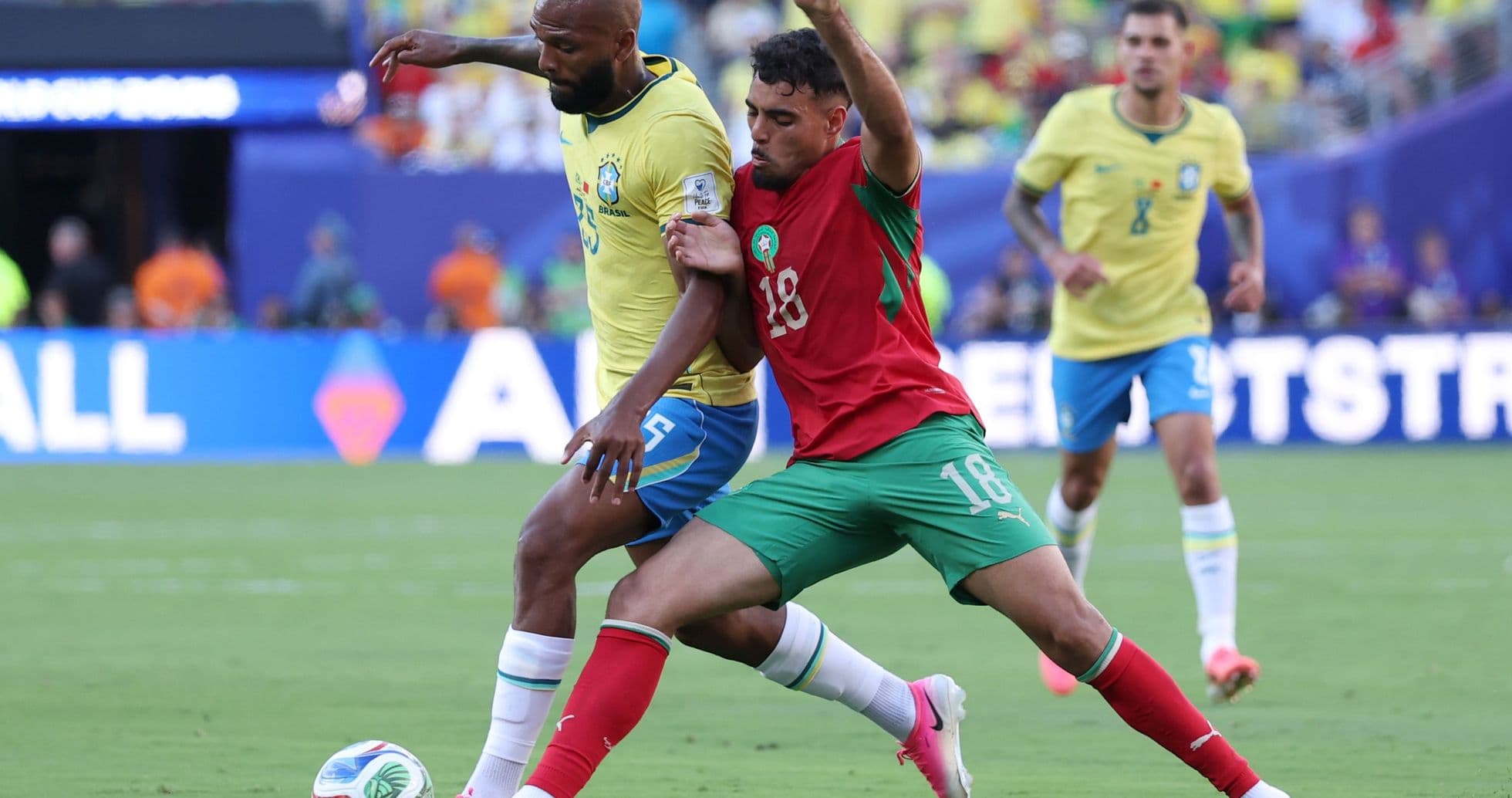
Morocco Holds Brazil to a Draw with Tactical Discipline and Quick Transitions
The match between Brazil and Morocco ended in a 1-1 draw, revealing a clash between Brazil’s individual talent and Morocco’s well-organized teamwork. Morocco’s early dominance was no accident but the result of a carefully designed tactical approach that caught Brazil off guard.
Lineups and Formations
Brazil played a 4-2-3-1 formation with Allison as goalkeeper. The defensive line featured Ibanez, Marquinhos, Gabriel, and Santos. Casemiro and Guimaraes formed the midfield pivot, supporting Paqueta, Raphinha, Vinicius, and Thiago Silva upfront.
Morocco matched this with their own 4-2-3-1, Bono guarding the net. Their defense included Mazraoui, Riad, Diop, and Hakimi. Midfielders Aynaoui, Bouaddi, and Ounahi linked to forwards El Khannous, Saibari, and Diaz.
Morocco Controls Early Play
Despite being underdogs, Morocco’s first 30 minutes stunned Brazil. They used rapid counterattacks and a tight, aggressive midfield block focused on central areas. Their defensive shape minimized gaps between lines, forcing Brazil’s play wide.
The tactic to steer Brazil’s buildup to their left side paid off. Morocco intercepted a misplayed pass from Brazil's flank, quickly moving the ball to Diaz, who assisted Saibari for the opening goal. This transition from defense to attack was executed within seconds and showed Morocco’s sharp game plan.
Bouaddi’s Midfield Mastery
Midfielder Bouaddi stood out, orchestrating plays and contributing actively both defensively and offensively. Morocco’s compact 4-4-2 block shielded central zones effectively and triggered pressure mainly when Brazil passed backward.
Brazil’s Struggles with Progression and Defense
Brazil faced challenges not in keeping the ball, but in advancing it smoothly. Their midfield lacked coordination, leading to frequent turnovers during buildup. Although they tried a 3-2 shape with Santos, Gabriel, and Marquinhos in the back line and Ibanez slightly ahead, spacing issues between midfielders and forwards disrupted fluid play.
Casemiro and Guimaraes anchored midfield but struggled to break through Morocco’s lines or keep possession cleanly. Brazil’s defensive setup also faltered, leaving spaces that Morocco exploited, exposing weaknesses in personnel and tactics.
Casemiro’s declining physical pace became clear, prompting his substitution by Fabinho early in the second half. Morocco’s coach had already recognized Brazil’s vulnerable spots in midfield and fullbacks, targeting these areas smartly.
Vinicius Shines Amid Brazil’s Offensive Issues
Brazil lacked a player to link midfield and attack effectively in the final third. Without a consistent facilitator, many attacks broke down before becoming threatening. Vinicius’s skill masked these problems but did not fix them.
Thiago Silva, the striker, functioned more as a traditional target man rather than a creative forward connecting plays. Cunha would have suited the role better, suggesting Brazil might have been better served by starting him instead.
Summary
The match revealed persistent issues in Brazil’s style. Their build-up was often imprecise against tight defenses, and their defense showed vulnerabilities after losing the ball. These flaws might become costly against stronger opponents.
Morocco proved why they are tactically respected internationally. Their disciplined defense and fast transitions allowed them to challenge one of football’s most talented teams evenly. This draw reflected careful planning rather than luck.