Morocco's World Cup Final Ambitions Amidst Political Tensions
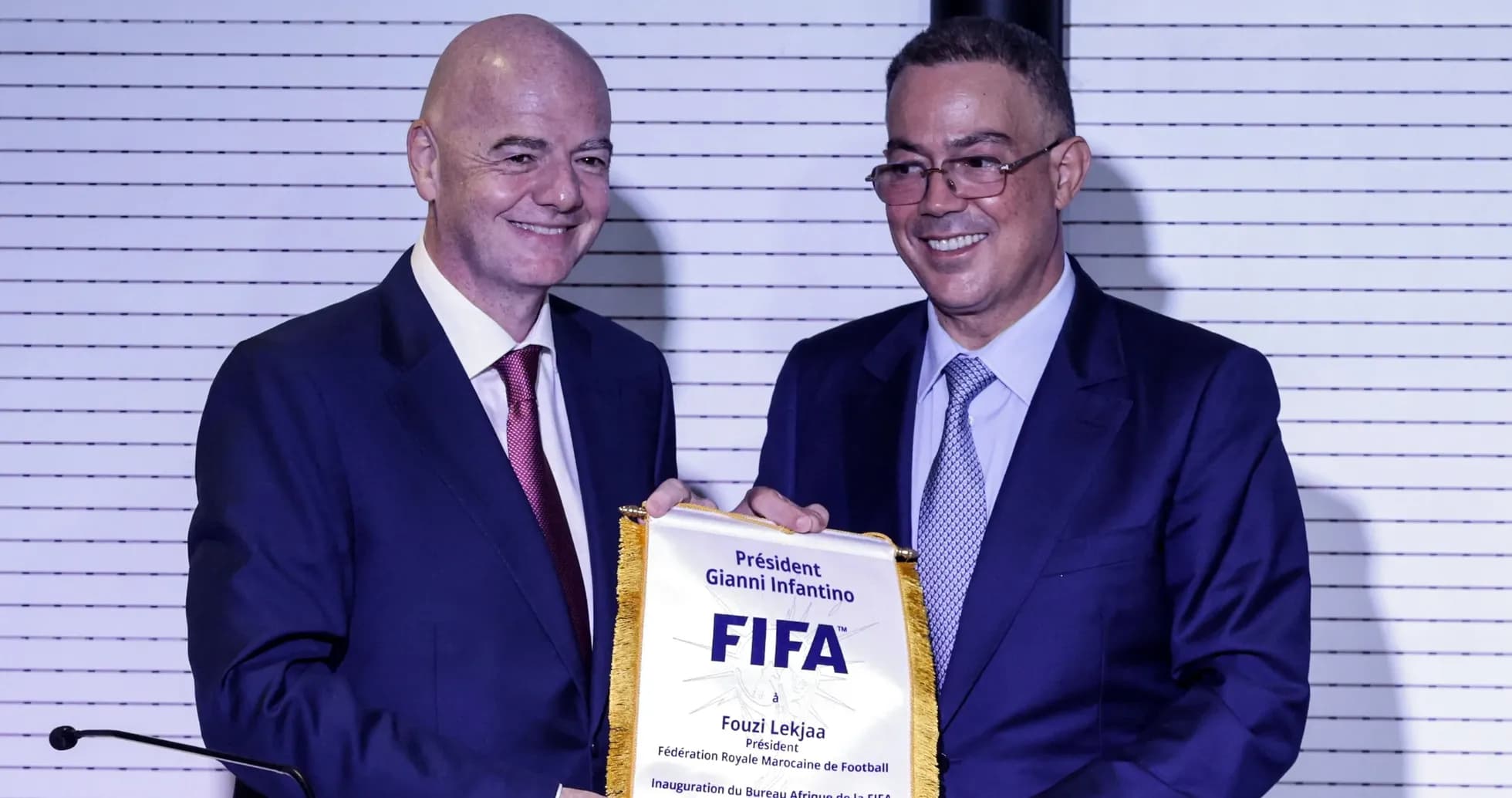
Morocco’s Prime Minister has fired a sharp warning shot at Fouzi Lekjaa, dragging a behind-the-scenes World Cup power play into the public arena.
At the heart of it: who gets the 2030 World Cup final.
Political chill over Casablanca final claim
The tournament, marking 100 years of the World Cup, will be co-hosted by Morocco, Spain and Portugal, with symbolic opening games in South America. The final, though, is still officially up for grabs.
That didn’t stop Fouzi Lekjaa, president of the Royal Moroccan Football Federation (RMFF), from going off script.
Speaking at a political party event, Lekjaa declared that the planned new stadium in Casablanca would have the “honour” of staging the final. It was a bold line, the kind that plays well domestically. It also went far beyond what FIFA has confirmed.
Prime Minister Aziz Akhannouch moved quickly to slam on the brakes.
Addressing a rally, he publicly rebuked Lekjaa and framed the issue as one of respect and diplomacy rather than sporting ambition.
“Do not offer to host the big final game in Morocco while we still have not discussed the matter with our allies, Spain and Portugal,” Akhannouch said. “There should be some respect, brothers. Stop using electoral promises to pull the rug out from under us. These are huge matters. Deciding where the final will be held is a major issue.”
The message was unmistakable: stop turning the World Cup final into a campaign pledge, and stop speaking for a coalition that hasn’t agreed.
FIFA waits, hosts jostle
FIFA, as ever, sits on the fence. The governing body has not named a host city, saying only that “a decision will be made in due course.”
While FIFA bides its time, the lobbying grows louder.
Morocco is pushing to bring the World Cup final back to Africa for the first time since Johannesburg in 2010. The government wants to keep that dream alive, but not at the cost of souring relations with Spain and Portugal, whose backing is crucial to the joint bid’s credibility.
Spain, though, is just as determined.
Spain leans on history, power and prestige
Rafael Louzan, president of the Spanish federation (RFEF), has been unflinching in his belief that the final simply belongs on Spanish soil.
“Even though no decision has been taken, I believe Spain is the place because it cannot be any other way,” he told Cadena SER radio. “As you know, we are currently world champions. I believe Spain’s organisational capacity for major events is beyond question and that is why reality dictates that the grand final cannot and must not be held anywhere other than in Spain.”
Spain’s case is built on recent success and infrastructure.
Their men’s national team has just added a second World Cup title, beating Argentina this past summer. The Santiago Bernabeu has been transformed into a multi-purpose, high-tech arena. Barcelona’s Spotify Camp Nou is in the middle of a major expansion. Between the two giants and a network of modern stadiums across the country, RFEF believes it holds the strongest hand.
Morocco’s giant gamble
Morocco’s response is not to back down, but to build big.
The country has launched construction of a 115,000-seat stadium, designed to be the largest football-specific venue on the planet. The project is a clear statement of intent: Morocco wants a stage that can stand alongside, and even overshadow, Spain’s legendary grounds.
Casablanca’s proposed super-stadium is central to the Moroccan pitch. It offers a dramatic, made-for-TV setting on African soil, a powerful narrative for a centenary World Cup that stretches across continents.
But Akhannouch’s intervention shows that, for now, the government prefers quiet persuasion to public declarations.
Decision on the horizon – but not yet
If the 2026 World Cup is any guide, there is no rush. New Jersey’s MetLife Stadium was only confirmed as the final venue in early 2024, long after the United States, Canada and Mexico had been awarded the tournament.
The same slow burn is likely for 2030.
Behind the scenes, the three European and African hosts will keep manoeuvring, each pushing their own stadium, their own story, their own vision of what a centenary final should look like.
Morocco has the ambition and a colossal new arena on the way. Spain has the trophies, the track record and two of the game’s most iconic stadiums. Portugal, quieter for now, remains a key ally whose support could tilt the balance.
For the moment, Rabat’s priority is clear: keep the bid united, keep Madrid and Lisbon close, and keep the dream of a Casablanca final alive without promising what FIFA has not yet given.
When the decision finally lands, will the World Cup’s 100th birthday be celebrated under African skies or in the heart of European football power?