Netherlands' Euro 2024 Journey: Dark Horses or Genuine Contenders?
The Netherlands arrive as they so often do: talked about, watched closely, but not quite trusted.
They are not filed alongside the absolute favourites for this tournament. Instead, they sit in that dangerous bracket of “dark horses” – too talented to ignore, too inconsistent to fully believe in. A team nobody wants to face in the knockout rounds, yet one many still doubt will actually win it.
A Brutal Group, A Brutal Standard
The draw has not been kind. Japan, Sweden, Tunisia: no soft landings, no easy six-pointers. It is a group built to expose flaws.
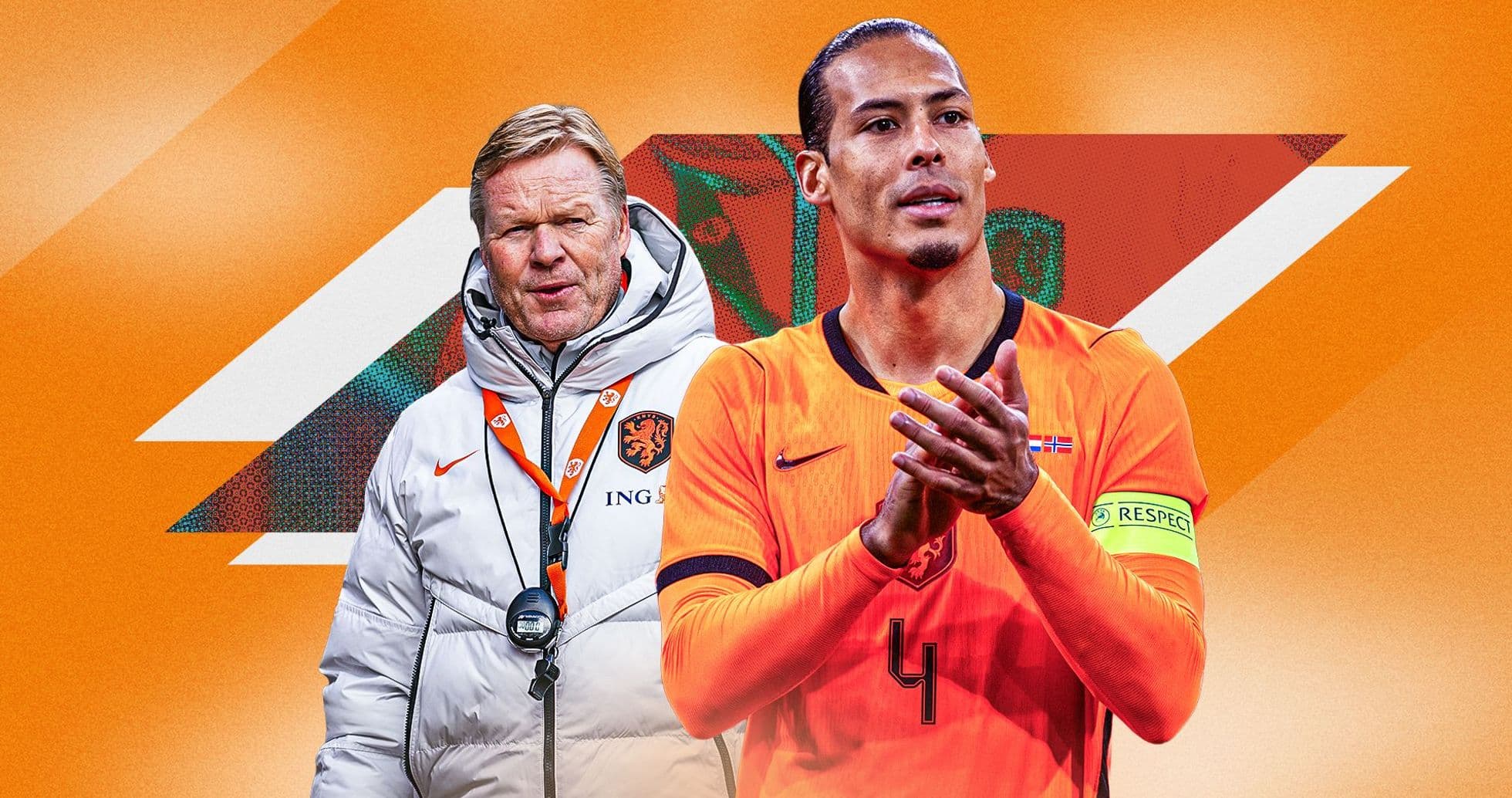
And yet, the Oranje still carry the weight of expectation. Virgil van Dijk anchors a defence that, on its day, can suffocate even the most fluid attacks. In front of him, Frenkie de Jong dictates tempo, the metronome and the escape route when pressure bites. Higher up the pitch, Memphis Depay and Cody Gakpo provide the cutting edge, the players expected to turn tight games with a single moment.
On paper, it looks enough to top the group. On grass, the questions are louder.
Key injuries have chipped away at the squad’s depth and dynamism. Xavi Simons, Jurrien Timber and Matthijs de Ligt have all been ruled out before a ball is kicked, robbing Ronald Koeman of versatility and high-level options in two key lines of the team. Jeremie Frimpong, one of Europe’s most explosive wing-backs, did not make the final squad. Nor did gifted midfielder Kees Smit, whose omission raised eyebrows among those who wanted fresher blood and more creativity.
Then came the warm-up games. A shock defeat to Algeria rattled confidence, and the narrow win over Uzbekistan did little to calm nerves. The results did not derail the campaign, but they underlined a simple truth: this Dutch side is still searching for its sharpest version.
Koeman’s Second Act
Ronald Koeman knows better than most that managing the Netherlands is never just about results. It is about identity.
His first spell began in 2018, a four-year contract handed to him after Dick Advocaat stepped aside. Koeman stabilised a drifting nation, took them to the 2019 UEFA Nations League final and secured qualification for Euro 2020. Then Barcelona called. He went, and the Oranje project was left unfinished.
Two and a half years later, in 2023, Koeman returned, this time replacing Louis van Gaal. The second act has already delivered two semi-finals – one in the 2023 Nations League, another at Euro 2024. On paper, that is a strong return.
Yet the debate at home refuses to die down. Koeman has been credited with bringing through a promising new wave of talent, but the manner of play divides opinion. For a country raised on the attacking gospel of Rinus Michels and Johan Cruyff, anything less than front-foot, expressive football feels like a compromise. Koeman’s more measured, pragmatic approach wins games, but not always hearts.
That tension hangs over this campaign. Are the Netherlands here to entertain, or simply to endure?
Memphis, Still the Reference Point
Amid all the tactical arguments and generational shifts, one constant remains: Memphis Depay.
No longer in Europe, and likely heading into his final major tournament with the national team, Depay is still the figure everything orbits around. He is the all-time leading scorer in Dutch history, his 55 goals lifting him past icons like Robin van Persie, Dennis Bergkamp, Arjen Robben and Ruud van Nistelrooy. That list alone tells you the scale of his achievement.
For Koeman, the equation is clear. Dutch football does not currently boast a classic, world-class No.9. So the responsibility falls, again, on Depay’s shoulders. The Corinthians forward drove the team through qualification and maintains a remarkable strike rate of almost a goal every two games at international level.
One statistic lingers, though: only six of those goals have come at major tournaments. For all his influence, this may be the last big stage on which he can turn numbers into legacy.
The Rise of ‘Brobbeast’
If Depay is the established star, Brian Brobbey is the new force crashing into the picture.
An Ajax academy product, Brobbey’s career seemed to stall during a difficult stint at RB Leipzig, where he was written off too quickly as a flop. That label now looks lazy. His move to Sunderland has reignited him.
At 24, he has become a central figure in an unexpected Premier League success story. Seven goals in 31 league appearances do not leap off the page in isolation, but context matters: he played a key role in driving the Black Cats to a remarkable Europa League qualification. His presence, his timing, his ability to occupy defenders turned Sunderland from plucky survivors into genuine contenders.
The nickname ‘Brobbeast’ is not just a social-media gimmick. Brobbey brings raw power, but he marries it with pace and intelligence. He can lead the line alone, bully centre-backs, run in behind, and finish with composure. Once lazily compared to “the new Romelu Lukaku”, he has long since outgrown that tag. Young forwards now study him, not his supposed template.
For Koeman, he offers something the squad has lacked: a true focal point, a striker who can stretch games and give Depay and Gakpo different spaces to exploit. If the Netherlands are to go deep, Brobbey’s emergence could be one of the decisive subplots.
The Oranje arrive, as ever, with questions swirling around them. But with Depay chasing a final flourish and ‘Brobbeast’ crashing through defences, this might be the tournament where a so-called dark horse finally bares its teeth.