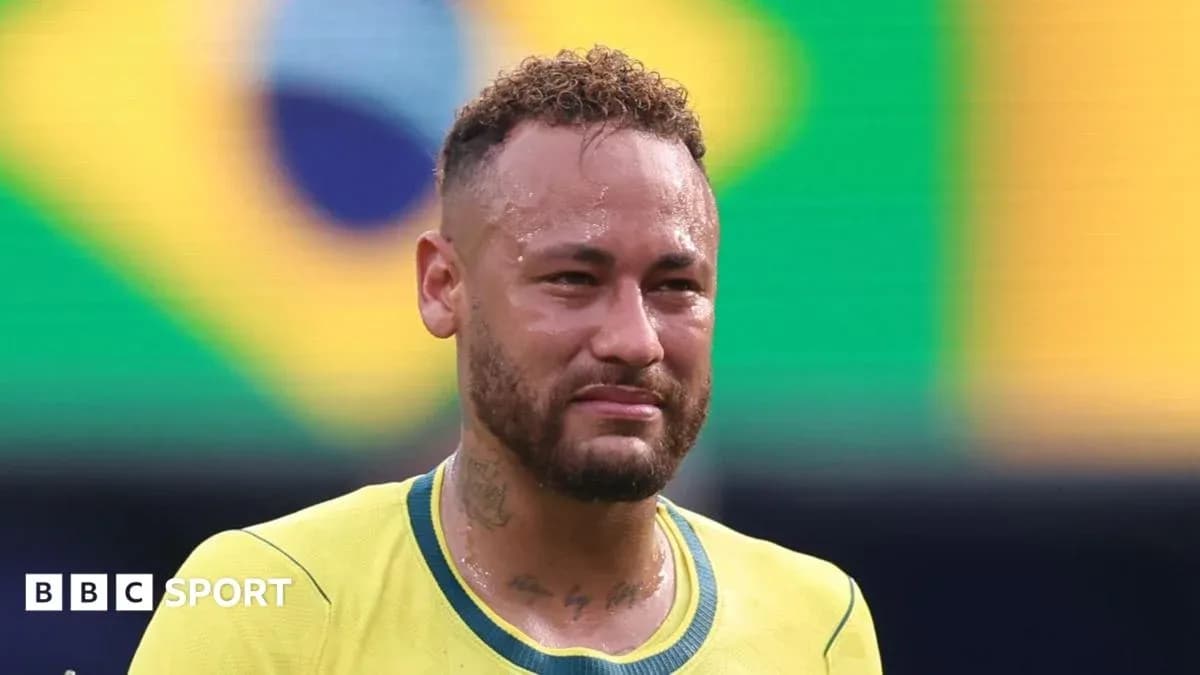
Neymar's Emotional Farewell as Brazil Exits World Cup to Norway
Neymar walked off the MetLife Stadium pitch with his head down, eyes red, and voice cracking. Minutes earlier he had rolled a penalty into the net, a familiar scene in Brazil’s yellow. This time it meant almost nothing.
“I tried, I tried. Now it's over. I started here, I finished here,” he told TV Globo, the words landing with the weight of an era closing.
At 34, Brazil’s all-time leading goalscorer says his international career is done, his final act coming in a 2026 World Cup last-16 defeat to Norway in New Jersey. No fairytale, no late rescue. Just a consolation goal and a brutal exit.
A Final Cameo That Came Too Late
Brazil were already 2-0 down when Neymar was sent on in the 67th minute, the stadium crackling with a mix of hope and anxiety. This was the moment, the roll of the dice. The superstar summoned from the bench one more time to change a game, to change a destiny.
The script never caught up with the occasion.
He drifted between the lines, demanded the ball, looked for pockets of space. Norway held firm. The clock accelerated. Brazil, chasing shadows for long stretches, could not find the old rhythm that once seemed to appear on command whenever Neymar stepped onto a big stage.
Deep into added time, the break finally came: a penalty, a lifeline. Neymar converted, as he has so often, but there was no surge of belief, no sense of inevitability. Just a muted roar, a glance at the scoreboard, and the realisation that the Selecao were still going home.
The whistle followed soon after. So did the words that stunned a nation: “Now it's over.”
From First Goal to Last at MetLife
There is a cruel symmetry to where it ended.
Neymar’s Brazil story at MetLife Stadium began in August 2010. A teenager then, all sharp edges and promise, he scored on his debut in a 2-0 friendly win against the United States. That night felt like a starting gun for a new Brazilian idol.
Sixteen years on, the same venue staged his goodbye.
Between those two moments, he became the country’s most prolific marksman. Eighty goals for Brazil, more than any player in the nation’s history. One hundred and thirty caps, a total bettered only by Cafu’s 142. He carried the No. 10 shirt, the expectations, and often the entire attacking burden of a football-obsessed country.
This World Cup was supposed to be his epilogue, not his peak. A final chapter, yes, but one last chance to chase the trophy that always eluded him.
A Body That Wouldn’t Cooperate
Neymar had not played for Brazil since 2023, his international career stalled by a string of injuries that chipped away at his explosiveness and rhythm. Each setback sparked the same question: would he ever again be the player who terrified defences and lit up tournaments?
The 2026 call-up felt like both a reward and a risk. Brazil gambled that even a diminished Neymar could still offer something decisive in short bursts. He was no longer the centrepiece, but he remained the symbol.
His role reflected that reality. He came off the bench in Brazil’s final group game, a 3-0 win over Scotland, entering late with the result already safe. Against Norway, in the knockout rounds, he was again the substitute, thrown on to salvage a tie that had begun to slip away long before he crossed the white line.
Two appearances. One goal. No knockout win. That is the stark ledger of his fourth World Cup.
Four World Cups, One Missing Trophy
Neymar’s World Cup journey stretches across 2014, 2018, 2022 and now 2026. Four tournaments, four different versions of the same player: the rising star on home soil in 2014, the wounded talisman in 2018, the veteran leader in 2022, and the fading but still dangerous figure in 2026.
He delivered goals, moments, storylines. What he never delivered, and what Brazil never managed around him, was the ultimate prize.
For a player of his talent, that gap will always sting. Yet the numbers refuse to be dismissed. Eighty goals, 130 caps, a decade and a half spent as the face of Brazilian football. When the debate about his place in the nation’s hierarchy flares again, those statistics will stand as his defence.
On this night, though, numbers felt hollow. The image that will linger is not of a record-breaker, but of a 34-year-old standing in the stadium where it all began, accepting that his time in the yellow shirt has run out.
He started here. He finished here. What Brazil looks like without him is the next great question.