Neymar's Triumphant Return to Brazil's National Team
Neymar did not need a team talk. He did not even need Carlo Ancelotti’s praise. Miami told him everything.
For hours before kick-off, in the thick, clinging heat of Miami Gardens, every glimpse of yellow with his name on the back drew a reaction. A banner. A shirt. A replay on the giant screens. The crowd responded as if he had already scored the winner.
Almost three years had passed since Neymar last wore Brazil’s colours in a competitive match. Three years of questions, doubts, and long, lonely rehab sessions. This World Cup has arrived with him no longer the centrepiece, no longer the face on every billboard. Yet here, in a city that adores stars, the stage swung back towards him.
An anterior cruciate ligament and meniscus tear in October 2023 had ripped him out of the picture. The injury, suffered in a World Cup qualifier, cost him not just matches but rhythm, relevance, and the easy certainty that he would always be Brazil’s first name on the teamsheet. Game time dried up as he recovered. The clock kept ticking.
Now 34, Neymar walked back into the international glare and found it waiting for him, still fierce, still demanding. Scotland, wilting in the heat, were reduced to extras in someone else’s story.
Miami, lit up for a forgotten king
Miami Stadium is not subtle. Four giant screens loom over the pitch, bright enough to catch the eye from miles away. When Neymar’s name flashed up before this Group C finale, the noise surged. It felt less like a team announcement and more like a headliner being introduced.
By then, Brazil had already begun to dismantle Scotland. Vinicius Jnr struck twice in the first half, ruthless and sharp, the new face of the Selecao twisting the knife. Matheus Cunha added a third, a finish that underlined Scotland’s self-inflicted collapse.
The goals were greeted with joy, of course, but there was a different kind of roar reserved for something else. A shot of Neymar on the screen. A close-up of him stretching on the touchline. A hint he might be coming on.
When he finally peeled off his warm-up bib and moved towards the touchline, the stadium erupted. The match, already decided, suddenly felt secondary. Cunha’s number went up, Neymar trotted on, and the noise rolled around the stands like a wave.
“He had the opportunity to play, because I think he deserved to play. He trained and worked hard to recover, with professionalism,” Ancelotti said afterwards. The Italian has seen enough great players to know when one still has something to give.
“For this World Cup, I think that he can help the team with his qualities. I think he played well, the few minutes he was on the pitch.
“Neymar needs no ulterior motivation. Everyone loves him here. He needs no motivation to wear the colours of Brazil.
“Neymar is still the same, and at 34, he has the same passion he had as a kid.”
Twenty minutes, one message
The damage to Scotland was already done by the time Neymar stepped over the white line. Brazil were cruising, Scotland were chasing shadows, and the scoreboard told its own story. Yet the final act belonged to the veteran.
He had 20 minutes. He made them count.
Twenty-four touches in that short spell – only 14 fewer than Cunha had managed in 76 minutes. A shot on target. Little darts into space, quick combinations, hints of the old swagger. It was not a vintage Neymar show, not yet, but it was enough to remind everyone why his name still carries such weight.
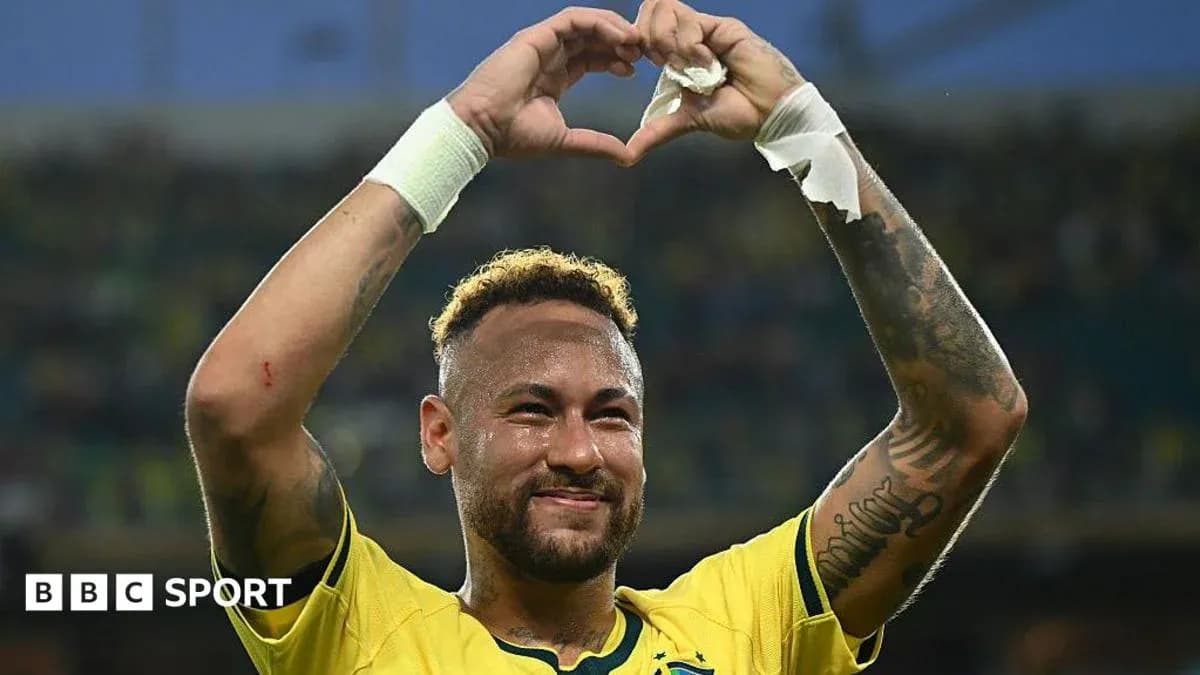
The real scene came after the whistle. The giant screens found him again as he walked towards the Brazil fans, shirt clinging to him, sweat still dripping. He applauded them, they roared back, and then he reached the front of the stand and embraced his young daughter. Cameras zoomed in. The stadium drank it in.
A hero, absent for so long, had reappeared at a moment when Brazil’s hunger for greatness borders on obsession.
A nation still chasing its sixth star
Brazil have not lifted the World Cup since 2002. For a country that measures eras in trophies, that gap feels like an eternity. Their last major title came in 2019, with a ninth Copa America, but the biggest prize has remained stubbornly out of reach.
Under Ancelotti, the picture has been uneven. Performances have swung between promise and frustration. Brazil have failed to beat Argentina, Ecuador, Bolivia, Japan, Tunisia, France and, most recently, Morocco. The aura, that sense of inevitability, has flickered.
Against a Scotland side that kept tripping over its own feet, the old Brazil resurfaced in flashes. There were spells of pure swagger, threaded with a ruthless edge that has too often gone missing. This time, the chances were taken, the pressure told, and Group C ended with Brazil on top.
As supporters spilled out into the Miami night, they celebrated more than a routine win. They rejoiced in the table, yes, but also in the sight they had waited years to see: Neymar, back in the middle of it all.
Outside the ground, the debate about where he sits in Brazil’s pantheon rumbled on.
“Pele is the best player of all time. No comparison,” one supporter said, heading away from the stadium. “He won three World Cups for Brazil.
“Neymar will be among the best ones. He could be in the same level as Ronaldo or Ronaldinho if he wins the World Cup.
“I was in 2016 at Maracana, when he was the guy who scored the decider at the Olympics, and that was a title that Brazil never had before, but the World Cup is the title that we need, and we’re going for the six stars.
“I think he’s able to open up the field and bring out jogo bonito, as they say.
“They have to respect who he is and who he once was, because if you don’t, he’ll make you pay, that’s for sure.”
The new Brazil, led by Vinicius and a fresh generation, has started to find its voice. In Miami, the old idol walked back into the frame. The question now is brutally simple: in a tournament that demands both memory and renewal, can Neymar turn this roar of welcome into the sound of a sixth star being stitched above that famous crest?