NFF Cleans House After Super Falcons' WAFCON Disappointment
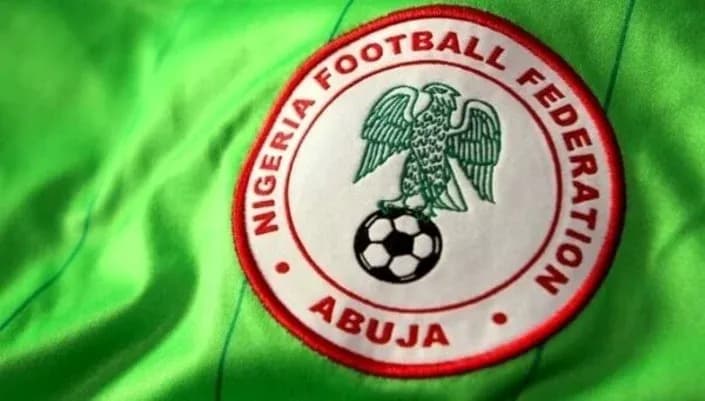
The Nigeria Football Federation has swept out the Super Falcons’ technical crew in the wake of a disastrous Women’s Africa Cup of Nations campaign and the country’s first-ever failure to reach a Women’s World Cup.
In a terse announcement on its official X account on Monday, the NFF confirmed that every member of the Super Falcons’ technical staff has been asked to step down “with immediate effect.”
No soft landing. No transition period. A clean break.
The decision comes on the back of a bruising 2026 WAFCON in Morocco, where Nigeria arrived as defending champions and the standard-bearers of African women’s football. The expectation was familiar: retain the title, underline their dominance, and punch their ticket to the 2027 FIFA Women’s World Cup.
Instead, the campaign unravelled. Nigeria failed to secure qualification for the 2027 tournament, a collapse that cuts deeper than a lost trophy. It ends a proud, uninterrupted World Cup run stretching back to the inaugural edition in 1991. For a team that has long been Africa’s reference point in the women’s game, the setback is historic.
The fallout has been swift. By clearing out the technical crew, the NFF has signalled that the current trajectory is unacceptable and that a new footballing direction is non-negotiable.
That fresh start has to come quickly.
Nigeria’s next major assignment is already looming: qualification for the 2028 Olympic Games, with the campaign set to kick off in October. The Super Falcons are expected to open against Comoros, a tie that, on paper, Nigeria should control. But recent events have stripped away any sense of entitlement. Preparation, structure, and clarity on the bench now matter more than reputation.
The federation faces an urgent double challenge: appoint a new technical team capable of rebuilding a shaken squad, and do it fast enough to avoid stumbling into Olympic qualifying with uncertainty hanging over the camp. Any prolonged vacuum on the touchline risks compounding the damage, disrupting training plans and feeding wider doubts about the team’s direction.
This is more than a routine reshuffle. It is a reset at a moment when Nigeria’s long-held aura in African women’s football has taken a heavy hit.
The next appointment will not just be about tactics or formations. It will be about restoring belief in a side that, for three decades, treated World Cup qualification as a given. Now, with that streak broken, the question is stark: who leads the Super Falcons into the next era, and can they make sure this kind of failure does not become a new normal?