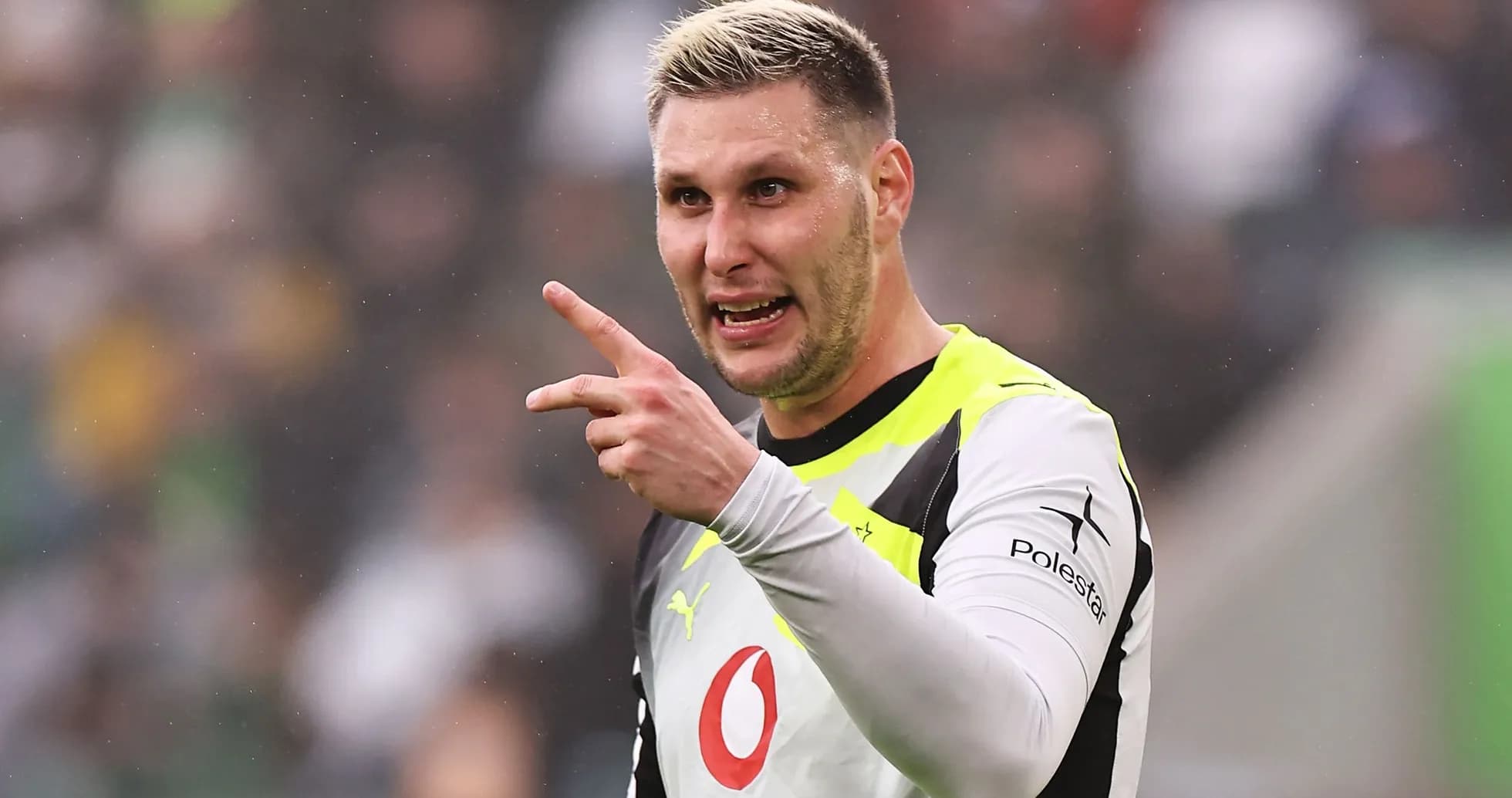
Niklas Süle Announces Retirement from Professional Football
Niklas Süle has never been one for drama. On Thursday, though, he chose a stage that left no room for doubt. Sitting in front of a microphone on the “Spielmacher” podcast, the Borussia Dortmund defender announced he is retiring from professional football – and with that, he closed the book on a career that always felt like it had more chapters left.
The timing caught many off guard. 1. FC Köln had been circling. Several MLS clubs had made their interest known. On paper, there was still a market for a 29-year-old centre-back with his experience, his presence, his CV.
But the decision wasn’t made on paper.
It was made on 18 April, in the bowels of a stadium he knew too well, after a match against his former club TSG Hoffenheim. Süle felt the familiar stab of fear in his knee. A third cruciate ligament tear? The thought alone was enough to drag him back through years of rehab, doubt, and lonely gym sessions.
Then came the moment that broke him.
In the dressing room, the club doctor performed the drawer test. A look to the physio. A shake of the head. The physio checked as well. Again, no resistance. For Süle, it felt like the verdict.
He walked into the shower and cried. Ten minutes. No cameras, no teammates, no bravado. Just a 29-year-old who thought his body had finally given in.
The scans later brought the all-clear. No rupture. No third cruciate. But by then, something deeper had shifted. As he put it, it was “a thousand per cent clear that it was over.”
From that point, the rest was administration.
Süle informed BVB coach Niko Kovac of his decision to leave the club at the end of the season, ending weeks of speculation around his future. Those close to him had sensed the direction of travel. Dortmund’s choice not to extend his contract, which expires this summer, effectively sealed it. The farewell now has a date and a backdrop: an official send-off before Friday’s home match against Eintracht Frankfurt.
On a strictly sporting level, Süle still believes he could carry on. And he probably could.
“I do believe that I'm a player who, in terms of quality, could continue playing football. Mentally, it became more difficult,” he admitted on the podcast. That line cuts to the heart of his decision. The legs might still go. The head no longer wants to.
His career has long been framed by two recurring battles: serious injuries and the public scrutiny of his weight. Unlike many, he never ducked those conversations. On “Spielmacher” he spoke about them with a disarming mix of honesty and self-deprecating humour, turning what others might have hidden into something he owned.
This is the player who moved from FC Bayern Munich to Dortmund on a free transfer in 2022, walking straight into the glare of one of the fiercest rivalries in German football. He has lived the pressure of title races, the grind of recovery, the constant judgement that comes with playing for Germany’s biggest clubs.
And yet, as his career winds down, he is chasing something surprisingly modest: one last appearance, one last number.
“In the best-case scenario, I'll get another ten seconds, a minute, or, if Niko Kovac wants, even five minutes – I can manage that,” he said. The target is clear: his 300th Bundesliga match. Not in an empty stadium, not as a footnote, but in front of 80,000 spectators, with his family in the stands.
That is the image he wants to take with him.
He spoke with genuine gratitude about where he has landed after everything his body has put him through. He is “in reasonably good physical shape,” he said, able to play sport, to kick a ball with his children, to play golf. For a man who once feared another long, dark road of rehab, that is no small victory.
So on Friday night, if Kovac turns to him and sends him to the touchline, it will not just be another substitution. It will be a career distilled into a few final strides, a handshake, a roar from the Yellow Wall, and a number on a stats sheet that means far more to the man than it ever will to the record books.
After that, the boots go away. The body gets a break. And a defender who has spent his adult life under the floodlights steps into something far less predictable than a football season: the rest of his life.