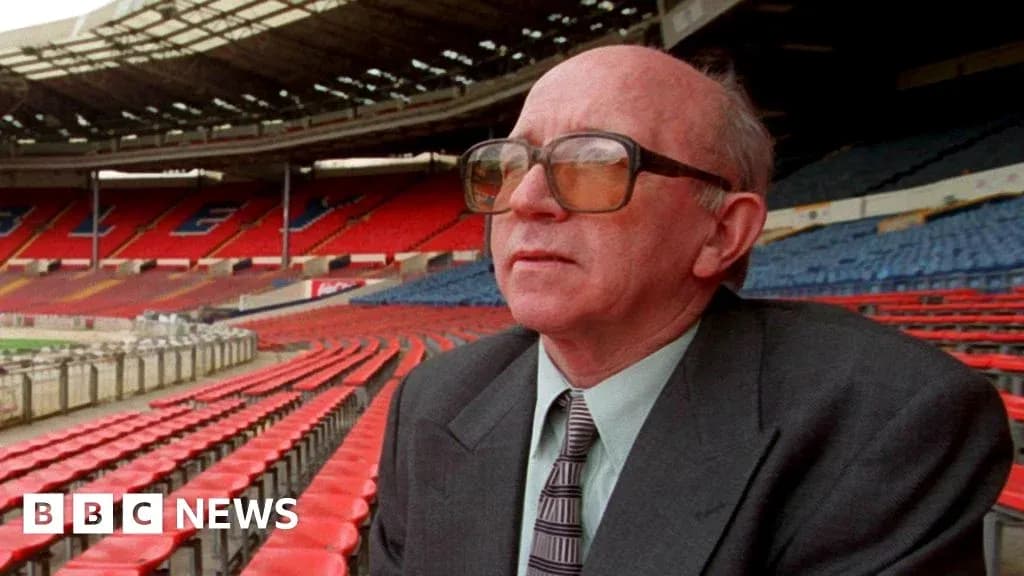
Nobby Stiles' Death Linked to CTE: Inquest Set to Examine Football's Concussion Crisis
Nobby Stiles, the gap-toothed enforcer of England’s 1966 World Cup triumph, died with a traumatic brain injury and chronic traumatic encephalopathy (CTE), a coroner has confirmed, as the game’s long-running concussion crisis moves into an even sharper, more uncomfortable focus.
A court in Stockport heard that Stiles, who passed away in 2020 aged 78, had high-stage CTE – the degenerative brain condition repeatedly linked to head trauma – along with other serious brain diseases. On that basis, area coroner for Greater Manchester South, Chris Morris, ruled that a full inquest into his death must now be held.
“The sad death of Mr Stiles,” as Morris described it, was not originally referred to the coroner at the time. That omission, he said, was “for reasons not entirely clear” and only changed after Stiles’s family came forward with information that triggered a fresh investigation and a review of his medical records by a brain specialist.
What that expert found was stark. Stiles’s death was contributed to by high-stage CTE, “stage three limbic predominant age related TDP-43,” and small vessel cerebrovascular disease. Crucially, CTE was categorised as a traumatic injury.
“On the basis of that cause of death, particularly the inclusion of a traumatic injury included in the cause of death, I’m satisfied an inquest is required,” Morris told the court.
The inquest hearing will take place on Wednesday at Stockport coroner’s court, a small room now carrying the weight of a much bigger argument about football’s past and its responsibilities to those who built the modern game.
Stiles was born in Manchester in 1942, a local boy who grew into one of the most uncompromising defensive midfielders of his generation. Capped 28 times by England, he played nearly 400 games for Manchester United, winning the European Cup in 1968 to sit alongside that World Cup winner’s medal. His image – socks rolled down, boots flying into tackles, and the famous jig at Wembley – became part of English football’s folklore.
Behind those memories, his family say, lay years of damage. They have campaigned relentlessly since his death, urging football’s authorities to confront the long-term consequences of heading heavy balls and playing through blows to the head in an era when concussion protocols were virtually non-existent.
That fight has now moved well beyond one family’s grief.
John Stiles, Nobby’s son, is a leading figure in Football Families for Justice (FFJ), a group pressing for better support for former players living with dementia and other neurological conditions. He is one of dozens of ex-professionals and relatives bringing legal action against the Football Association, the Football Association of Wales and the English Football League.
Their claim is blunt. They argue those governing bodies were “negligent and in breach of their duty of care” to players by failing to protect them from the risks of repeated head impacts, especially heading in training and matches. Lawyers acting for the families say football’s leaders knew, or should have known, for decades that such exposure was likely to cause brain injuries.
The sport’s authorities contest that charge. In March, lawyers for The Football Association told the High Court that “it has not been established by science” that heading a ball or “occasional” concussion can lead to permanent brain damage. That line goes to the heart of the looming legal battle: what was known, when it was known, and what was done – or not done – in response.
Yet the pattern of cases continues to grow. In January, an inquest into the death of Gordon McQueen, the former Scotland, Manchester United and Leeds United defender, concluded that heading the ball was “likely” to have contributed to a brain injury that played a part in his death at 70.
McQueen’s case, like Stiles’s, comes from an era when centre-backs and holding midfielders were expected to attack every cross and long clearance with their head, session after session, season after season. The science is still being argued over in courtrooms and medical journals, but the human cost is becoming harder to ignore.
Now one of English football’s most iconic World Cup winners is formally recorded as having died with a traumatic brain injury. An inquest will probe how that conclusion was reached and what it means for the official record of his death.
The legal arguments will rage on. The medical research will continue to evolve. But for a sport built on its history, the question lingers: how many more heroes from that history will have to pass through a coroner’s court before football finally decides what it owes them?