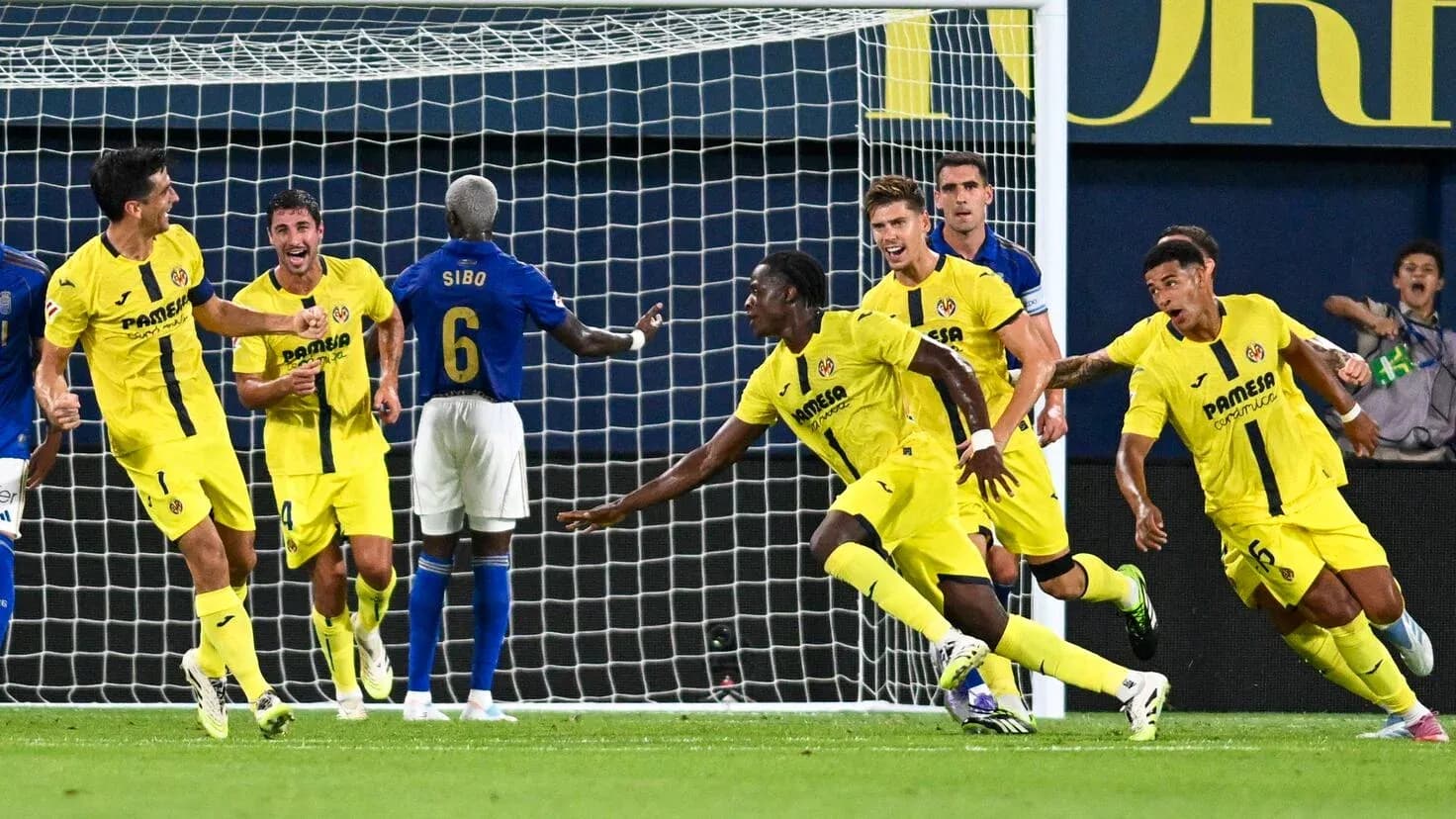
Oviedo vs Villarreal: Clash of Survival and Champions League Aspirations
On 23 April 2026, the Estadio Nuevo Carlos Tartiere in Oviedo becomes the stage for a clash of desperation against momentum. Bottom‑placed Oviedo, marooned in 20th with 27 points and a -24 goal difference after 31 matches, must find a way to derail a Villarreal side sitting 3rd on 61 points and chasing the Champions League. The reverse fixture was a harsh lesson: Villarreal cruised to a 2–0 win in Villarreal on the opening Matchday of the season. Now, under the lights in Oviedo, the hosts are fighting for survival while the visitors are fighting for Europe.
Statistical Insights: Timing & Efficiency
The clocks inside Estadio Nuevo Carlos Tartiere may tell the same time, but the danger windows for these two sides are very different.
Oviedo – scoring and conceding patterns (31 league games):
For goals scored, the absolute Peak period is 31–45 minutes (8 goals, 33.33%), where Oviedo are at their most incisive before the interval. They also carry a secondary punch just after half-time in the 46–60 window (5 goals, 20.83%).
Defensively, their most vulnerable spell is the closing stages: the Peak is 76–90 minutes (13 goals conceded, 27.08%), followed by 61–75 minutes (10 goals conceded, 20.83%). Late collapses are a recurring theme (48 goals conceded in total, 1.5 per match).
Villarreal – scoring and conceding patterns (31 league games):
In attack, Villarreal’s Peak is 31–45 minutes (14 goals, 24.56%), with a powerful surge around half-time backed up by 46–60 minutes (12 goals, 21.05%). They spread their 56 goals well, averaging 1.8 per match, with consistent threat from 0–75 minutes and still solid output in the 76–90 range (8 goals, 14.04%).
Defensively, the Peak danger period is also late: 76–90 minutes (11 goals conceded, 31.43%), ahead of 46–60 minutes (8 goals conceded, 22.86%). Despite this, they keep their overall defensive record relatively controlled at 36 goals conceded (1.2 per match).
Overlaying these curves, the final quarter of the match looks primed for drama: Oviedo concede most late (27.08%), Villarreal also wobble late (31.43%), and both sides’ attacking structures are strong around the interval. The probability of decisive late incidents is high based on these distributions.
Match Essentials
- 🏆 Competition: La Liga (Season 2025).
- 🏟 Venue: Estadio Nuevo Carlos Tartiere, Oviedo.
- 🗓️ Date: 23 April 2026.
The Tactical Battle: Expert Prediction
The prediction model leans clearly towards the visitors while still protecting against the upset. Villarreal are flagged as the expected winner with the comment “Win or draw”, and the advice line is explicit: Double chance: draw or Villarreal. The percentage model gives Oviedo just 10% to win, with 45% for the draw and 45% for an away victory.
The Poisson-based view in the comparison block further underlines the imbalance: Villarreal carry a 73% Poisson win probability versus 27% for Oviedo, a gap consistent with the league table and goal metrics (Oviedo: 24 scored, 48 conceded; Villarreal: 56 scored, 36 conceded, all across 31 games).
For bettors, the model’s “win or draw” posture is reflected in the market: most major bookmakers price Villarreal as clear favourites but not overwhelming ones, leaving some room for value on the away side when combined with the statistical edge.
Discipline and intensity: cards and fouls profile
Oviedo (31 league games – card data from team statistics):
Oviedo’s yellow-card Peak comes in the 61–75 minute window (15 yellows, 20.83%), closely followed by 46–60 (14 yellows, 19.44%) and 31–45 and 76–90 (13 yellows each, 18.06%). This paints a picture of a side that becomes increasingly stretched and reactive as the match wears on, especially after the break (high yellow volume from 31–90 minutes, exact stats in brackets).
Red cards spike dramatically late: the Peak is 76–90 minutes (3 reds, 37.50%), with additional dismissals in 16–30, 46–60 and 61–75 (1 each, 12.50% per window) and even 91–105 (2 reds, 25.00%). This is a volatile team under pressure (total red-card share heavily skewed to the final third of games).
Villarreal (31 league games – card data from team statistics):
Villarreal’s yellow-card Peak is also late: 76–90 minutes (18 yellows, 26.09%), followed by 61–75 (16 yellows, 23.19%). They show heightened aggression and tactical fouling as they protect leads or chase results in the last half-hour (high yellow volume from 61–90 minutes, exact stats in brackets).
Red cards are rarer but similarly late-peaked: the key window is 76–90 minutes (2 reds, 66.67%), with one earlier dismissal in 31–45 (1 red, 33.33%).
Put together, this looks like a match that could escalate in intensity after half-time, particularly in the last 30 minutes, with both sides statistically prone to cards and late disciplinary issues.
Recent Head-to-Head & Form
- Current Form String (Standings): Oviedo – WWLWD; Villarreal – WLWDW.
- H2H Summary (Last 10 Meetings): Based on the provided head-to-head sample of 1 match, Villarreal have 1 win, 0 draws and 0 defeats across the provided head-to-head sample.
- Verified Previous Results:
- 2–0 (La Liga season 2025, August 2025) – Villarreal vs Oviedo at Estadio de la Ceramica.
Tactical Deep-Dive
Oviedo Analysis
From the standings, Oviedo’s season totals across 31 league games read: 6 wins, 9 draws, 16 defeats, 24 goals scored and 48 goals conceded. At home they have played 15 times, winning 4, drawing 5 and losing 6, with just 7 goals scored and 14 conceded. That meagre home output (0.47 goals per home game) underlines their blunt attack in front of their own fans.
Using the broader team statistics over the same 31‑match sample, Oviedo average 0.8 goals scored per game (24 total) and 1.5 goals conceded per game (48 total). Their scoring is front‑loaded around half-time (Peak 31–45 minutes, 8 goals, 33.33%), but they struggle to sustain pressure late on, where their defensive line frays (Peak concessions 76–90 minutes, 13 goals, 27.08%).
Tactically, the data shows a clear identity: Oviedo have lined up most often in a 4‑2‑3‑1 (22 matches), with occasional switches to 4‑3‑3, 3‑4‑3, 4‑4‑1‑1 and 4‑4‑2. The 4‑2‑3‑1 suggests a double pivot trying to shield a fragile back four while allowing a central creator to link with the lone striker. Yet, with 16 matches failing to score and 9 clean sheets, they oscillate between being compact and toothless (16 failed‑to‑score games, 9 clean sheets, exact stats in brackets). Their biggest wins (1–0 at home, 0–3 away) and heaviest defeats (0–3 at home, 4–0 away) confirm a low‑margin team: when they win, it is narrow; when they lose, it can unravel.
Discipline is a real tactical variable: late yellow and red peaks show a side that tends to chase games with increasing risk, which can be costly against Villarreal’s counter‑attacking quality.
Villarreal Analysis
From the standings, Villarreal’s season totals across 31 league games are those of a top‑three contender: 19 wins, 4 draws, 8 defeats, 56 goals scored and 36 goals conceded. At home they are formidable (12 wins, 1 draw, 2 defeats, 34 scored, 13 conceded in 15 matches), while away they remain solid if less dominant (7 wins, 3 draws, 6 defeats, 22 scored, 23 conceded in 16 matches).
Across the full 31‑match sample from team statistics, Villarreal average 1.8 goals scored per game (56 total) and 1.2 goals conceded per game (36 total). Their attack is versatile: a Peak scoring window of 31–45 minutes (14 goals, 24.56%) is supported by strong production in 46–60 (12 goals, 21.05%) and 16–30 (9 goals, 15.79%). Defensively, they are generally controlled but show their own late fragility (76–90 minutes, 11 goals conceded, 31.43%).
Structurally, Villarreal are extremely settled: they have used a 4‑4‑2 in 30 matches, with just one outing in 4‑3‑3. The 4‑4‑2 underpins a balanced, high‑output side that can press, counter and sustain possession. With only 5 matches failing to score and 8 clean sheets, they are consistently dangerous going forward while maintaining a respectable defensive platform (exact stats in brackets). Their biggest win at home (5–0) and solid away wins (1–3) show they can overwhelm weaker opponents, especially those struggling to build from the back like Oviedo.
Personnel and Tactical Shapes
Oviedo’s squad blends experienced technicians and hard‑running forwards. In attack, F. Viñas is pivotal: 9 league goals, 1 assist and a relentless duel volume (408 duels, 214 won), but also a combustible edge with 4 yellows and 2 reds (plus a yellow‑red) in 27 appearances. Around him, creative support can come from veterans like Santi Cazorla and workers such as L. Dendoncker and S. Colombatto, suggesting a structure built on a double pivot and a roaming 10 behind the striker. The defensive unit – with options like E. Bailly, Dani Calvo, David Costas and full‑backs such as Lucas Ahijado or Nacho Vidal – will likely sit in a medium‑low block, trying to compress space between the lines and protect against Villarreal’s combinations.
Villarreal, by contrast, are stacked with creative and direct threats. In the final third, G. Mikautadze (9 goals, 5 assists, 43 shots, 25 on target) and Alberto Moleiro (9 goals, 4 assists, 603 passes at 76% accuracy, 30 key passes) headline a multi‑layered attack. Wide and support options like T. Buchanan (6 goals, 1 assist, 8 yellows) and seasoned forwards such as Gerard Moreno, N. Pépé and Ayoze Pérez give the coach flexibility between a classic front two and wide‑drifting forwards. In midfield, Santi Comesaña (3 goals, 5 assists, 1017 passes at 82% accuracy, 43 tackles, 24 interceptions) and Dani Parejo provide control and distribution, while at the back S. Mouriño (9 yellows, 1 yellow‑red) anchors a back line that is aggressive in duels.
Tactically, expect Oviedo to form a compact 4‑2‑3‑1 defensive shell, with the double pivot screening central spaces and the wide players tracking Villarreal’s full‑backs. Villarreal’s 4‑4‑2 should morph into a 4‑2‑3‑1 in possession, with one striker dropping between the lines and wide midfielders pushing high to pin Oviedo’s full‑backs. The battle for second balls and transitions – especially around Viñas versus Mouriño and Comesaña – will be central.
Projected Starting XIs
- Oviedo: H. Moldovan; Lucas Ahijado, E. Bailly, Dani Calvo, David Costas; L. Dendoncker, S. Colombatto; I. Chaira, Santi Cazorla, H. Hassan; F. Viñas.
- Villarreal: Luíz Júnior; J. Foyth, Rafa Marín, S. Mouriño, Sergi Cardona; T. Buchanan, Santi Comesaña, Dani Parejo, Alberto Moleiro; G. Mikautadze, Gerard Moreno.
Head-to-Head: Numerical Comparison
- Expected Goals (xG): The comparison block aggregates attacking and defensive strength into a composite total rating of 44.3% for Oviedo vs 55.8% for Villarreal, effectively reflecting Villarreal’s xG‑style superiority in both creation and prevention.
- Poisson Win Probability: Oviedo 27% vs Villarreal 73%.
The Score Projection: 0–2
The predictions model leans towards a low‑to‑moderate scoring away result, with both teams’ goal lines set under 2.5. Combining Oviedo’s average of 0.8 goals scored and 1.5 conceded per match with Villarreal’s 1.8 scored and 1.2 conceded, plus the earlier 2–0 Villarreal win in August 2025, the most coherent projection is a 0–2 away victory.
Oviedo’s home attack has been extremely limited (7 goals in 15 home games), while Villarreal’s away output (22 goals in 16 away matches) and their strong Poisson edge (73%) support the idea of the visitors scoring in both halves and managing the game. Oviedo’s late defensive collapses and Villarreal’s powerful 31–60 minute scoring window further back a scenario where the away side establish control and then protect the lead.
Editorial Verdict
From a betting perspective, the statistical and market landscapes align firmly behind Villarreal. The model’s advice – Double chance: draw or Villarreal – is supported by:
- League position and season totals (Oviedo 20th with 24 scored and 48 conceded vs Villarreal 3rd with 56 scored and 36 conceded across 31 games).
- Poisson distribution strongly favouring Villarreal (73% vs 27%).
- Head-to-head edge in the provided sample (2–0 Villarreal in La Liga season 2025).
Bookmakers broadly price Villarreal as odds‑on or close to it in the away column, with many markets offering away odds around 1.94–2.13 and home odds often above 3.5. That makes the draw or Villarreal double‑chance a statistically grounded, lower‑risk angle that matches the model’s guidance. For those seeking more aggressive value, Villarreal to win in a low‑scoring game (in line with both teams’ “under 2.5” goal lean in the prediction) and a correct score of 0–2 fits both the data and the tactical narrative.