Plazma Youth Sport Games: The Davos of Sport in Split
On a stone terrace high above the Adriatic, 20 children sit in a ring, faces fixed on their boards. In the middle, shuffling from one position to the next, Nigel Short tries to keep up. The grandmaster makes a move, pivots awkwardly, makes another, forever circling.
He is not just playing the best young chess talents from the Balkans. He is taking on a small committee each time. The kids can lean over their pieces and quietly consult their “celebrity coaches”. So Short finds himself effectively facing Ana Ivanovic, Sean Dyche and, in the most jarring sight of the afternoon, Peter Thiel.
The former French Open champion, the former Burnley manager and the right‑wing tech billionaire pacing between plastic chairs, whispering advice on knight forks and pawn structure to 10-year-olds. It is surreal, and very much the point.
The “Davos of sport” on the Dalmatian coast
This is the Plazma Youth Sport Games (YSG), 30 years old this summer and turning Split into a kind of Adriatic congress for sport, politics and money. Some of its more illustrious visitors have already christened it “the Davos of sport”.
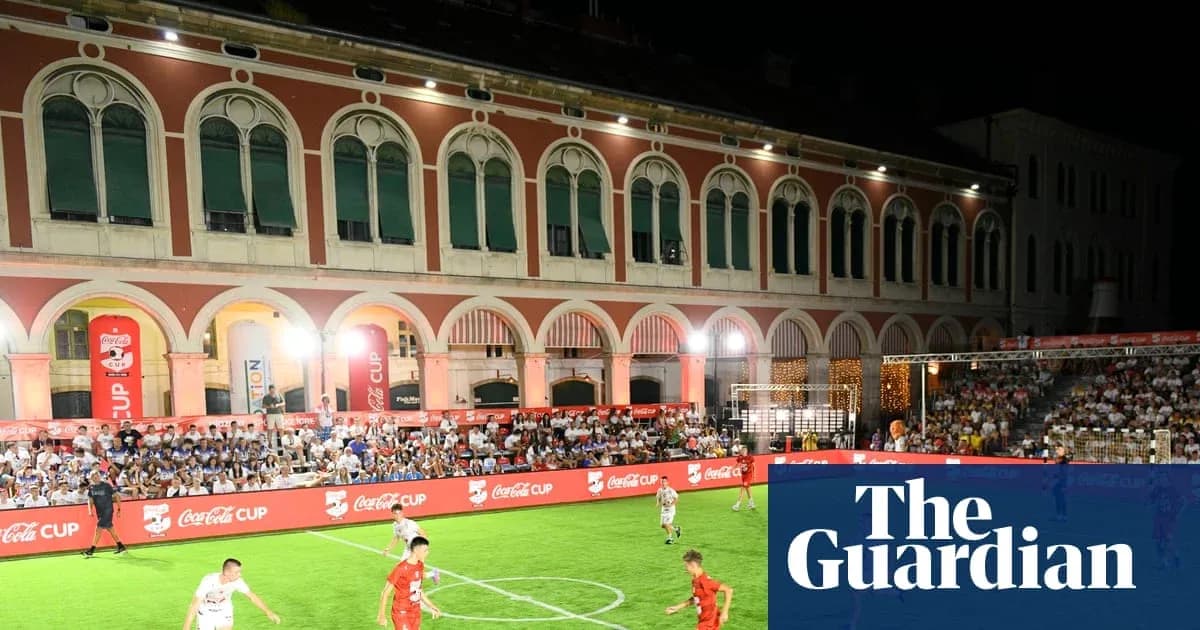
Strip away the grand comparisons and the event still has heft. It is the biggest amateur sports gathering for children in Europe. Just under half a million young people from Croatia, Bosnia and Herzegovina, Serbia, Slovenia and North Macedonia entered qualifiers this year. Over one week in Split, the best of them meet in finals across 10 sports, from chess to 3v3 basketball.
The competition is only half the story. Organisers hammer home themes of teamwork, collaboration and, crucially, putting phones away. They sell Plazma as sport, yes, but also as a “social project” – a place where the scoreboard matters less than the time spent together.
The message has travelled well. Zlatan Ibrahimovic has signed up as an ambassador. So has Alastair Campbell. Visitors tend to leave as converts.
Sean Dyche certainly did. The former Burnley and Everton manager calls the Games “a brilliant, brilliant initiative”, and his voice lifts when he talks about the girls’ mini-football final.
“It was terrific, they were playing good football; getting properly stuck into each other, properly playing,” he said. “You could feel that they felt free and were being supported in that environment.”
Dyche then delivers the sort of verdict that will ring familiar to anyone who has tried to get a community pitch built in Britain. “It seems to me that every time you try and get an initiative off in England, there’s a million rules and regulations that make it difficult,” he said. “I know how hard it can be to get funding too and times are tough for people.”
Born out of crisis, not nostalgia
The Plazma Games themselves emerged from tougher times than these. Zdravko Maric launched them in the wake of the breakup of Yugoslavia and the Bosnian war. The founding idea was not some airy notion of regional harmony. It was more blunt: drag young Croatians away from drugs and into something healthier.
“It’s a lifetime project and we live with it every day,” says his brother, Slaven Maric, who has worked on the Games since the beginning. “But when Zladko started it we didn’t have an idea that it would develop into this. It’s not about sport or the results, it’s about social life, it’s about being together.”
Back then, he says, drug abuse was the burning issue. Now the battlefront has shifted to screens. “Now it’s about bringing the kids to spend sometime together in real life.” Getting children off their phones is already a headline message for the 2026 edition. Esports companies have tried to muscle in. They have been politely shown the door.
Split’s sporting machine
By bringing the Games to Split, the Maric family tapped into a city that already lives and breathes elite sport. With a modern population of only around 160,000, Split punches far above its weight.
Goran Ivanisevic grew up here. So did Bernard Vukas, long considered Croatia’s greatest footballer before Luka Modric came along. The roll call stretches across disciplines: Branko Cikatic, one of the great kickboxers; Toni Kukoc, three-time NBA champion; Stipe Bozic, the renowned mountaineer.
The city has an Olympic “walk of fame” honouring 73 medal winners, laid out with Hollywood swagger. It even has its own sport, picigin – a kind of hand‑played hackysack in the shallows of the Adriatic, more about artistry and camaraderie than points.
No surprise, then, that the bond between Split and the Games runs deep. Locals talk about YSG as though it were another of the city’s clubs.
Slaven Bilic, another native son and now an ambassador, has known Zdravko Maric for more than three decades. “I’m not objective because I’ve known Zdravko for more than 30 years but it’s great that at a time when there’s a lot of negativity in the world that this can exist,” he said. “Especially in this part of the world that is supposed to be unstable.”
Billionaires on the touchline
Three decades on from those fragile beginnings, the question now is how big this can get. Organisers are already pushing beyond the original map. North Macedonia joined the competition proper for the first time this year. Ukrainian teams came as invited guests. Talks have taken place with six other countries about coming on board.
The corporate world has noticed. Coca‑Cola is a partner. So are Topps and Croatian telecoms company Telemach. Around the edges of the courts and pitches, the logos sit alongside a different kind of backing: serious private wealth.
There are now 11 billionaires associated with the Games, several of whom have put money in. One of them is understood to be Peter Thiel, the PayPal and Palantir founder and mentor to JD Vance, the US vice-president. Asked by the Guardian why he had chosen to invest, Thiel offered nothing. He simply moved along the riviera with his security detail, leaving the question hanging in the salt air.
For Aleksander Ceferin, the Uefa president whose organisation also helps fund YSG, the project offers something else: an example he believes the wider game should follow.
“I think that top sport, and the money that you get with top competition, should be used for the development of sport and this is the development of sport,” he said in Split. The line carried an obvious echo of his long‑running clash with Gianni Infantino, and the Fifa president’s attempts to sell a stake in the World Cup to private investors. Ceferin did not want to revisit that fight here. His praise for the Games did it for him.
A Soccer Aid finale on the Adriatic
The week closed on Friday night with a flourish that felt familiar but still faintly absurd: a kind of Adriatic Soccer Aid. On one side, a YSG select team. On the other, 11 all‑stars.
On paper, it looked wildly lopsided. Claude Makélélé, Pavel Nedved and Ibrahimovic all lined up for the star side. The local kids, though, had a different weapon: Sean Dyche on the bench, barking and cajoling.
It was a fitting last act. A bridge between generations, a few more memories etched into young minds, and a reminder that this “Davos of sport” still rests on something disarmingly simple: kids playing games, getting properly stuck in, and walking away with stories they will tell for the rest of their lives.