Police Meeting Highlights Discipline Ahead of Old Firm Clash
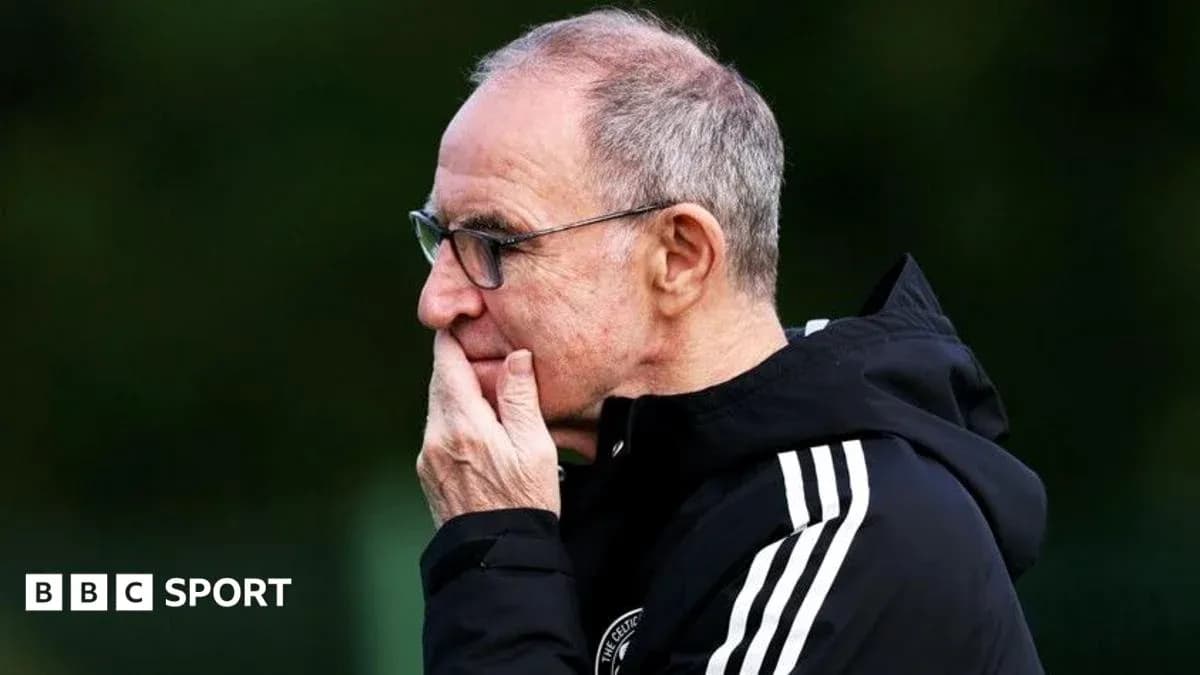
Martin O'Neill’s preparation for an Old Firm quarter-final already loaded with history and hostility took an unusual turn on Friday morning. Before a ball is kicked, Celtic have been reminded that how they behave could matter every bit as much as how they play.
Police Scotland officers visited the Scottish champions’ training base for what O’Neill described as a “little 15-minute meeting” – a short, sharp briefing on conduct ahead of Sunday’s Premier Sport Cup tie against Rangers at Ibrox.
“A timely reminder,” O’Neill called it. The message was clear enough.
Old wounds, fresh warning
This is not happening in a vacuum. Both Celtic and Rangers were ordered last month to play their next home Scottish Cup ties behind closed doors, punishment for the chaos that scarred last season’s quarter-final at Ibrox, a tie Celtic eventually won on penalties.
Celtic have not been back there since that febrile night. They did host Rangers in May, a 3-1 win in the Premiership that underlined their dominance in the fixture, but Sunday’s return to Govan comes with a different kind of tension.
The Scottish Professional Football League has already removed one flashpoint by ruling there will be no away fans at any Old Firm derbies in the league or League Cup this season. The atmosphere will be intense, but it will be one-sided.
Inside that context, the police visit takes on a sharper edge.
“They didn’t mention this, but I would have assumed that one of the things that would be considered is what happens in the field of play, because these things can be taken further,” O’Neill explained.
“You don’t want any sort of punch-ups for a start. Secondly, you don’t want excessive celebrations, stuff like that.
“I think it’s just the behaviour in the light of what has happened in recent fixtures. I think that the conversation with the police wouldn’t have taken place had not recent events been brought up to us.”
No away fans, no safety net
For once, Celtic will walk into Ibrox without even a sliver of visible backing in the stands. No pocket of green and white to salute a goal, no corner of noise to cling to if the game turns ugly.
“It’ll be strange in many aspects not to have any away fans in our area,” O’Neill admitted. “I always felt as if it would give you a crumb of comfort in some description.”
He paused on that thought, then turned back to the football.
“I think the games themselves almost take care of themselves in that sense. Nervously looking forward to it, excitedly looking forward to it.”
Those nerves are understandable, but they are hardly rooted in Celtic’s form. The champions have taken command of the rivalry again, winning the last three derbies since Rangers’ 3-1 victory at Celtic Park in January. After just six league games, O’Neill’s side already sit five points clear at the top of the Premiership.
Rangers, by contrast, have lurched through a turbulent start under Derek McInnes. The new manager has faced criticism from his own support, the early-season stumbles raising questions about his direction. Yet the numbers heading into Sunday are not all bleak: four wins on the bounce have steadied the ship and restored some belief.
Hostility as a weapon
If Rangers are fragile, their crowd will not be. With no Celtic support inside Ibrox, the home stands will feel even more like a weapon.
“I suppose if you get in front in the game, that makes them anxious,” O’Neill suggested. “Talking about getting in front and getting in front are two different things. The crowd will be right behind their team, which you would expect.”
He knows what that noise can do. It can rattle, it can roar, it can drag a tired team through the final 20 minutes. It can also turn quickly if the home side concedes first.
That, in O’Neill’s mind, is where the opportunity lies.
“We just do our best. We know that we’re up against a very fine side. We’re up against a crowd that can make a difference. I’d be delighted to be celebrating something in the game.”
The challenge for Celtic is to walk that tightrope: to play with the fire this fixture demands, without spilling over into the kind of chaos that brought the police to their door in the first place.