Premier League 2026-27 Season: New Rules and Fresh Faces
The Premier League is back – and it’s not quite the same beast.
The 2026-27 season kicks off on Friday with the usual noise, familiar grudges and heavyweight storylines. But under the surface, the league has been rewired: new laws, new dugout faces, record-breaking transfers and a fresh twist in how fans will experience it on screen and radio.
This is not just another opening day.
Time-wasting under the microscope
The first big change hits one of English football’s oldest dark arts: running down the clock.
Referees now have a weapon of their own. If they decide a team is stalling over a throw-in or goal-kick, they can start a visible five-second countdown. Once that count begins, the player has those five seconds to take it. Go over, and the punishment is brutal: a goal-kick turns into a corner to the opposition; a throw-in is handed the other way.
And the clampdown doesn’t stop there.
The enforced off-pitch spell for injured players is getting longer. Last season, if play was halted for an injury, the player had to leave the field for 30 seconds. That mandatory spell is now one minute. Only specific situations avoid it – such as when the injury comes from a foul that earns a card, or in other unusual circumstances.
Goalkeepers will no longer be able to buy cheap breathers, either. If a keeper goes down injured and the game stops, the manager must nominate another outfield player to leave the pitch for one minute as well. Tactical “timeouts” suddenly come with a price.
Substitutions are being sharpened up too. Players now have 10 seconds to get off the pitch once their number goes up. Take longer than that, and their replacement will be forced to wait an extra minute before entering the field. Time-wasting on the walk of shame just became a risky game.
VAR’s reach grows – but not everywhere
Video assistant referees are also stepping into new territory.
From this season, VARs can intervene on second yellow cards if the caution has clearly been shown in error. They still cannot advise a referee to give a second yellow if one has not been produced on the pitch, but they can help correct a mistaken dismissal.
There is a new layer of scrutiny around set pieces as well. If an attacking foul occurs before a free-kick or corner is taken and that set piece leads to a penalty, a goal or a disciplinary sanction, VAR can now step in. The outcome can be wiped and the set piece retaken.
One thing that is not crossing over from international football: the World Cup rule that saw players sent off for talking to opponents with their mouths covered. Despite those red cards in the summer, the Premier League has chosen not to adopt that measure.
Arteta tops the longevity table as the dugouts reset
On the touchline, the league looks very different.
Arsenal begin their title defence with Mikel Arteta now the longest-serving manager in the division. In charge since 2019 and finally a Premier League champion last season, he heads a new hierarchy of stability. Aston Villa’s Unai Emery is next on the list, with Leeds’ Daniel Farke third.
Around them, a wave of fresh appointments has swept through the league. This campaign sets a record for the most new managers starting a Premier League season: nine in total.
Marco Rose takes over at Bournemouth. Xabi Alonso walks into Stamford Bridge as Chelsea’s new head coach. Pierre Sage steps in at Crystal Palace, while Álvaro Arbeloa arrives at Fulham, bringing a Real Madrid pedigree with him.
Gary O’Neil returns to the top flight at Ipswich Town. Liverpool have turned to Andoni Iraola. Manchester City begin a new era under Enzo Maresca. Matthias Jaissle takes charge at Newcastle, and Oliver Glasner starts at Nottingham Forest.
Nine new voices. Nine new ideas. One unforgiving league.
Record fees and high stakes: the headline signings
The transfer market has been typically chaotic, but a handful of deals have defined the summer.
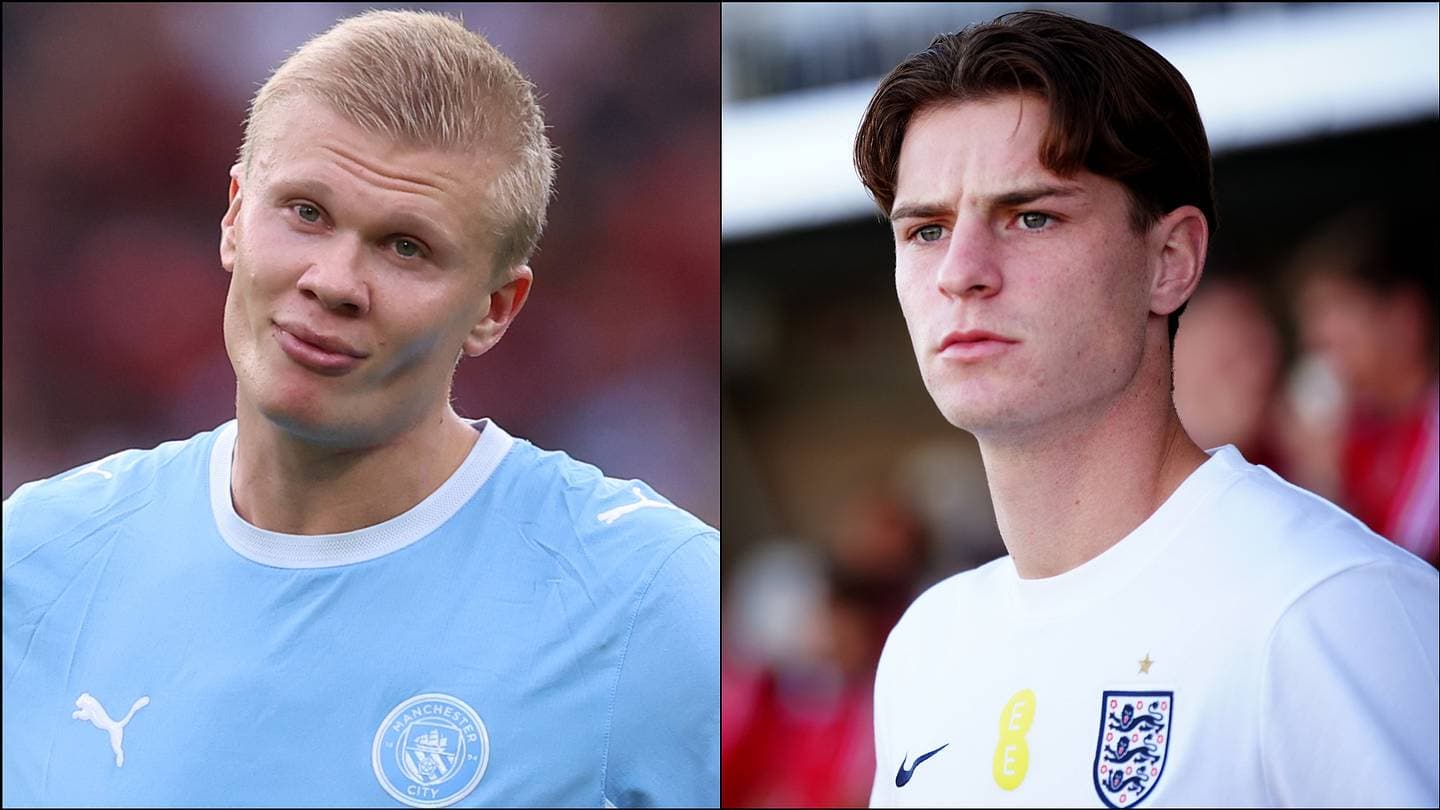
For a brief spell, Elliot Anderson held the British transfer record. Manchester City paid £116m to prise him from Nottingham Forest, slotting him into a rebuilt midfield after the departures of Rodri, Bernardo Silva and Tijjani Reijnders. Anderson arrives not as a luxury extra, but as a central piece in City’s remodelled engine room.
Then City’s mark was broken.
Chelsea went higher for Morgan Rogers, paying £117m to take the versatile forward from Aston Villa. Rogers, who helped England finish third at the World Cup alongside Anderson, leaves Villa after a standout Premier League season in which he scored 10 goals and supplied seven assists. At 24, he is both a statement signing and a glaring loss for Villa.
Arsenal’s big move was quieter in tone but no less significant. They brought in Bruno Guimarães from Newcastle, a midfielder with proven Premier League quality and reliability. Sporting director Andrea Berta spelled out the logic: Guimarães can sit deep, surge box-to-box, and consistently deliver goals and assists. For champions facing a heavier schedule, that kind of depth in the middle of the pitch is priceless.
Fulham, under Arbeloa, have gambled on potential at the very top end. Gonzalo García, who broke into Real Madrid’s first team last season, has followed his former coach to London. It is the striker’s first move away from Madrid; his adaptation to the Premier League’s pace and physicality will be one of the more intriguing subplots of the year.
Lower down the table, Sunderland have gone for experience. Thomas Meunier arrives from Lille with 83 Belgium caps and 14 trophies across spells at PSG and Dortmund. For a club looking to steady itself at this level, that kind of know-how can change dressing rooms.
Old names, new chapters: the promoted trio
The three promoted sides are hardly strangers to the Premier League. Hull City, Coventry City and Ipswich Town all know the terrain – and the scars.
Ipswich’s story has been a rollercoaster. The Tractor Boys climbed back into the Premier League in 2024, only to drop straight back down. Kieran McKenna then dragged them up again by finishing second in the Championship, restoring their top-flight status. But he will not be with them this time. McKenna stepped down to take a break from management, opening the door for Gary O’Neil’s return to the league.
Hull’s comeback has been a decade in the making. Absent from the top flight since 2016-17, they return under Sergej Jakirovic, who guided them to an unexpected promotion. Survival will be the first target; anything more would be a bonus.
Coventry’s journey has been even longer. Twenty-five years outside the Premier League, a spell in League Two, and a slow, stubborn climb back up the pyramid. Frank Lampard orchestrated their Championship title win and now leads them into his first permanent Premier League role since his caretaker stint at Chelsea in 2023. For club and manager, it feels like a second chance at the elite level.
How fans will watch – and listen – to the new era
On the broadcast front, the landscape looks familiar, but with some intriguing tweaks.
Sky Sports and TNT Sports remain the live TV broadcasters in the UK, with the BBC still anchoring the highlights package on Match of the Day. The big change sits in the sound.
For the first time, the Premier League will allow on-field discussions between referees and players to be aired during live broadcasts. It will start as a trial and will not feature on the opening weekend, but once it arrives, viewers will hear the arguments, explanations and flashpoints in real time. The distance between the stands, the sofa and the whistle just got smaller.
Match of the Day is refreshing its punditry line-up too. Former Brentford and Spurs manager Thomas Frank joins the panel, alongside ex-players Toby Alderweireld, Robbie Keane and Ashley Young. Different voices, different angles, the same Saturday night ritual.
One familiar sound, though, is disappearing. The BBC has axed its Fantasy Premier League podcast, Fantasy 606. Host Alistair Bruce-Ball confirmed the decision in July, paying tribute to the listeners whose emails, poems, songs and team management became part of the show’s identity.
So the season opens with a league that looks the same from a distance – Arsenal defending, City reloading, Chelsea spending, promoted clubs dreaming. But the rules are tighter, the touchlines are crowded with new thinkers, and the microphones are edging closer to the pitch.
How quickly will everyone adapt? The answer starts on Friday night.