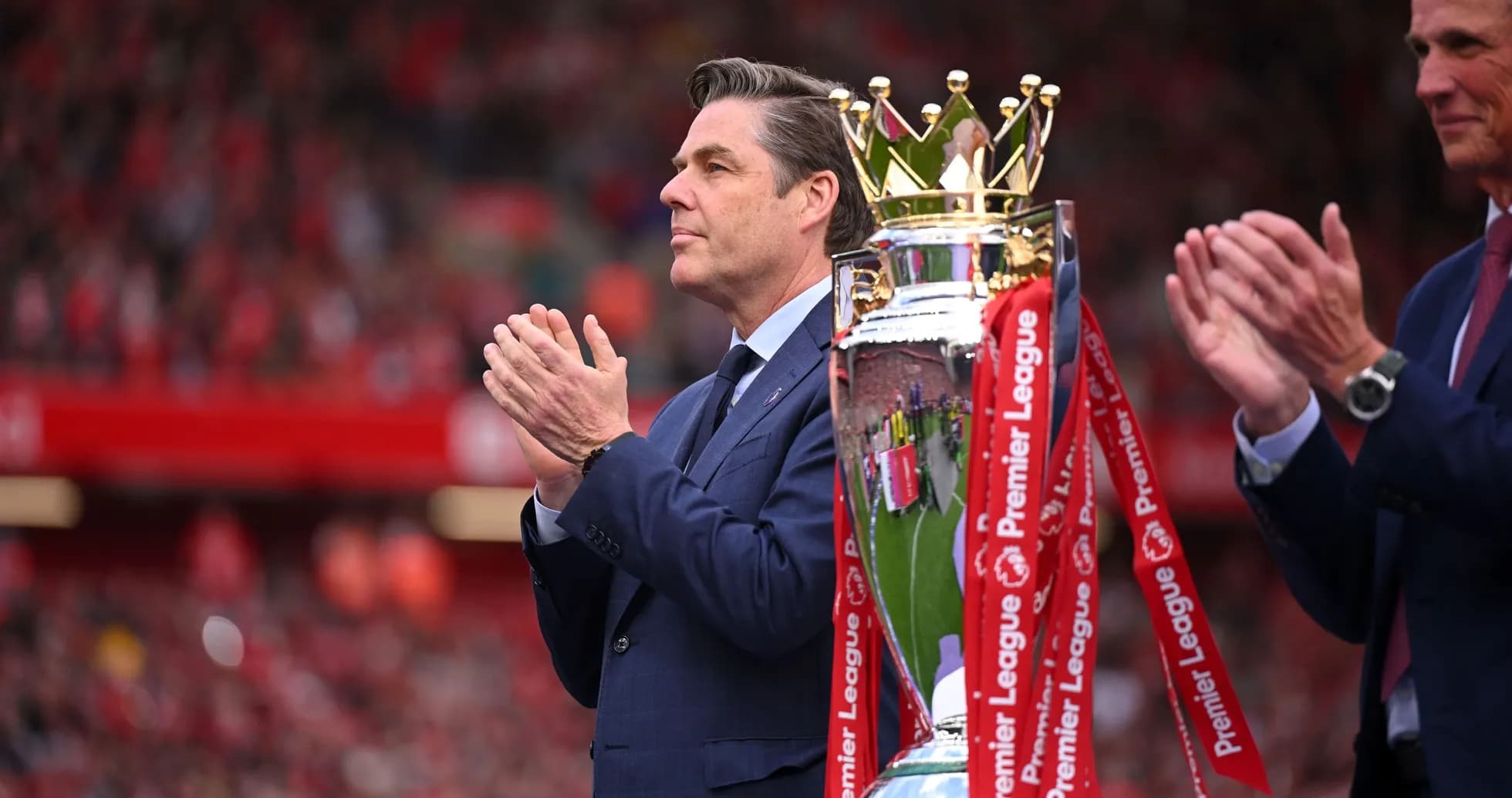
Premier League Chief Executive Richard Masters on Man City Case
Richard Masters has acknowledged the growing impatience around Manchester City’s unresolved financial charges but insists the Premier League cannot cut corners to speed up a verdict.
Speaking at a launch event on Tuesday and in an interview with talkSPORT, the Premier League chief executive addressed the long-running case, which has hung over English football for nearly two years.
Man City were charged in February 2023 over alleged breaches of financial regulations. An independent commission heard the case, with proceedings finally wrapping up in December 2024. Since then, silence.
“As every day elapses, we must be a day nearer,” Masters said. “I obviously can't comment on it. I do understand the frustration. It has taken longer than expected, but we have to follow the process.”
The message was clear: the clock might be ticking loudly in public, but behind closed doors the league believes the integrity of the process outweighs the demand for speed.
Masters underlined that point, framing the commission’s work as a search for clarity rather than a race to a conclusion.
“In the end, the Premier League's responsibility is to ask the Independent Commission to look at serious allegations and to establish the truth,” he said. “That shouldn't be qualified by it taking too long, for example.”
While City wait, other clubs have already faced punishment. Chelsea, for instance, received a £10 million fine and a suspended transfer ban for historical breaches after their new ownership disclosed information about past financial dealings.
That comparison has fuelled debate. Masters leaned into it to highlight how different cases demand different approaches.
“In the situation with Chelsea, obviously it's historic. It's very different to PSR cases,” he explained. “In the case of Chelsea, the new owners came forward with all the information, and we decided to enter a sanction agreement.”
City’s case, he stressed, sits in another category entirely. The Premier League believes the scale and complexity of the allegations, combined with gaps in evidence and the absence of key witnesses in some historical matters, make a contested commission hearing unavoidable.
Where clubs cooperate fully and quickly, sanction agreements can be struck. Where they do not, or where the evidence is incomplete, the legal battle stretches on.
For Manchester City, that means the spotlight stays fixed and the questions keep coming — with the Premier League adamant that only the commission’s final judgment will end the uncertainty.