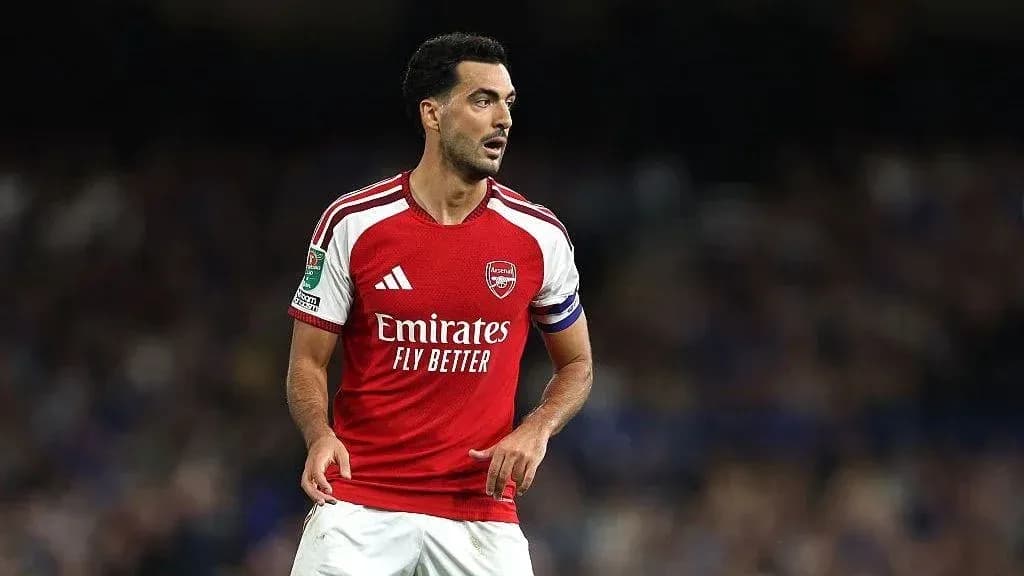
Premier League's Youth Revolution: Max Dowman and JJ Gabriel
The Premier League is being dragged into a new era by kids who should still be worrying about homework, not headline billing.
On one side, Max Dowman, 16, ripping up Ipswich in the Carabao Cup for Arsenal. On the other, JJ Gabriel, 15, telling Manchester United he wants out before he has even kicked a first-team ball. Two teenagers, two very different nights – but the same message: the next generation is arriving early, and they are not prepared to wait.
Dowman’s double against Ipswich came only hours after Gabriel shocked United by asking for his registration to be cancelled. One teenager seizing his chance, another demanding one. Between them, they frame a wider question: which Premier League clubs are actually set up for this youth explosion, and who is falling behind?
To answer that, Transfermarkt’s valuations of teenagers across the division draw a stark map of where the real value lies.
Man City out in front, United slipping back
No one stacks teenage value like Manchester City. Their youngsters are rated at a combined £122.6m, the highest in the league. Chelsea are almost neck and neck on £121m, with Arsenal third on £102.4m.
Then comes a surprise. Brighton sit fourth on £100.7m, a figure that underlines their growing reputation as the sharpest operators in the market for emerging talent. Liverpool, despite their own recent push towards youth, trail behind in fifth on £64.3m.
Manchester United? Once the gold standard for youth under Sir Alex Ferguson, they now sit sixth, with a teenage value of £48.1m. That total leaves them only just ahead of Hull City, who are seventh and punching well above their financial weight.
At the other end, Ipswich have no teenagers with Transfermarkt valuations at all, putting them bottom. Newcastle and Everton also look light, with teen totals of only £9.9m and £10.5m respectively.
Tottenham, for all their talk of a youthful, progressive project, have the lowest teenage value of the traditional big six. Their £23.1m tally leaves them 11th in the league table of teen assets.
Bouaddi, Estevao and the elite teen bracket
At City, one name dominates the numbers. Ayyoub Bouaddi, signed from Lille in August, carries a Transfermarkt value of £68.6m – more than half of City’s entire teenage pot on his own. The 18-year-old midfielder sits alongside Chelsea’s Brazilian winger Estevao as the joint most valuable teenager in the Premier League.
Just behind them is Luka Vuskovic. Brighton paid Spurs £50m for the centre-back in the summer and Transfermarkt now values the 18-year-old at £51.4m, another sign of Brighton’s willingness to invest heavily in potential.
Arsenal’s teenage wealth is spread more evenly. Myles Lewis-Skelly is valued at £38.6m, Ethan Nwaneri at £30m and Dowman at £25.7m. All three sit inside the top 10 most valuable teenagers in the division.
Dowman, who became the Premier League’s youngest goalscorer at 16 years and 73 days last season, stands alone in another category too: he is the only 16-year-old at any Premier League club with a Transfermarkt valuation.
Liverpool’s Rio Ngumoha, 18, is also in that top bracket, matching Dowman’s £25.7m figure. He is joined there by Manchester United defender Ayden Heaven, 19, and Aston Villa’s Ibrahim Mbaye, 18.
Beyond that elite tier, only five other teenagers currently break the £20m barrier: Brighton’s Charalampos Kostoulas, Fulham forward Josh King, Hull’s Christos Mouzakitis, Liverpool’s Giovanni Leoni and Sunderland’s Chris Rigg.
Arsenal’s Hale End machine
City and Chelsea’s numbers are inflated by huge spending on Bouaddi and Estevao, both imported at serious cost from Lille and Palmeiras. Arsenal’s strength looks different. Their teenage value is largely homegrown.
Lewis-Skelly, Dowman and the on-loan Nwaneri are all Hale End products. So is 17-year-old defender Marli Salmon, who also caught the eye against Ipswich on Tuesday. Salmon’s Transfermarkt value of £4.3m makes him the third-most valuable 17-year-old in the Premier League, behind only City’s Jeremy Monga and Villa’s Brian Madjo – both signed from elsewhere in the summer.
Scan the 20 most valuable teenagers in the division and the pattern is clear. Aside from Lewis-Skelly, Nwaneri and Dowman, only Fulham’s King, Sunderland’s Rigg and Tottenham winger Mikey Moore – currently on loan at Koln – came through the academies of their current clubs.
Even Heaven, now at Manchester United and among the top-rated teens, is another Hale End graduate, having moved from Arsenal last year. The production line in north London is not just churning out talent for Arsenal, but for their rivals as well.
Talent, impatience and a warning from Merson
All of this brings the conversation back to Dowman and Gabriel – and to patience.
Speaking on Sky Sports News, Paul Merson could not hide his admiration for Dowman’s impact. “He’s going past players like they’re not there, like he’s playing in his own age group,” Merson said. “The first goal on Tuesday, the way he throws the dummy, leaves the defender on his backside and scores. It’s just unbelievable.
“He’s at an unbelievable Rolls Royce of a football club. He’s got 15 years at least at the top. He’s just got to be patient and that’s hard because he’ll think that he should be playing in the team now.”
Then there is Gabriel, the 15-year-old who has told Manchester United he wants to go. “First of all, he’s an unbelievable talent. This kid can play as well,” Merson said. He pointed to the wider picture: “The problem now is with the lad and probably his agents and his family. I don’t know him, so I’m only thinking from the outside.
“When you’re watching Max Dowman and Rio Ngumoha getting given a chance at Liverpool and doing very well, he’s probably thinking, I should be playing at Man United now as well.
“This is the problem you’re going to have with the kids now of this day and age. They’re so talented that they want to play straight away. When I was playing, it was unheard of at 16.”
The valuations, the headlines, the instant clips flying around social media – they all tell these teenagers how special they are. The question for the Premier League is no longer whether the talent is there. It is whether the clubs that claim to develop it can keep pace with the ambition of players who refuse to wait their turn.