PSG vs Monaco: A Tactical Battle Analysis
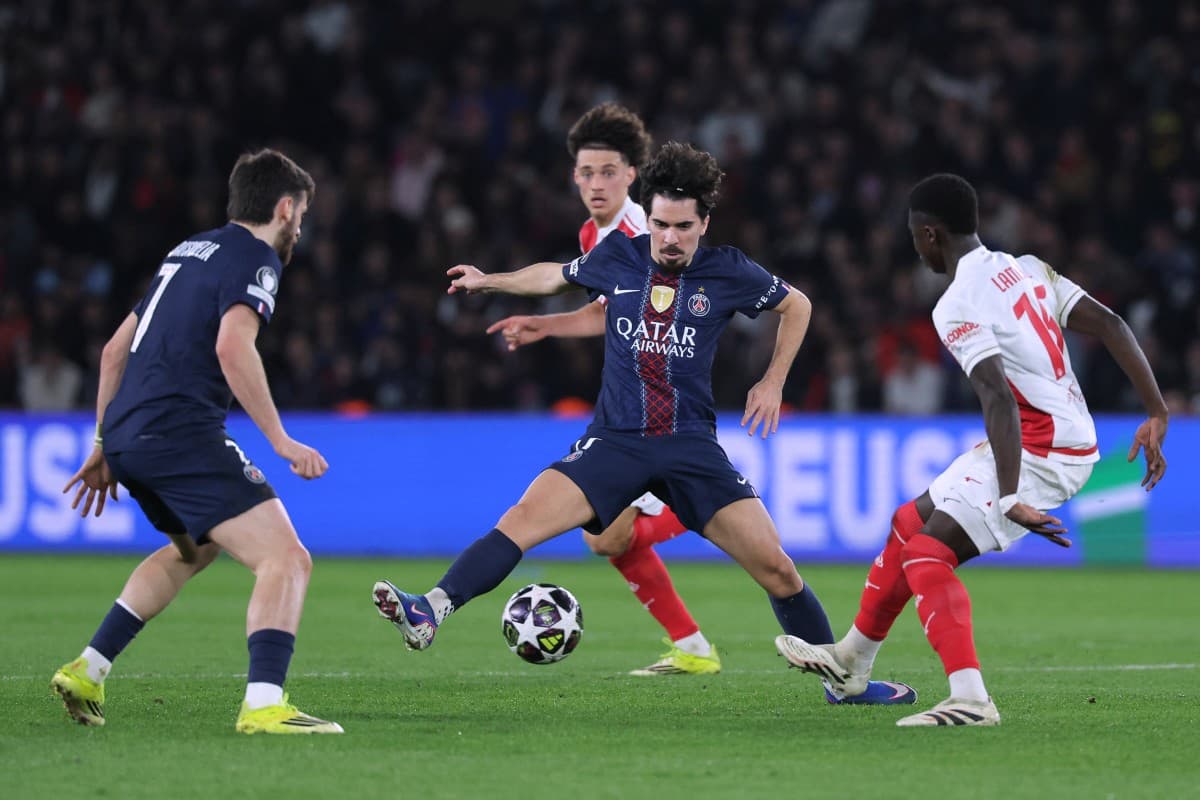
This was a textbook case of sterile domination versus compact resistance. Paris Saint Germain held 73% of the ball, completing 708 passes at 93% accuracy, while Monaco saw just 27% possession with 266 passes at 78%. PSG’s 4-3-3 aimed to suffocate Monaco territorially, circulating the ball and pinning the 3-5-2 block deep. Yet Monaco controlled the space: they accepted long phases without the ball, focused on closing central lanes, and waited for rare transitions. The first half, reflected in a 0–1 scoreline at the break, showed how Monaco’s low block and selective pressing could punish PSG’s slow tempo despite being massively out-possessed.
Offensive Efficiency
PSG’s offensive plan was volume and territorial siege. Their 21 total shots, including 10 from inside the box and 11 from outside, plus 8 corners, show a sustained, multi-channel assault. However, only 6 of those efforts hit the target, underlining a lack of cutting edge relative to their territorial dominance and xG of 2.13. The high number of blocked shots (9) indicates Monaco’s back line and midfield collapsing aggressively into the box, often turning PSG’s attacks into crowded, low-quality looks rather than clear one‑v‑ones.
Monaco, by contrast, embraced a clinical counter-attacking profile. With just 9 total shots and 4 on target, they still generated 1.16 xG, a strong return given their limited possession. Seven of those shots came from inside the box, revealing that when they did progress, they reached dangerous zones quickly rather than settling for speculative efforts. Their 4 corners versus PSG’s 8 further reflect a game where Monaco’s attacks were rarer but more vertical and direct. The final 2–2 scoreline, with PSG doubling Monaco’s shots but not the goals, encapsulates Paris’ relative wastefulness versus Monaco’s efficiency.
Defensive Discipline & Intensity
Defensively, the contrast in discipline was stark. Monaco committed 12 fouls to PSG’s 8 and picked up 5 yellow cards plus 1 red. The dismissal in the 58th minute forced Monaco into an even deeper, emergency block, prioritizing survival and time management—evidenced by a yellow for time wasting as early as the 48th minute. This disruptive, foul-heavy approach was central to slowing PSG’s rhythm and breaking up combinations around the box.
Despite the pressure, Monaco’s goalkeeper made only 4 saves compared to Safonov’s 2, which, combined with Monaco’s 2 blocked shots versus PSG’s 9, shows that much of PSG’s threat was absorbed by the defensive line before reaching the keeper. PSG, with just 1 yellow card and 8 fouls, defended more positionally, rarely needing to resort to cynical challenges, but were twice punished by Monaco’s ability to turn limited attacks into high-value chances.
PSG’s possession and shot volume could not fully convert into a decisive win, while Monaco’s compact block, disruptive intensity, and ruthless use of rare openings earned them a 2–2 draw. Efficiency and spatial control allowed Monaco to neutralize PSG’s territorial dominance.