Rayan Cherki's Tension with Didier Deschamps After France's Win
In a French camp still buzzing from a ruthless 3-0 dismantling of Graham Potter’s Sweden, one small moment cut through the celebrations and lit up social media.
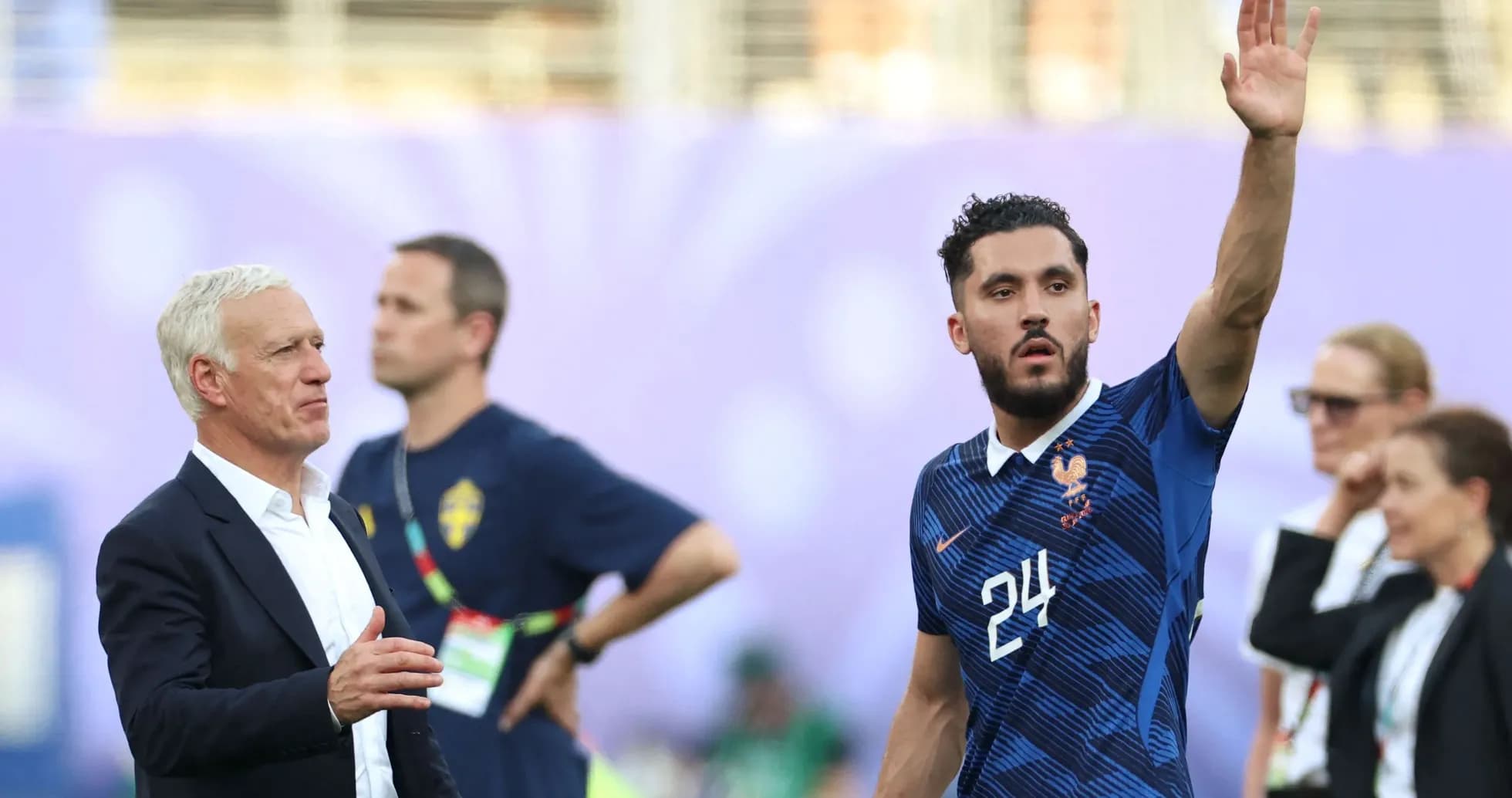
As the rest of the squad gathered to applaud the travelling support, Rayan Cherki stood alone in the centre circle, clapping the fans on his own. The cameras found him. So did Didier Deschamps.
The France coach walked over to acknowledge his playmaker’s brief contribution. What followed has been replayed endlessly online. As Deschamps reached out, Cherki appeared to brush his hand away. When the 57-year-old moved in again, the midfielder bent down to tie his boot, shifting his body away and leaving his manager hanging in front of a stadium still in party mode.
It was a fleeting exchange, but it spoke to a deeper tension.
Cherki’s frustration has been simmering all tournament. Tipped for a starring role after his move to Manchester City, he has yet to start a game in North America. Four matches, four appearances off the bench, and just 51 minutes in total. On a night when France cruised past Sweden, he was sent on with Crystal Palace forward Jean-Philippe Mateta for the final five minutes. The game was already won. His tournament, so far, has barely begun.
This is the reality of Deschamps’ attacking riches. Michael Olise has made the No 10 role his own, knitting together moves with the authority of a player who looks born for the big stage. Out wide and between the lines, Bradley Barcola and Desire Doue are jostling for minutes of their own. Somewhere in that queue, Cherki has become the odd man out in a squad widely labelled as tournament favourites.
The contrast between the team’s dominance and one player’s discontent has fuelled the online debate. Clips of the incident spread quickly, framed as evidence of a rift between the gifted midfielder and his coach. In the stands and on the pitch, France looked united. On the screen, that brief, awkward interaction told a different story.
Deschamps, for his part, chose to highlight the togetherness rather than the tension when he faced the media after the game. He pointed to the work rate of his attacking stars, delighted by the way his forwards chased, pressed and tracked back in a performance that never allowed Sweden to breathe.
“There’s a good connection,” he said. “When we need to work hard with the ball, everyone is involved, including the forwards. That’s a very good thing. Obviously, it’s something that pleases me, and I’m proud of it. We need to keep it up.”
The message was clear: the collective comes first.
Yet Deschamps did not pretend the job is simple. Managing egos at this level rarely is. With so much talent squeezed into one dressing room, keeping everyone happy is almost impossible.
“The team spirit doesn’t win matches, but it can lose them,” he warned. “Players might be disappointed because they’re not playing enough or at all; there might be frustrations, but the collective strength is paramount.”
That line will hang in the air over the coming days. France now move on to a round of 16 tie against Paraguay in Philadelphia, a knockout game that leaves no room for internal fractures.
Deschamps has the depth to rotate. He has the luxury to leave a Manchester City playmaker on the bench until the final minutes. What he cannot afford, as the stakes rise, is for those brief, viral moments of frustration to harden into something that threatens the very thing he values most.