Real Madrid Edges Benfica 2–1 in Champions League Thriller
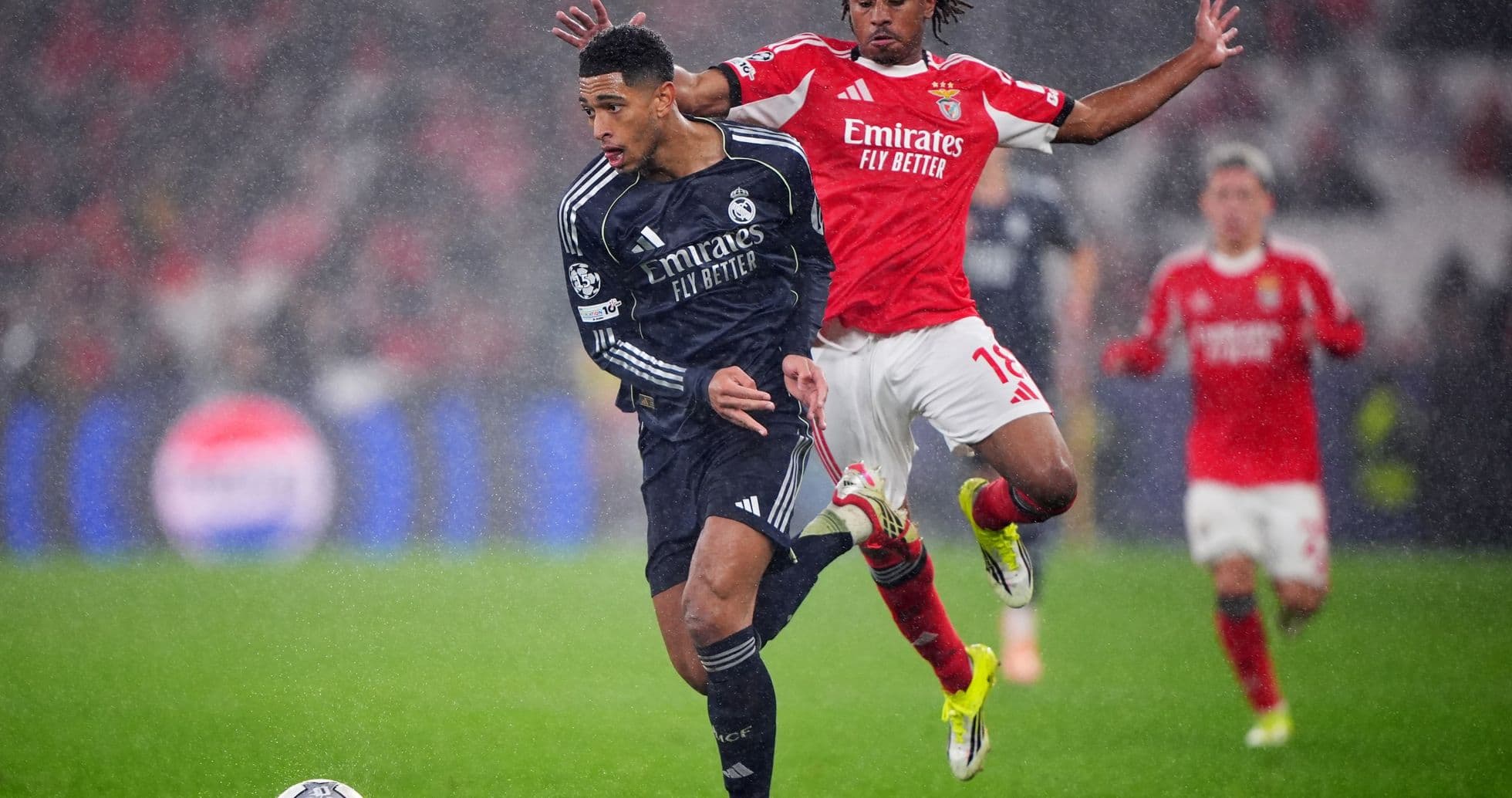
On a tense Champions League Round of 32 night at the Bernabéu, Real Madrid came from behind to defeat Benfica 2–1, taking a slender but valuable advantage into the second leg. Rafa Silva’s early opener stunned the home crowd, but Aurélien Tchouaméni quickly levelled before Vinícius Júnior delivered the decisive blow on 80 minutes. With referee Slavko Vinčić overseeing a contest that ebbed and flowed, Alvaro Arbeloa’s team leaned on superior control of possession and passing to tilt the tie. The result reinforces Madrid’s status among the competition’s top performers, while leaving Jose Mourinho’s Benfica with work to do after a spirited but wasteful display.
First Half Analysis
Benfica struck first, capitalising on their early attacking intent. On 14 minutes, Rafa Silva found the breakthrough with a normal goal, giving Mourinho’s side a precious away lead and briefly silencing the Bernabéu. The advantage, however, was short-lived. Just two minutes later, at 16', Aurélien Tchouaméni restored parity for Real Madrid, finishing a move assisted by Federico Valverde to make it 1–1 and reset the tie’s balance.
Real Madrid thought they had turned the game on its head at 34' when Arda Güler had the ball in the net, but VAR intervened and the goal was cancelled, a pivotal moment that kept Benfica level at the interval. The Portuguese side’s aggression without the ball showed in the card count: Richard Ríos picked up a yellow card for a foul at 35', the only booking of the half. With the score locked at 1–1 at the break, the first period had been finely poised rather than one-sided, Benfica clinical early, Madrid gradually asserting more control.
Second Half & Tactical Shifts
The second half opened with rising physical intensity. Benfica’s experienced centre-back Nicolás Otamendi went into the book for a foul on 51', signalling a more combative phase. Real Madrid’s Raúl Asencio followed with a yellow card of his own for a foul at 57', underlining that neither side was willing to concede ground in midfield or defence.
Arbeloa’s key tactical shift came on 77', a double substitution that rebalanced his back line and refreshed his attack. Centre-back Raúl Asencio was withdrawn and replaced by David Alaba, a like-for-like change that added composure and distribution from the back. At the same time, Eduardo Camavinga made way for forward Franco Mastantuono, an attacking gamble that effectively tilted Madrid’s 4-4-2 towards a more aggressive posture between the lines.
The move paid off swiftly. On 80', Vinícius Júnior struck what proved to be the winner, again with Valverde the provider. The Uruguayan’s second assist of the night highlighted his influence in Madrid’s attacking patterns. Protecting the lead, Arbeloa continued to adjust: at 84', Arda Güler was replaced by César Palacios in midfield, while forward Gonzalo García came off for Thiago Pitarch, a double switch that freshened both the engine room and front line.
Mourinho responded at 85' with his own changes, but notably later and from a position of deficit. Fredrik Aursnes was substituted by Enzo Barrenechea, and Andreas Schjelderup departed for Franjo Ivanović, maintaining Benfica’s attacking structure but injecting new legs. In stoppage time, Real Madrid made a final defensive tweak, Álvaro Carreras leaving the pitch for Fran García at 90+1', while Benfica introduced Sidny Lopes Cabral for Leandro Barreiro in the same minute, a late defensive change from the visitors. The closing moments were fractious: César Palacios received a yellow card for a foul at 90+6', emblematic of Madrid’s determination to disrupt Benfica’s late push.
Statistical Deep Dive
Over the 90 minutes, Real Madrid controlled 56% of the ball, using their extra possession to dictate tempo and territory. Their passing was sharp and secure, completing 512 of 568 passes at a 90% accuracy rate. Benfica, with 44% possession, conceded the ball more often but were far from careless, completing 380 of 440 passes at 86% accuracy, enough to threaten consistently on transitions.
In attacking terms, the numbers tell a nuanced story. Madrid attempted 14 total shots to Benfica’s 12, a modest edge, and both sides managed 4 shots on goal. Yet the expected goals data flips the narrative: Real Madrid’s xG stood at 1.11 compared to Benfica’s 1.98, suggesting the Portuguese side carved out the higher-quality chances but failed to convert them. Both goalkeepers recorded negative “goals prevented” values of -1, aligning with the 2–1 scoreline and indicating that finishing, rather than elite shot-stopping, shaped the result.
Discipline and set pieces also framed the contest’s intensity. Real Madrid committed 16 fouls to Benfica’s 10, reflecting their willingness to break up play as the game wore on. Both teams finished with two yellow cards, maintaining numerical parity. Benfica’s 7 corner kicks to Madrid’s 4 underline how often they reached advanced areas, but their inability to turn those situations into goals will be a key regret for Mourinho.
Standings & Implications
This win reinforces Real Madrid’s strong campaign. Coming in with 15 points, a +9 goal difference and a 5–3 record (21 scored, 12 conceded), they underline why they sit 9th in the overall ranking and firmly within the promotion zone for the 1/16-finals. At home, they have now strengthened an already solid record of 3 wins from 4, with 10 goals for and only 4 against. Benfica, ranked 24th with 9 points and a -2 goal difference, remain in the playoff frame but face a daunting task in the return leg, especially given their away record of 1 win and 3 defeats, with just 2 goals scored and 6 conceded on the road.