Rodri's Transfer to Barcelona: A Game-Changer for La Liga
Rodri’s decision to join Barcelona has the feel of a turning-point transfer. Not just another big name changing shirts, but a move loaded with meaning: sporting ambition, political edge and a direct blow in the eternal Barcelona–Real Madrid duel.
According to Mundo Deportivo, the Spain midfielder listened to both giants. He heard out Real Madrid. He heard out Barcelona. Then he walked towards the Camp Nou. Not because of nostalgia, not on a whim, but after what he described as a meticulous look at the “full picture” during a turbulent summer in which both Spanish superclubs tried to drag him away from Manchester City.
This was a career calculation, not a romantic gesture. Rodri wanted the strongest sporting project, the clearest pathway, the place that stirred just that little bit more excitement. The club where he believed he could win more and grow further.
Barcelona, he decided, ticked those boxes.
Deco, Flick and the power of a plan
Strip away the noise around modern transfers and his explanation is almost old‑fashioned. Rodri talked about football. About roles, ideas, development. Barcelona’s hierarchy – with Deco and Hansi Flick at the forefront – convinced him that their project fit him best.
That matters in the margins where elite deals are actually won. It was about who had the sharpest plan, who could explain in detail how he would be used, who spoke with conviction rather than just waving a pay packet.
Barcelona did their work. They didn’t simply wait for circumstances to break their way; they sold him on a vision and he bought it.
Respect for Madrid, but a firm “no”
If Barcelona won the argument, Real Madrid hardly embarrassed themselves. Rodri went out of his way to say so. He described turning them down as anything but easy and praised the way the club treated him throughout the process.
He spoke like a player who understands scale. Saying no to Madrid still echoes around Europe, and he did not try to play that down.
His words on José Mourinho, who personally tried to pull him towards the Bernabéu, added weight. Rodri said:
“Bueno, no creo que sea lo suyo desvelar una conversación privada, pero evidentemente expresó sus ganas de que fuera y de lo que podía aportar al equipo. El trato fue muy bueno. Cuando tomé la decisión también le llamé para agradecer el interés y el trato. Me parece un grandísimo entrenador, ya lo ha demostrado allá donde ha ido en sus grandes etapas y el Real Madrid va a ser un duro rival para esta Liga.”
Diplomatic, but not cold. He made his choice, yet still picked up the phone to thank Mourinho personally. In a sport that often chews up courtesy, he insisted on closing the loop properly.
Drawn to Barça, not fleeing City
There is a nuance here that Barcelona fans will cling to. Rodri did not dress this up as an escape from Manchester City or as a move fuelled by bitterness elsewhere. He framed it as attraction, not rejection.
He chose Barça. He did not run from City. That distinction gives the transfer extra weight for the Catalans. They did not just profit from unrest or opportunism; they convinced one of the world’s best midfielders that their project was the most compelling.
Rodri also brushed aside the swirl of off‑field theories and background drama around Madrid’s interest. No indulging the soap opera. He spoke about staying locked in on football, on Spain, on his own path.
Then came the small but telling line: in England, he said, football is largely kept to football. It sounded like a nod to the Premier League’s intensity, but also a hint that he now wants something different – a new kind of pressure, a new kind of spotlight, a new kind of noise.
La Liga’s balance of power
If Rodri hits his usual level, this is not just a headline signing. It is a potential hinge point in La Liga.
Barcelona have imported control, intelligence and steel into the heart of their midfield. They have done it by beating Real Madrid to a player who dictates the biggest matches and calms the wildest nights. That sends a message about their pull, their planning and the enduring magnetism of the Barcelona badge.
Madrid, for their part, will feel frustration rather than humiliation. They moved with intent. They made their case. They were, by Rodri’s own account, impeccable in how they handled him. They simply lost out to a rival whose pitch resonated more with the player.
For Barcelona, that is precisely the satisfaction: signing a footballer who knew exactly what the alternative looked like – the money, the power, the history – and still walked their way.
The City-sized hole he leaves behind
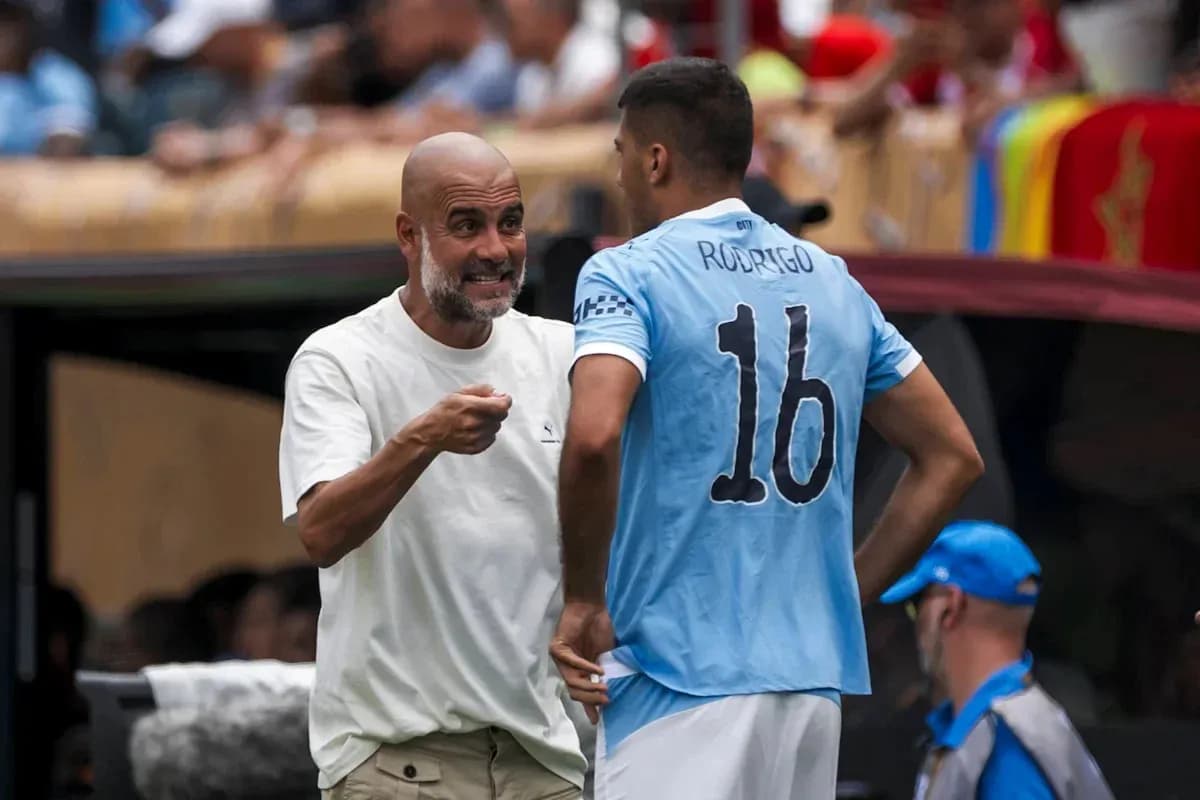
From Manchester, the emotions are more tangled. On one side, there is pride. Rodri is being spoken about as the midfielder both Barcelona and Real Madrid wanted above all. That says everything about the level he reached at City.
He became the calm in chaos. The organiser in possession. The man who made a superteam feel balanced. Under the glare of the Premier League, he carried vast responsibility and evolved into one of the most influential midfielders on the planet.
On the other side lies the familiar irritation City fans know too well: Europe’s historic giants circling around a player shaped in Manchester and treating him as if he naturally belongs in their ecosystem. This version of Rodri – the complete controller – was forged at the Etihad.
If he has gone, most City supporters will probably wish him well. But they will also stare at the pitch and ask the only question that really matters to them now.
Who controls their games next? Who dictates tempo when matches fray and panic creeps in? Who provides that sense of certainty when everything else starts to wobble?
Because that is Rodri’s real legacy at City. He leaves behind a vacuum. And all the glamour of Spain, all the politics of Barcelona versus Real Madrid, does nothing to fill it.