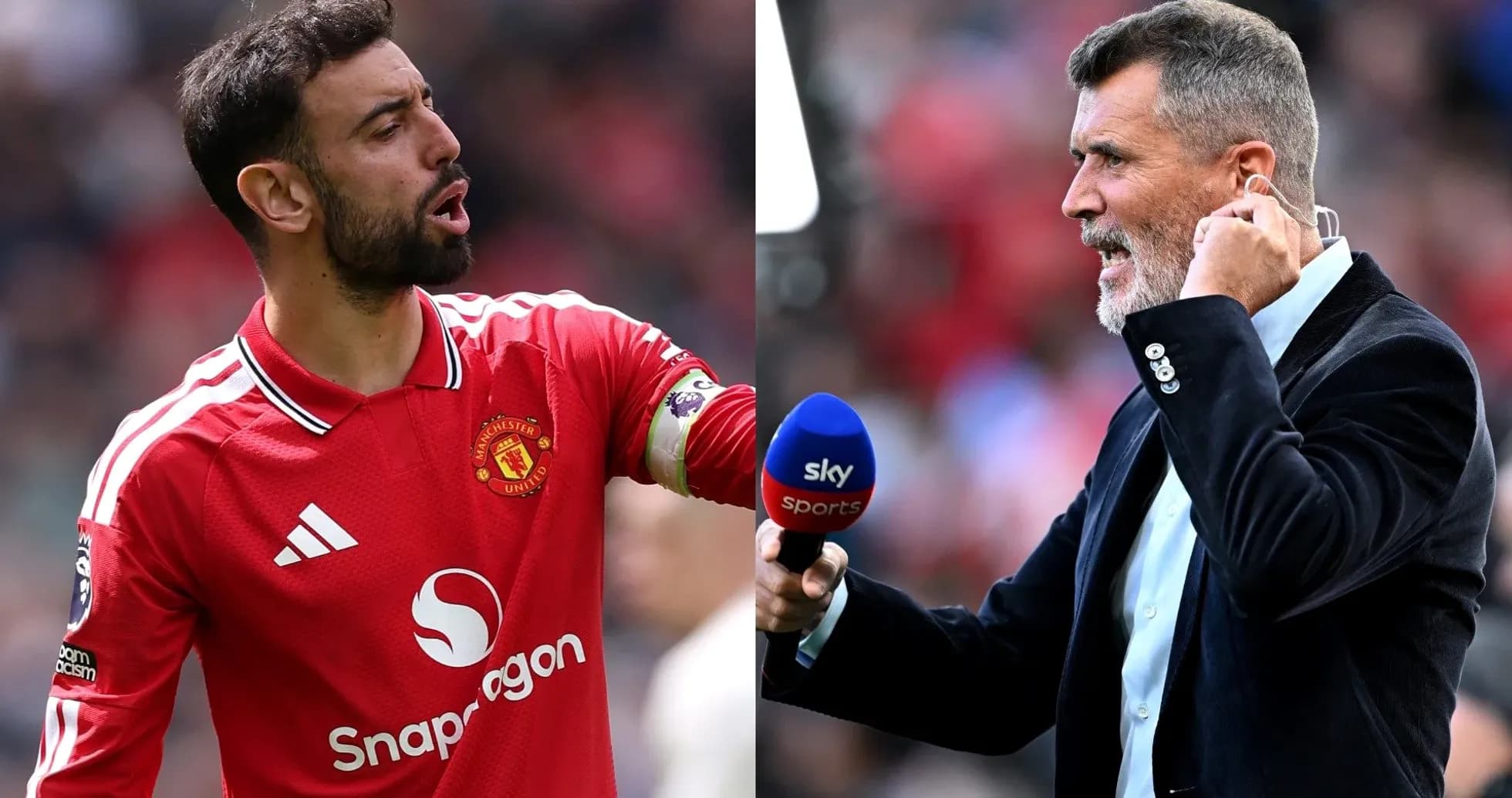
Roy Keane vs Bruno Fernandes: Manchester United’s Leadership Clash
Roy Keane lit the fuse. Bruno Fernandes has now walked straight into the fire.
What started as a pointed critique on The Overlap has turned into a full-blown row over honesty, leadership and what it really means to wear the armband at Manchester United.
Keane’s blast
Keane’s anger was triggered by the reaction to Fernandes equalling the Premier League’s single-season assist record in a win over Nottingham Forest. The former United captain bristled at what he saw as a celebration of personal glory over collective ambition.
“When you're the captain of a club and you're supposed to be driving the club forward, do not be getting bogged down by just your role in the team, just assists,” Keane said.
He described himself as “raging” at the post-match narrative, claiming the dressing room chatter and Fernandes’ own interview revolved around assists rather than the result.
Keane’s key objection came down to one line he attributed to Fernandes: that the Portuguese had said he “probably should have… shot but I made the passes,” which Keane framed as a mindset geared towards chasing a record instead of simply winning the game.
For a man who built his career on an almost unforgiving standard of captaincy, that was too much. Keane saw vanity where he expects ruthlessness.
Fernandes fights his corner
Fernandes has now hit back, and he has chosen his words carefully – and publicly. Appearing on The Diary of a CEO podcast, the United playmaker made it clear he was not just irritated by Keane’s criticism, but by what he believes is a distortion of the truth.
It was pointed out to him that, in reality, his post-match comments after the Forest game had run in the opposite direction. Fernandes had actually said: “There were probably moments today when I should have passed instead of shot. I'm very happy for the assist, but more than that, I'm happy for the win and to finish the season on a high."
That is a very different emphasis to the one Keane described. Fernandes did not let that slide.
“I don't mind criticism. I always take criticism from everyone and never reply to anyone whatsoever,” he told host Steven Bartlett. “People have an opinion, they think it's good, bad or whatever.
“What I don't like is when people lie about things, and in this case, what you said about Roy Keane, basically, what he said is a lie. Luckily for me everything is on record, imagine if it wasn't, then people will think Bruno is always the guy going for the assist."
The word “lie” hangs heavy there. This is not a mild disagreement over interpretation; Fernandes is accusing one of the club’s most iconic captains of misrepresenting him.
He went even further, revealing he had sought to confront Keane directly.
“I even asked Ole [Gunnar Solskjaer] his number to text him to have a word with him,” Fernandes added, “to say 'I don't mind the criticism, I don't like when people lie about the things that I say, because this goes over the top of the things I think are acceptable.'”
In an era when many players quietly absorb punditry and move on, Fernandes has chosen to push back, to draw a line between fair analysis and what he sees as fabrication.
A divided verdict on leadership
The clash cuts to a deeper question: is Fernandes the kind of captain United need?
Keane has long been sceptical of the midfielder’s on-pitch demeanour and leadership style, unconvinced that his emotional, demonstrative presence matches the steel he associates with the role. That view resonates with a section of the fanbase who still measure every captain against the hard edge of Keane, Nemanja Vidić or Rio Ferdinand.
Inside Old Trafford, the picture looks very different.
New permanent manager Michael Carrick, fresh from signing a new two-year deal, has nailed his colours firmly to Fernandes’ mast. For Carrick, the Portuguese international is not a problem to be solved, but a pillar to build around as United prepare for a return to the Champions League.
Speaking about his captain’s future and influence, Carrick was unequivocal: “He’s such an influence for us and he’s been the captain and led by example in different ways. I’ve got no reason to think otherwise [regarding him staying]. We’ve loved what he’s done and he loves being here, I think you can see that."
Carrick’s backing matters. He played alongside Keane’s successors, understands the demands of the armband and now sees Fernandes every day in training. His verdict is clear: this is his leader.
Old standards, new era
Strip away the noise and the fault line is obvious. Keane represents an older, unforgiving standard of United captaincy – win at all costs, no space for nuance, no tolerance for anything that looks like self-indulgence. Fernandes is the modern playmaker-captain, numbers-heavy, emotionally open, judged as much by his statistics as by his snarls.
Keane hears talk of assists and sees ego. Fernandes hears his own words replayed, sees the footage, and accuses a club legend of crossing a line.
The numbers, the quotes, the interviews are all there, recorded and replayed. What cannot be captured so easily is the changing definition of what a Manchester United captain should be – and who gets to decide it.
For now, the manager has chosen his man. The question is whether the armband in this new United belongs to Keane’s idea of a captain, or Carrick’s.