Ruben Amorim Addresses Criticism Ahead of Lazio Clash
Ruben Amorim shrugs off the noise. The criticism, the debates about style, the grumbles after a cagey draw with Juventus – he’s heard it all before, and at louder volume.
“Criticism is normal. I already experienced that in my former club [Manchester United]. More than that, it's impossible,” the AC Milan coach said on Friday, ahead of his side’s trip to Lazio.
The message was clear: the storm outside won’t change the way he works.
“We lacked energy” – Juve draw under the microscope
Milan arrive in Rome unbeaten, with two wins and a draw from their opening three Serie A matches. On paper, it’s a solid start. The mood, though, has been shaped by that last outing against Juventus, a 1-1 draw that reopened the old Milan debate about style versus substance.
“The last game wasn't just static; I think we lacked energy,” Amorim admitted. “We controlled the ball quite well, especially in the first half, but then we lacked aggression in the final third and inside the box.”
He didn’t spare his own players in the video review.
“I showed the players that a lot of opportunities for Juve came from us losing the ball, sometimes even without pressure. Just a sloppy pass. Those details can change the game and the momentum. We worked on that, and we need to do better.”
Gonçalo Ramos, so sharp in the wins over Torino and Venezia, found himself in the crosshairs after a quieter night in Turin. Amorim pushed back on the idea that the striker alone was to blame.
“I think we need to improve as a team. Ramos did so well against Torino and Venezia that, in a game where he doesn't have the same performance, you notice it,” he said. “It's more about the understanding of the game from all the players in the team.”
The criticism, then, he accepts. The identity, he insists, will not be abandoned.
“The team will always be in first place”
If some Milan supporters fear a coach too cautious, Amorim answered with a promise and a warning: he won’t betray his principles, but he knows where the pressure comes from.
“What I promise is that the team is always in first place,” he said. “Then I said my intention, and what they [Milan] asked me to do, was to be positive and score goals.”
He knows that intention alone doesn’t win matches.
“Sometimes we want to score goals and be positive, but then there's the opponent, and maybe Spalletti – your Spalletti – is really good and they pushed us back. We had the ball more than Juventus. Sometimes even when I have the ball, the other guy is better than me, but that doesn't change the intention you have.”
Amorim bristled slightly at the idea that Milan are drifting without a clear idea.
“If you look at our team, we always have an intention; you can't see anything that is random,” he insisted. “Sometimes we want certain patterns that are hard for the players. I understand the pressure. I understand that when you see a guy coming from abroad to say how to play your football, it is really hard, and in the first moment you are just waiting to tell me that in my face.”
He circled back to his core pledge.
“I understand, but what I can promise is that the team will always be in first place. I want to dominate games, but then Spalletti, Fabregas, all these guys, they are really good and will push us.”
Then came the line that shows he knows exactly how this business works.
“What's really important is to be good in the last set pieces of the game because if we win, some guys will have to keep that question in their pocket for one more week. The only thing I promise is the club will always be in first place. My intention is always to be better than the opponent in a certain way. I'll try. But then you have the opponents; Spalletti was better than me, and that doesn't change.”
Cissé on the brink of Azzurri debut
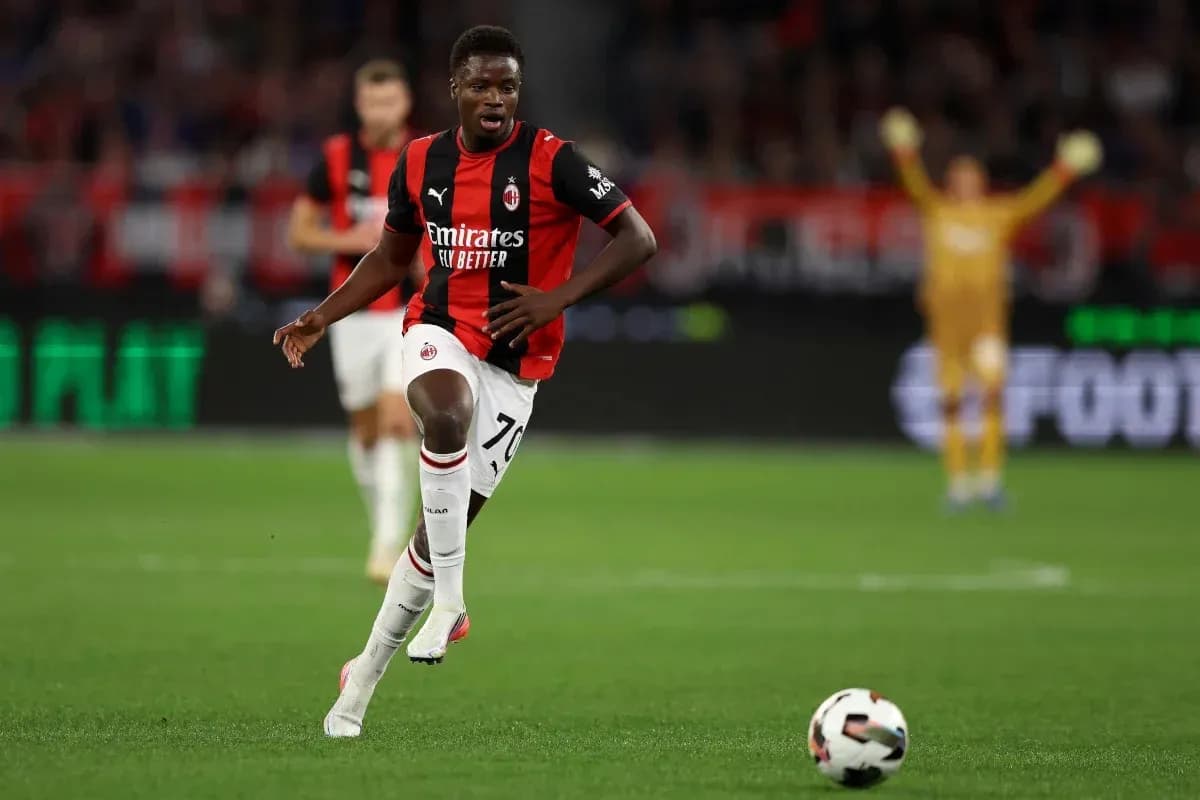
While the debate rages around tactics, one young player has cut through the noise: Alphadjo Cissé. Two goals in his first three Serie A matches have pushed the 19-year-old into the national conversation, with reports in Italy suggesting he will be called up by the Azzurri for the upcoming international break.
Amorim did nothing to cool the excitement – but he did try to frame it.
“If you put Cissé on the pitch, he's going to play. Doesn't matter if he's with the national team, with Bastoni or with these guys,” the coach said. “He's going to play, free. For that, he's ready.”
Ready, but not finished.
“He needs time to grow up. I saw a bit of a difference when he plays away and when he plays at San Siro. San Siro is tough, so he needs to adjust to all these small things. Let's give time to Cissé.”
The idea of the teenager walking into an Italy camp does not scare his club coach in the slightest.
“If you put Cissé in training with the national team and playing with the national team, he won't be shy, and he's going to have the ball. So he's ready, but he needs time to be the player he can be. He has a lot to learn.”
For Milan, that learning curve could define their season. For Italy, it might shape the next generation.
Pulisic “upset” and waiting
Another attacking storyline sits on the opposite end of the experience scale. Christian Pulisic, one of the marquee names in the squad, has yet to play a minute this season. Amorim confirmed the USMNT star will finally feature in 2026-27 against Lazio – and that the forward hasn’t hidden his frustration.
The coach admitted Pulisic is “upset” about his lack of playing time across the first three games, a natural reaction from a player who arrived to be decisive. The test now is how that frustration translates on the pitch once the door opens.
Como, Fabregas and a different path
As Milan wrestle with identity and expectation, another story has been unfolding quietly up north. Como 1907, coached by Cesc Fabregas, were the only Serie A side to win in the opening round of the Champions League, dismantling RB Leipzig with authority.
Some have wondered if that project should be a model for Milan. Amorim dismissed the comparison.
“I think we are different managers, with different backgrounds and work for different clubs,” he said. “Mister Cardinale has never told me that [Como] is the inspiration, so you need to tell me, as I didn't know.”
He drew a clear line between admiration and imitation.
“I have my way of playing; I think it will take time. Every manager needs time. You saw against Torino, the friendly against United, that we are improving. But if you want a team that plays like Como, you need to buy Como's manager to play the same way.”
There was respect in his voice for Fabregas and the work being done at Como, but no hint of envy.
“I'm completely different; I have my style of play, my identity. Coaching Milan is really hard; coaching Como and doing what they are doing in the Champions League is so hard, and they are doing so well, but I'm not focusing on how Como are playing; I focus on how Milan must play to win games.”
The answers are on him now. Lazio away, a restless fanbase, a rising star in Cissé, an “upset” Pulisic waiting to explode – and a coach who insists the only promise he’ll make is that Milan, the team, comes before everything else.