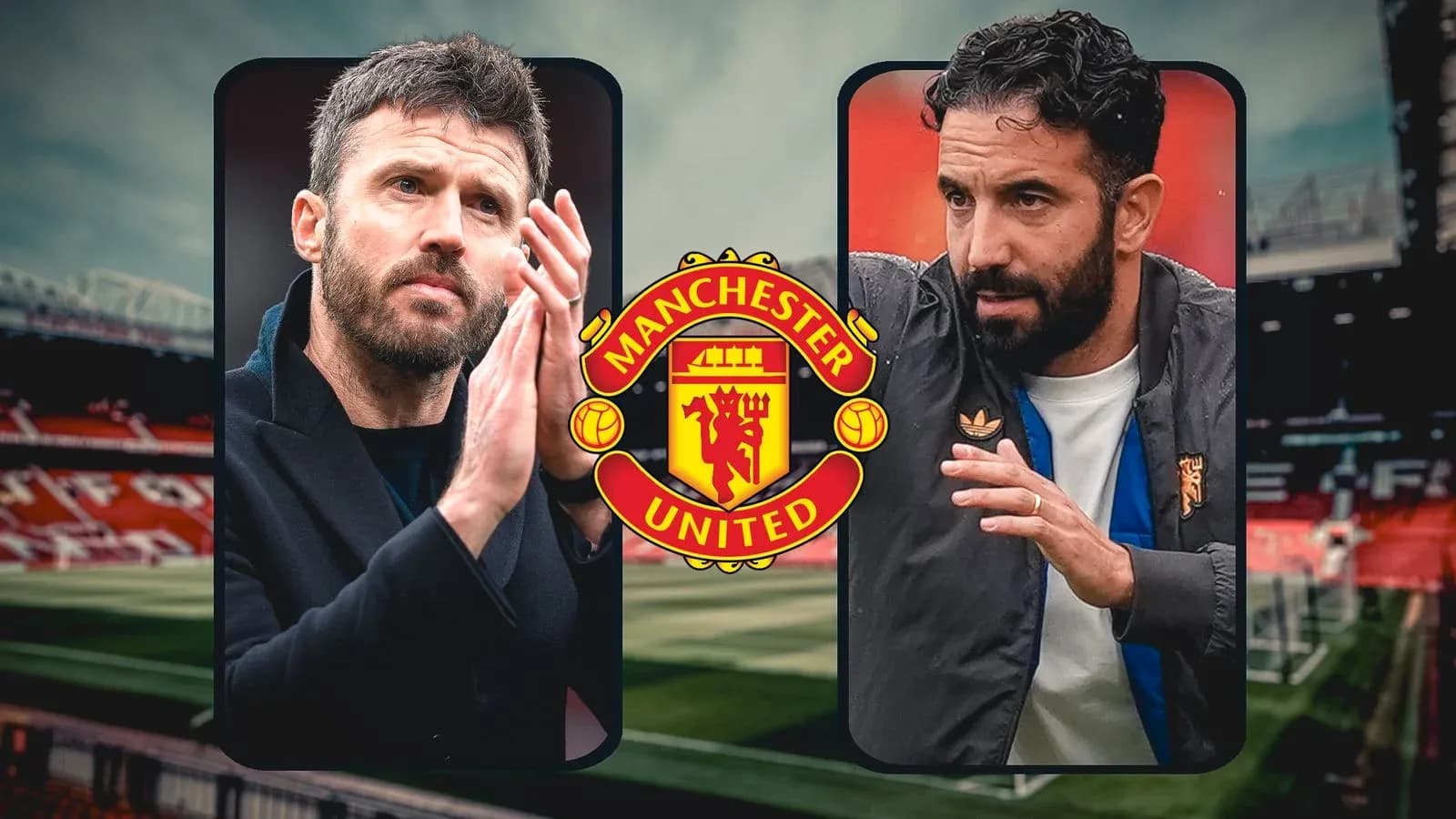
Ruben Amorim vs Michael Carrick: A Clash of Philosophies at Old Trafford
Ruben Amorim once told Manchester United fans they would have to suffer for success. Michael Carrick has told them something very different: there is still a United way to win – and it does not have to feel like a storm.
Twelve months ago, Marcus Rashford was lighting up the Camp Nou, Carrick was out of work after his sacking by Middlesbrough, and Amorim was bracing himself for his first full season at Old Trafford. A year on, all three collide again, in the same stadium, under utterly different spotlights.
Rashford, the academy star once ushered towards the exit, walks back into a club that looks familiar but feels renewed. Waiting for him is Carrick – former team‑mate, former captain, now head coach – arms metaphorically open, ready to offer him a chance to rewrite a story that began on those same pitches a decade ago.
On the opposite bench, Amorim. Dismissed just five months into last season, now in charge at AC Milan, still chasing his first win of pre-season and desperate for it to come against the club that cut him loose. Carrick’s understated rise, carved out with quiet authority, stands in stark contrast to the noise and turbulence that defined Amorim’s brief reign.
Rashford’s return adds a sharp edge. Amorim publicly questioned the England forward’s attitude more than once and ultimately decided United had to move him on. That history lingers. So when United face Milan in their final pre-season outing on Saturday, it will not feel like a gentle warm-up. It will feel like the next episode in a saga that never quite turned the volume down.
This is not just a friendly. It is a checkpoint. A chance to look back at a chaotic year, at the midseason reset that dragged United away from the brink and towards something that suddenly looks like a plan.
From rigid dogma to flexible United
Amorim’s refusal to bend became the defining mark of his time at Old Trafford. Given the job of turning results around, he reached for what he knew best and clung to it.
The 3-4-3 was his gospel. Under pressure, he doubled down. He even told reporters that not even the Pope could persuade him to change it. The quote became infamous. So did the consequences.
When the Africa Cup of Nations stripped numbers from his squad, he had no answer. Results slipped, performances frayed, and his insistence on the same shape – even as the pieces around it changed – slowly eroded trust. There were late, tentative signs of adjustment, but he always snapped back to type. That, insiders said, was at the heart of the tension between Amorim and the United hierarchy.
The fans felt it too. They saw goals – United did score freely in bursts under him – but they also saw a structure that jarred with everything they associated with the club. Three at the back, wing-backs pinned deep, key players shoehorned into unfamiliar roles. It worked in flashes, never as a lasting identity.
Those same complaints are already echoing at Milan. Early reports from Italy talk of confusion, of players asked to twist themselves into the system rather than the system bending to them.
Carrick walked in and did the opposite. In his first game, a Manchester derby, he rolled out something instantly recognisable. United on the front foot. United with width. United allowed to run.
He let the horses go and Manchester City could not live with it. United’s 2-0 win barely captured the gap between the sides on the day; City left Old Trafford relieved the scoreline was not uglier.
That intent has carried into pre-season. The ball goes forward quickly, not for chaos, but with purpose. New signing Andrey Santos looks to punch passes through the lines instead of recycling sideways. Bryan Mbeumo has been unleashed centrally, forever darting in behind, dragging defenders where they do not want to go.
Bruno Fernandes has been one of the biggest winners. Restored permanently to his favoured No 10 role, he hit a creative streak that ended with a new Premier League assist record. The questions that once surrounded United’s style – what are they trying to be, what are they trying to do – have faded.
Under Carrick, the shape feels like United again. And crucially, it bends with the players, not against them.
From doom and storms to belief
The atmosphere at Old Trafford has shifted, and it starts with the man in the technical area.
Amorim was pure box office. His press conferences were events. Talk of storms, of suffering, of this being the worst team in the club’s history. It was dramatic, it was headline-grabbing, but it drained belief. Even when the table said United were close to the top four, his tone suggested a club on its knees.
When he was sacked, United were still within reach of the Champions League places. You would not have guessed it from his demeanour. Carrick walked in, calmed the noise and got them over the line, securing a Champions League spot Amorim had previously insisted his side were not ready for.
That alone changed the mood. But the shift since has gone deeper.
Ahead of the new campaign, optimism has replaced fatalism. Leny Yoro has spoken about wanting to win the league. Mbeumo has echoed that ambition. Under some managers, such talk would be batted away as unrealistic. Carrick has not done that. He has embraced it.
He has not promised titles, but he has made it clear he believes this squad can do something significant. That message carries extra weight when you remember where United were a year ago: flirting with the wrong end of the table, a fanbase braced for a relegation scrap, a club defined by crisis.
The result is visible in the way they play. There is risk again. There is courage on the ball. Players look like they want the responsibility rather than hiding from it.
United, once again, look like a team of believers.
Second chances and the offer of redemption
Under Amorim, the line felt permanent. Cross him, fall out of favour, and your United story was effectively over. In a dressing room whose character had been questioned for years, that hard edge had its admirers.
But it also had casualties.
Alejandro Garnacho felt it most acutely. Kobbie Mainoo looked on the verge of the same fate. Rashford, the local hero, ended up taking two loans away as his situation at the club became untenable.
Amorim will point to Garnacho as vindication. The winger’s loan to Chelsea failed to ignite, and he now finds himself at Aston Villa, trying to reboot a career that once seemed destined to explode at Old Trafford.
Mainoo tells a different tale. Carrick pulled him back in, trusted him, and built around his intelligence. The midfielder became a fixture, only starting his first league game in January yet doing enough to earn a nomination for PFA Young Player of the Year. The talent had always been there; the faith had not.
Rashford sits somewhere in between. Nobody doubts his ability to change games. That was never Amorim’s argument. His issue was with Rashford’s conduct and consistency. A bright spell at Villa, followed by a LaLiga title with Barcelona, has reminded everyone of the damage he can do when he is locked in.
Now comes the real test. Back at United, he must show he can match the culture Carrick has tried to build – intensity, humility, accountability – if he is to stay beyond the end of the transfer window.
Carrick has at least opened the door. Under Amorim, it looked bolted. The new manager has chosen a different path, one built on man-management and the belief that players can change.
Whether Rashford grasps that chance is another story. Whether this softer edge will help or hurt United in the long run is another question again.
For now, the picture is simple: Amorim returns with Milan searching for a first pre-season win, Carrick stands in the opposite dugout with a squad that believes again, and Rashford walks the tightrope between redemption and regret.
All three will share the same pitch on Saturday. Only one of them can shape what comes next.