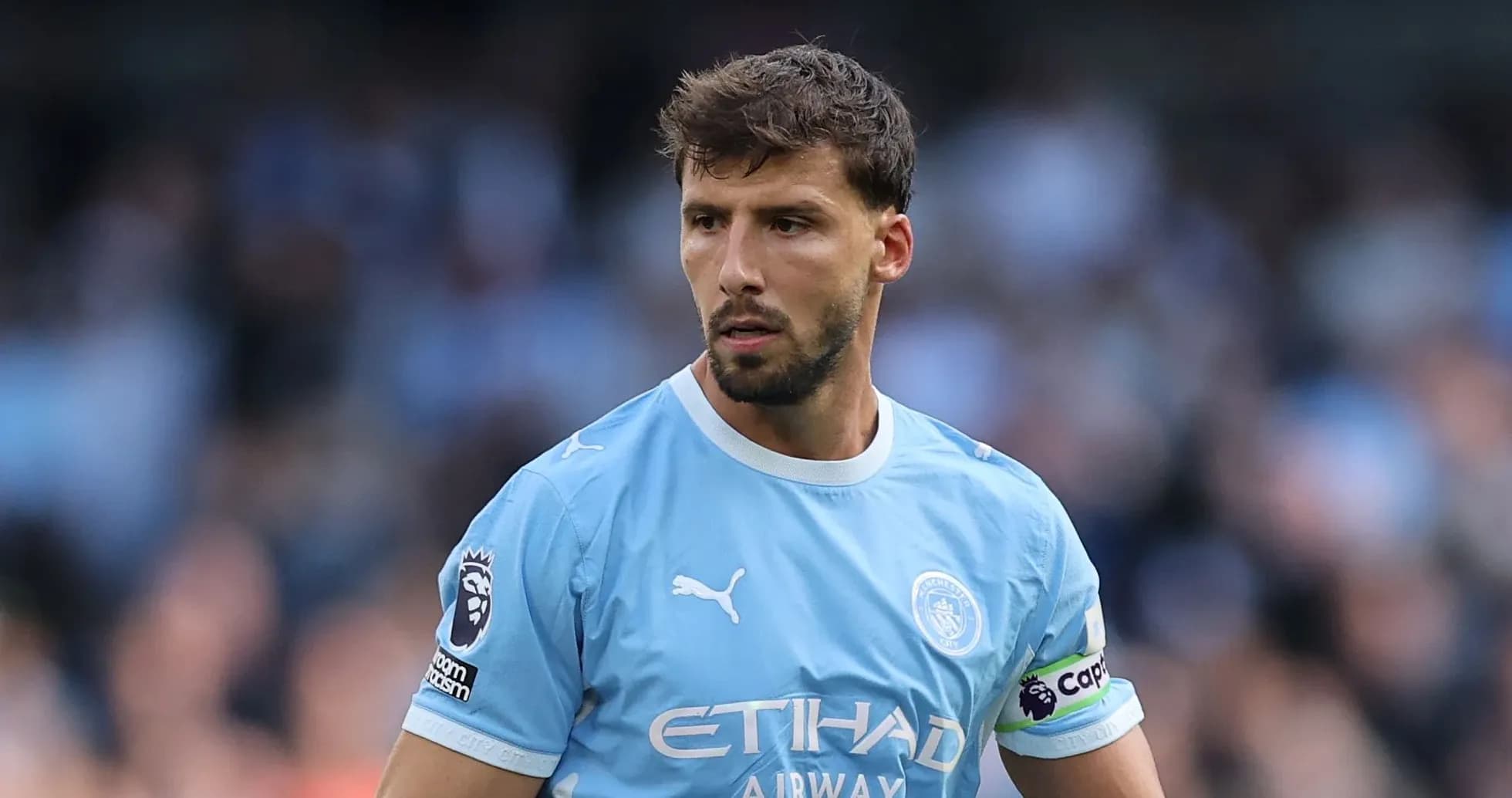
Rúben Dias: The Standard-Bearer of New Era at Man City
The Pep Guardiola era at Man City is over. The squad that defined a decade has been broken up, the dugout has a new voice, and a Premier League record £458 million has been spent to hand Enzo Maresca his own version of the champions.
Yet in the middle of all that upheaval, one thing hasn’t moved: Rúben Dias.
A new City, same standard-bearer
Rodri gone. Bernardo Silva gone. John Stones gone. The spine that helped deliver a Treble has been ripped out, and with it a large chunk of the dressing-room hierarchy. In their place: Enzo Fernandez, Elliot Anderson, Ayyoub Bouaddi and a cluster of hungry new faces trying to find their place at the Etihad.
The landscape has shifted so dramatically that at 29, Dias suddenly looks like an elder statesman. More than 250 appearances. Four Premier League titles. A Champions League. He is now the living link between what City were and what they are trying to become.
The armband might not always be on his arm, but the responsibility is unmistakable.
“In terms of the role I have, it goes down to trying to be the best version of yourself, and in terms of that, nothing has changed,” he told BBC Sport. The cast around him has changed almost overnight, but his own brief, as he sees it, is identical: set the standard, every day.
“So many people have left and so many winners have left,” he said. “Now new people have joined with a lot of ambition and people that are desperate to win and that is also what makes the club keep on going.”
Maresca’s ideas, City’s continuity
The biggest risk of all was not the players who walked out, but the manager. Guardiola’s departure closed a towering chapter in English football. Replacing him with Enzo Maresca – a coach with ideas of his own but a history inside the building – could easily have led to turbulence.
Instead, City have opened the season with four straight wins across the Premier League and Champions League. The machine hasn’t stalled; it has simply changed drivers.
The reason, Dias believes, lies in familiarity. Maresca’s previous spell as an assistant has allowed him to reshape City without tearing up the identity that made them dominant.
“There’s obviously many things from training session to some details about the way we press, details about the way we defend and that make all of these Enzo’s idea,” Dias explained. The tweaks are clear, but they fit the club’s existing framework.
“I feel like everything is making a lot of sense. Everyone is buying into the idea. Everyone’s excited about it and there is a lot of joy in training, which is massively important.”
Joy in training, despite the farewells and the shock of change, is no small achievement. It suggests Maresca has not only convinced the new signings, but also the old guard who have lived through the highest of highs.
The circle of life in a superclub
For Dias, this summer has been as emotional as it has been demanding. Close friends have gone. Dressing-room constants have disappeared. He has just extended his contract to 2029, committing the core of his career to a club that suddenly looks very different.
“I am 29, I am going to be 30 next year but I am excited about all of this and all the things with the club, the new manager, new players, the new challenge, guys that I was so close with leaving,” he said.
He doesn’t pretend it is easy. But he accepts it as part of elite football’s brutal rhythm.
“It’s the circle of life, you can call it and it is just how things are,” he added. “I am appreciative of all of it – I’m appreciative of the memories I have with all the ones that left and I’m excited about the memories I’m going to make with the ones that have just arrived.”
That balance – nostalgia for what’s gone and excitement for what’s next – is exactly what City need from a leader in a season like this. Someone who understands the weight of what has been built, but refuses to treat it as a museum piece.
Legacy over moments
Dias has already won almost everything there is to win in club football. Yet he talks less about trophies now and more about something harder to measure: longevity at the top.
“I am still very ambitious,” he said. “I took the decision of being at this level because I feel like I have won so much but maybe the thing that would be my biggest reward would be to be here so many years playing at this level and having the consistency of being ambitious for so long.”
This is not a player satisfied with a decorated CV. It is someone chasing a different kind of legacy – to prove that City’s culture of winning survives beyond Guardiola, beyond Rodri, beyond any single generation.
The money has been spent, the squad has been reshaped, the manager has changed. The question now is simple: can this new City still play with the same ruthless edge?
Dias clearly intends to make sure the answer is yes.