Scott McTominay's Transformation at Napoli: From United's Backup to Serie A Star
Scott McTominay left Old Trafford for £26 million, a solid fee for a midfielder many at Manchester United never truly trusted as a permanent starter. He walked away with 255 senior appearances, a product of the club’s academy, but also a player whose role always felt slightly compromised.
At United, particularly under Jose Mourinho, McTominay did the dirty work. He sat deep, shielded the back four, plugged gaps. His engine was used as a barrier rather than a battering ram. The attacking instincts he showed as a youngster were muted, his game stripped back to discipline and diligence. It led to a nagging question: was United really getting the best of him?
Naples gave a different answer.
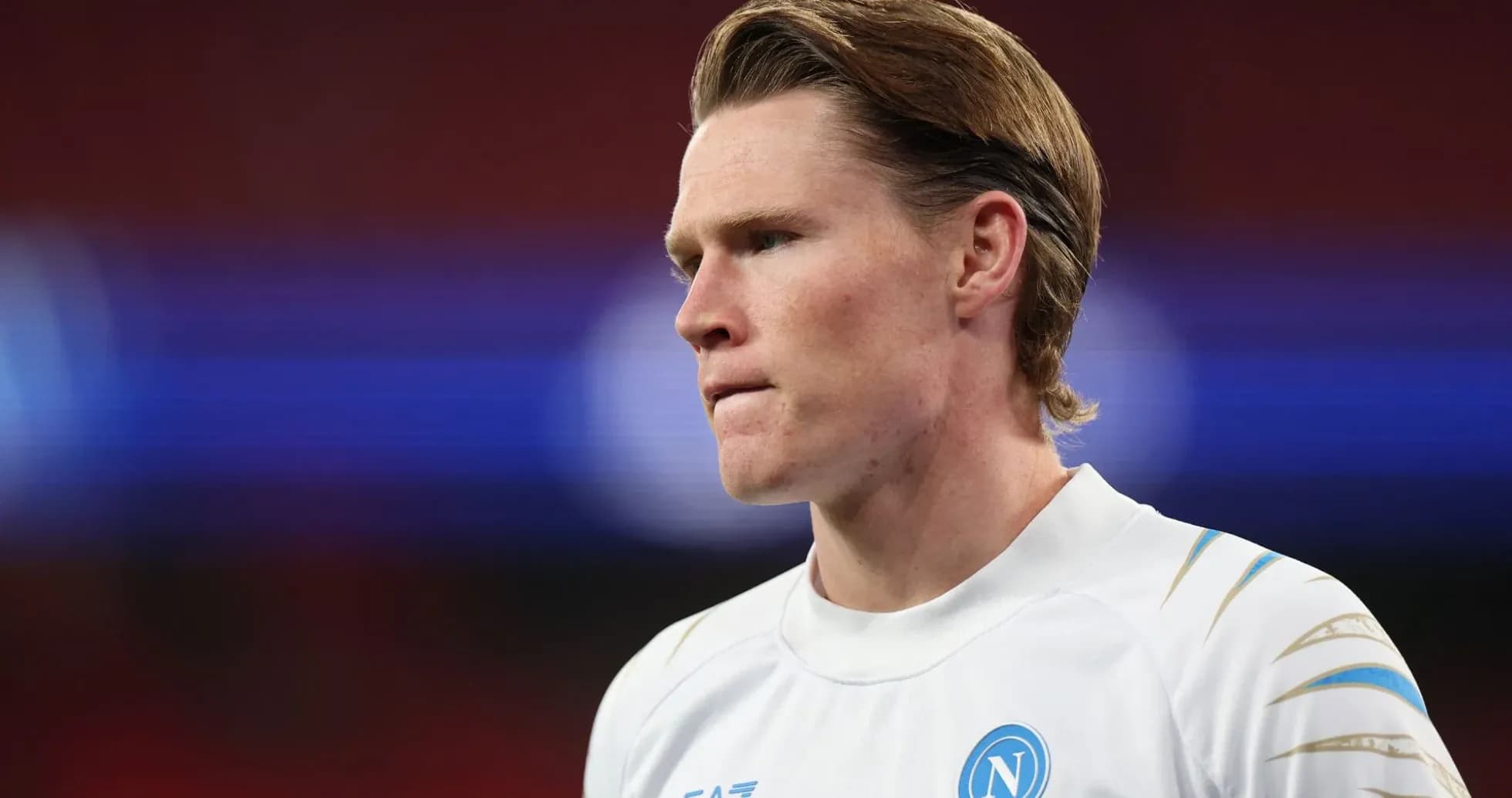
Freed at Napoli and pushed into a buccaneering No.10 role, McTominay has been unrecognisable from the cautious figure of his Premier League days. He has smashed in 27 goals across two seasons at Stadio Diego Armando Maradona, driving the club to the title, collecting the division’s MVP award and forcing his way into the Ballon d’Or conversation. The shackles have gone. In their place: a midfielder playing with swagger and conviction.
United, predictably, have worn the backlash. Letting a home-grown talent flourish elsewhere always stings, but doing so while he becomes a champion and a continental star has only sharpened the criticism. Transfer rumours have followed McTominay through recent windows, yet reports now point towards fresh terms in Italy that could tie him down until 2030.
So is British football done with him? Former Scotland defender Colin Hendry is not convinced.
Speaking to GOAL in association with Estafa.info, Hendry pointed straight at McTominay’s impact in Serie A. “Seeing what he's done for Napoli a couple of years back, such a massive influence on them and what they achieved, then there's going to be somebody in England probably thinking, ‘you know what, we wouldn't mind bringing that here because he has got that winning mentality’,” he said.
That phrase matters: winning mentality. Hendry knows it is a scarce commodity at the very top. “And I'm not saying that the top six, top eight clubs don't have a winning mentality, but over the years, it’s not easy to find,” he added. For him, McTominay was supposed to be one of Scotland’s driving forces at the World Cup. It did not work out that way.
The midfielder had been a central figure in getting Scotland to the tournament, their first World Cup since 1998. His stunning overhead kick against Denmark in a crucial qualifier became an instant landmark moment, a symbol of a team finally punching through decades of frustration. Once in North America, though, the story turned sour. McTominay, like many of Steve Clarke’s players, could not reproduce qualifying form as Scotland slid out at the group stage again.
Hendry did not hide his frustration. “I was disappointed with Scotland in the World Cup, if I'm being honest. Then again, I suppose a lot of people would say that we were disappointing in 1998,” he admitted. The parallels were hard to ignore for anyone who lived through both campaigns.
If the football left a bitter taste, the supporters did the opposite. The Tartan Army, as so often, became the soul of the trip. “The one shining light about the World Cup in 2026 was the Tartan Army. They've now got history in America that's totally untouched,” Hendry said. He spoke with clear pride as he reeled off examples. “I've even seen some of the fans that are local to me, North East Tartan Army from Peterhead, they're back out in Boston in October - they're going back, they've got the boat and everything organised, it’s remarkable.”
On the pitch, the defining emotion was regret. A 1-0 defeat to Haiti in the opener left Scotland chasing the group from the outset. “I think everybody was completely disappointed after 1-0 against Haiti. The initial game really set us up - I mean, really, really set us up,” Hendry said. The damage was done early.
Then came Morocco. Scotland conceded within 70 seconds, a nightmare start that, strangely, sparked them into life. “In a strange fashion as well, us going down 1-0 within 70 seconds against Morocco actually worked in our favour a little bit because they had their noses in front and we had to then react,” Hendry reflected. “The good thing is that they didn't score a second or a third goal, but we had to actually react to that and had a practically whole game to do that.”
Fine margins crept in. Hendry pointed to a penalty shout involving John McGinn that never came. “Could we have had a penalty on John McGinn? I think so. I think generally if that's a free-kick outside the box, which it would have been given as a free-kick outside the box, it's obviously a penalty if it's in the box and it wasn't given.”
His verdict on the campaign was blunt. “But I think on the whole, we were disappointing.” The echoes of France ’98, when Scotland were thrashed by Morocco in their final group game, were impossible for him to ignore. “But then again, as I said, people going back to 1998, it was disappointing in the end because we ended up getting gubbed by Morocco in the final game, which was a disappointment as well.”
Through all of it, McTominay sits at a fascinating crossroads. A transformed force in Naples, a nearly-man on the biggest international stage, and a player whose future may yet drag him back to England. If someone in the Premier League does decide to test Napoli’s resolve, they will not just be buying goals. They will be gambling on that “winning mentality” Hendry insists is so rare – and on the idea that Scotland’s No.10 still has another level to reach.