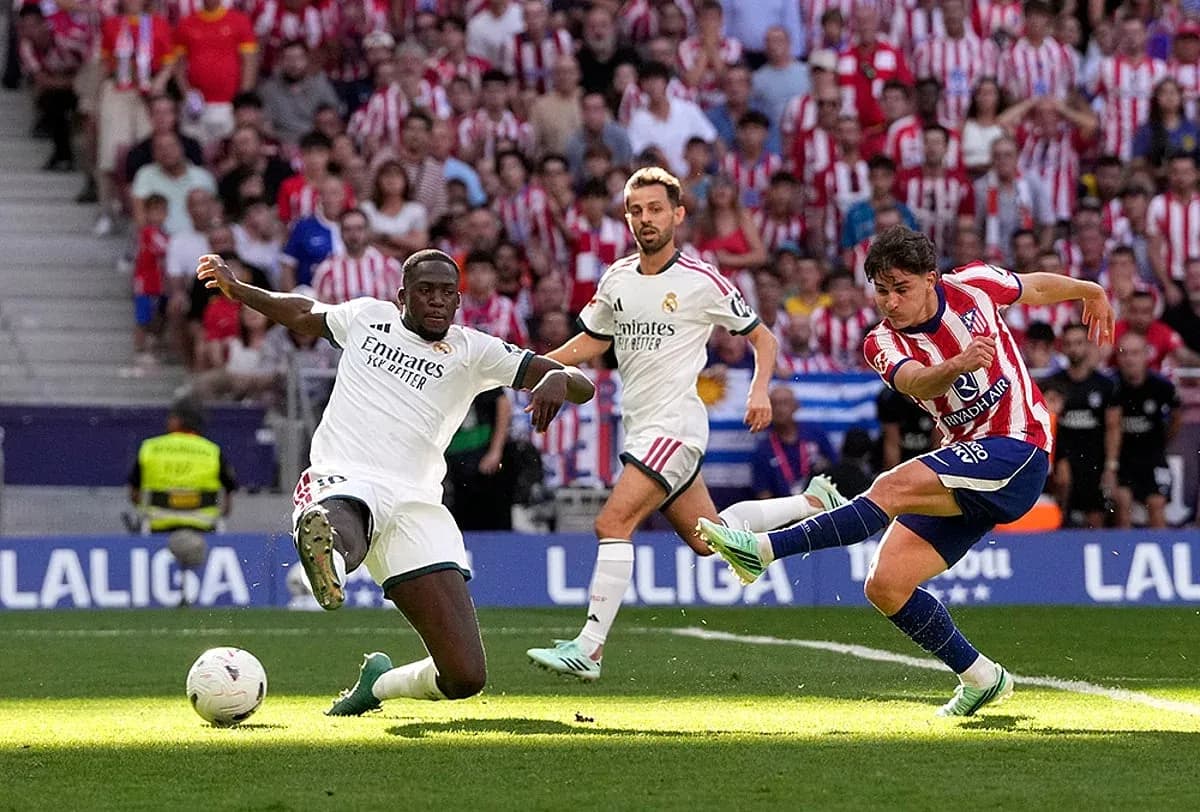
Sevilla Secures 1–0 Victory Against Real Sociedad in La Liga
Sevilla edged a tight tactical contest 1–0 against Real Sociedad at Estadio Ramón Sánchez Pizjuán in La Liga’s Regular Season round 34, decided by a second‑half strike from Alexis Sánchez. In a match where the visitors controlled more of the ball but almost none of the penalty areas, Sevilla’s compact 4‑4‑2 outperformed Real Sociedad’s 4‑2‑3‑1 in both chance creation and box control. The hosts generated 19 shots to 6 and an xG of 1.39 to 0.16, translating territorial concessions into a controlled defensive performance and a single, well‑constructed attacking punch. Real Sociedad’s sterile 58% possession never translated into a shot on target.
In terms of scoring sequence, the first half ended goalless despite Sevilla carrying the greater attacking threat. The key disciplinary moment before the break came on 28', when Jon Aramburu was booked for a foul, an early warning for Real Sociedad’s right side against Sevilla’s wide pressure. Halftime arrived at 0–0, consistent with the scoreboard and the lack of clear chances converted.
Luis Garcia Plaza moved first at the interval. At 46', I. Romero (OUT) made way for A. Sanchez (IN), a decisive attacking shift in Sevilla’s 4‑4‑2. Simultaneously, Pellegrino Matarazzo adjusted his midfield profile: J. Gorrotxategi (OUT) was replaced by O. Oskarsson (IN) at 46', hinting at a more direct or vertical threat from deeper areas.
The breakthrough came on 50'. A. Sanchez finished a flowing move for Sevilla, assisted by N. Maupay, the Chilean’s introduction paying off within four minutes. No VAR interruption is recorded, so the goal stood without delay, giving Sevilla a 1–0 lead that would hold to full time.
Real Sociedad’s response was substitution‑driven rather than structurally transformative. At 58', P. Marin (OUT) was replaced by T. Kubo (IN), injecting one‑v‑one quality between the lines. On 69', B. Turrientes (OUT) made way for Y. Herrera (IN), adding ball‑carrying and physicality in the double pivot. The final visiting reshuffle arrived on 82', when A. Barrenetxea (OUT) was replaced by L. Sucic (IN), and Aramburu (OUT) by Wesley (IN), pushing a target forward and fresh legs into the right‑back slot.
Sevilla’s game management phase began with a booking and a structural tweak. On 75', Alexis Sánchez received a yellow card for a foul, a by‑product of his defensive work rate after his goal. In the same minute, R. Vargas (OUT) was replaced by J. Sanchez (IN), maintaining energy and defensive coverage on the flank. On 82', N. Gudelj (OUT) was withdrawn for B. Mendy (IN), a like‑for‑like midfield change to preserve intensity and legs in the central block.
The final disciplinary action came at 88', when José Ángel Carmona was shown a yellow card for a foul, reflecting Sevilla’s willingness to break up play late on to protect the lead. In stoppage time at 90+1', Garcia Plaza used his last substitutions to close the game: N. Maupay (OUT) for Peque (IN) and C. Ejuke (OUT) for Oso (IN), fresh forwards to press and chase in transition as Sevilla saw out the 1–0.
Tactically, Sevilla’s 4‑4‑2 was built on verticality and density between the lines rather than long spells of possession. With only 42% of the ball and 346 passes (79% accuracy), they focused on direct progression into the front two of Maupay and Romero initially, then Maupay and Alexis Sánchez. The wide midfielders, R. Vargas and C. Ejuke, played key roles in stretching Real Sociedad’s full‑backs and creating lanes for underlapping runs from G. Suazo and José Ángel Carmona.
The central pairing of L. Agoume and N. Gudelj (later B. Mendy) formed a compact screen in front of the back four, prioritising horizontal shifting over high pressing. This allowed Sevilla to concede possession but protect central zones, forcing Real Sociedad into lower‑value shots from distance and blocked efforts. The shot map supports this: Sevilla took 19 total shots (10 inside the box, 9 outside), while Real Sociedad were held to just 6 shots (2 inside the box, 4 outside) and, crucially, 0 shots on goal.
Defensively, Sevilla’s back line of O. Vlachodimos behind Carmona, Castrin, K. Salas and Suazo controlled depth well enough that Vlachodimos did not have to make a single recorded save. The defensive index for Sevilla, inferred from holding Real Sociedad to 0.16 xG and 0 shots on target, was very high: they blocked 5 of the visitors’ 6 efforts and prevented clean entries into the six‑yard area. Real Sociedad, by contrast, required 4 saves from A. Remiro despite their higher possession, underlining how much more dangerous Sevilla’s attacks were.
Real Sociedad’s 4‑2‑3‑1 had structural possession advantages but limited penetration. With 58% possession, 481 passes and 84% accuracy, they circulated the ball well, particularly through B. Turrientes and J. Gorrotxategi (later Y. Herrera) in the double pivot. The advanced line of A. Barrenetxea, C. Soler and P. Marin (later Kubo and Sucic) behind M. Oyarzabal offered technical quality but rarely received the ball in dynamic, facing‑goal positions. Sevilla’s narrow mid‑block forced them to play around the block rather than through it, and when Real Sociedad tried to go more direct with Wesley late on, the centre‑backs Castrin and K. Salas handled the aerial and second‑ball duels.
In the executive statistical verdict, Sevilla’s attacking edge is clear. They generated 5 shots on goal from 19 attempts, converting 1 of them, aligned with an xG of 1.39. Their overall form on the night was characterised by clinical use of transitions and set attacking patterns rather than volume of possession. Real Sociedad’s attacking output—0 shots on target, 6 total shots and 0.16 xG—speaks to a low offensive ceiling in this match, despite their superior passing metrics.
From a defensive index perspective, Sevilla committed 19 fouls and collected 2 yellow cards (Alexis Sánchez 75', José Ángel Carmona 88'), but those tactical fouls were part of an effective game‑management strategy that preserved the clean sheet. Real Sociedad, with 11 fouls and 1 yellow (Jon Aramburu 28'), defended more in space and were more exposed when Sevilla broke lines. Both goalkeepers registered negative “goals prevented” values of -0.7, but the context is different: Remiro was actively worked and beaten once; Vlachodimos was largely protected by the structure in front of him. Ultimately, Sevilla’s balance between compact defending and incisive attacking actions justified the 1–0 scoreline.