Spain's Tactical Mastery Secures Second World Cup Victory in 2026
Spain triumphed over Argentina 1-0 after extra time at the New York New Jersey Stadium, capturing their second men's World Cup title. Ferran Torres scored the winning goal at 106 minutes, crowning a tournament where Spain displayed unwavering control, defensive strength, and tactical clarity across eight matches.
Building Momentum Through Consistency
Entering the expanded 48-team tournament as one of the favorites, Spain steadily improved as the rounds progressed rather than rushing through. In Group H, La Roja topped the table undefeated: a goalless draw with Cabo Verde, a 4-0 win against Saudi Arabia, and a narrow 1-0 victory over Uruguay.
The knockout stages saw Spain dismantle Austria 3-0, edge out Portugal 1-0 in a tight Iberian clash, overcome Belgium 2-1 in the quarter-finals, then secure a composed 2-0 semi-final win against France. The final against Argentina culminated in another disciplined effort to seal the title in extra time.
Defense Forms the Backbone
Though Spain’s attacking play attracted attention, their defense was the cornerstone of success. Only one goal was conceded throughout the tournament, alongside seven clean sheets. Possession acted as their initial defensive shield, with midfielders controlling the game tempo and limiting the opposition’s chances.
Rodri’s positioning protected the back line, which stayed compact and connected tightly with midfield. Goalkeeper Unai Simon contributed with solid saves and confident ball handling. Young defender Pau Cubarsi stood out for his calmness and maturity, embodying Spain’s trust in emerging talent.
Purposeful Possession and Tactical Flexibility
Spain’s approach combined possession with intent rather than endless passing. They dictated pace and manipulated opponents to create attacking spaces. Against Argentina, they held roughly 65% possession, completed more passes, and took more shots on target, stifling Argentina’s offensive flow for much of the match.
Possession doubled as a defensive strategy, reducing opportunities for counterattacks through sustained passing sequences.
Luis de la Fuente’s Modernized Spain
Coach Luis de la Fuente reshaped Spain’s identity by blending technical skill with a quicker, adaptable style that embraced vertical attacks when possible. His integration of younger players fostered a squad capable of maintaining intensity, building on earlier successes in the European Championship and UEFA Nations League.
Emerging Stars Shine Bright
The team’s success reflected years of youth development. Lamine Yamal impressed with pace and creativity, unsettling defenses and opening space. Midfielders Pedri and Gavi offered intelligence and finesse, while Alex Baena brought speed from wide positions. Pau Cubarsi emerged as one of the tournament’s breakthrough defenders, showcasing Spain’s emphasis on technical and tactical education.
Rodri’s Quiet Command
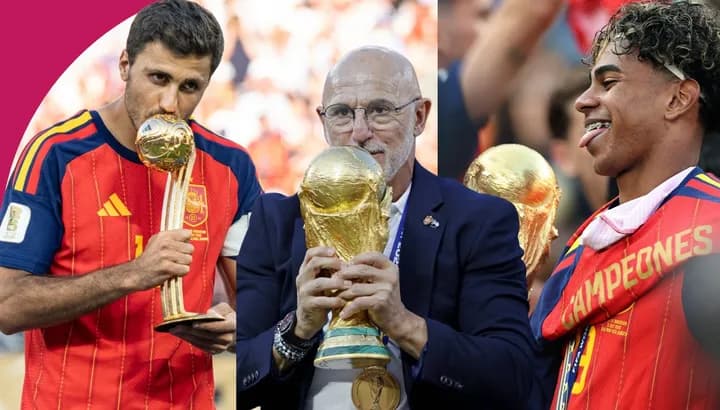
While forwards captured headlines, Rodri quietly dominated midfield. His role involved shielding defense, recovering possession, setting tempo, and linking play. His positional awareness allowed attacking freedom without sacrificing balance. These qualities earned him the Golden Ball as the tournament’s best player.
Adapting Tactics in Knockout Battles
Each elimination round posed unique challenges. Spain displayed patience against Portugal, managed transitions carefully versus Belgium, and maintained defensive structure against France. The final demanded another disciplined performance; Spain controlled possession, limited Argentina’s chances, and held firm until Torres’ extra-time goal sealed victory. The team’s performance, though not high-scoring, was arguably their most complete.
Key Tournament Statistics
- Matches played: 8
- Wins: 7
- Draws: 1
- Goals scored: 14
- Goals conceded: 1
- Clean sheets: 7
- Possession in final: approx. 65%
- Expected goals (xG): Highest in tournament
- Expected goals against (xGA): Among strongest defensive records
A New Chapter in Spanish Football
This victory invites comparison with Spain’s 2010 World Cup-winning team. Both squads valued technical skill and teamwork, but the 2026 side introduced greater tactical versatility, stronger defense, and varied attacking options. This blend set them apart, allowing Spain not just to win the World Cup but to control it throughout the competition.