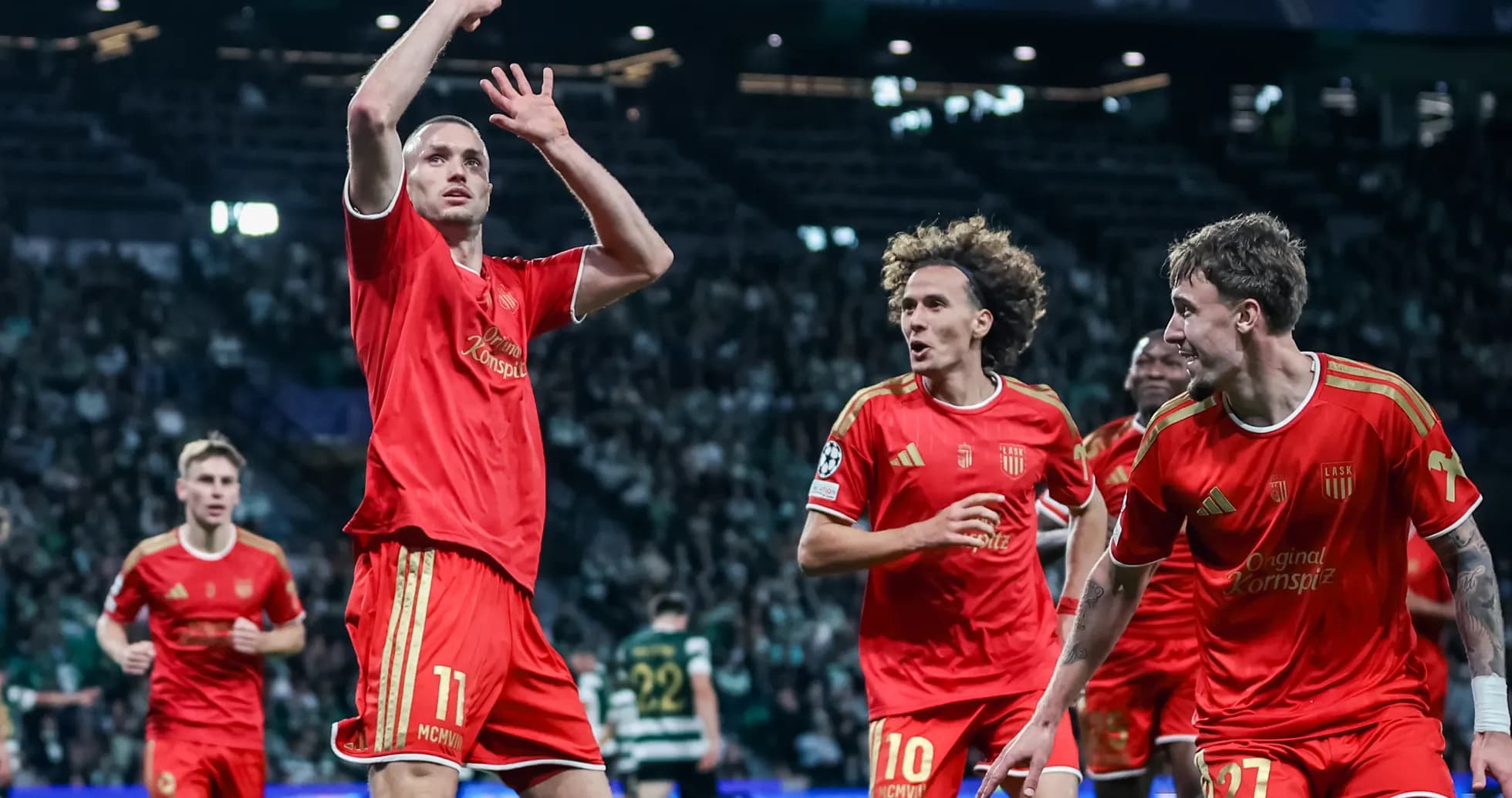
Sporting CP Ambushed by Lask Linz in Champions League Clash
Under the Lisbon lights of Estádio José Alvalade, a supposedly routine Champions League league-stage night for Sporting CP turned into a tactical ambush. Lask Linz arrived with just 3 points and a negative goal difference, yet walked away with a 3–2 win, flipping the script on a group in which Sporting had looked the more stable side.
Heading into this game, Sporting sat 12th in the overall league-stage table with 6 points from 3 matches, their goal difference a healthy +3 (7 scored, 4 conceded). At home they had been expansive and volatile: 2.5 goals scored on average, but 2.0 conceded. Lask Linz, down in 24th with 3 points and a goal difference of -3 (6 for, 9 against), were the chaotic underdog—dangerous going forward, fragile at the back, and yet to keep a clean sheet in the competition.
Rui Borges doubled down on Sporting’s identity with a 4‑3‑3. Kaique in goal sat behind a back four of Iván Fresneda, Eduardo Quaresma, Gonçalo Inácio and M. Araújo. The midfield trio of João Simões, Sergi Altimira and I. Doumbia was built to dominate the ball and control transitions, while the front three of Geny Catamo, L. Suárez and N. Irankunda promised verticality and direct threat.
On the other side, D. Kühbauer’s choice of a 3‑4‑3 for Lask Linz was a bold statement away from home. L. Jungwirth anchored the side, with a back three of X. Mbuyamba, Alemão and A. Andrade screening the box. Across midfield, K. Jørgensen and Y. Dibango patrolled the flanks, with R. Ljubičić and S. Horvath operating centrally. Up front, K. Daněk, S. Kalajdzic and C. Lang formed a mobile, interchangeable front line.
The absences framed the tactical voids. Sporting were without Z. Debast, N. Santos and R. Zalazar, all listed as missing the fixture—Debast through injury, Santos with a knee injury and Zalazar with a thigh problem. That stripped Borges of a key central defensive option and an extra creative midfielder, pushing more responsibility onto Inácio’s distribution and Altimira’s control. For Lask Linz, G. Bello (muscle injury), R. Harakate (knee injury), and K. Cheikne and A. Smakaj (both off the roster) reduced rotational flexibility, especially in wide and defensive areas. It meant more minutes and more two‑way running for Y. Dibango and Jørgensen in the wing roles.
From a disciplinary standpoint, the patterns were clear even before kick‑off. Sporting’s yellow cards in this Champions League campaign had clustered between 16–30 minutes and 31–45 minutes (25.00% each), then surged again between 61–75 minutes (50.00%). Lask Linz’s bookings were even more telling: 27.27% between 31–45 minutes, 18.18% between 61–75, and a spiky 36.36% in the 76–90 window, plus 18.18% deep into added time. This is a side that defends on the edge as games stretch and legs tire.
Key Players
The “Hunter vs Shield” duel was always going to revolve around L. Suárez. Heading into this game, he was one of the Champions League’s standout forwards: 4 goals in 3 appearances, all from the start, with 11 shots (7 on target) and 2 penalties converted from 2 attempts. His 8.0 average rating underlined his status as Sporting’s reference point. Sporting’s overall attacking profile backed him up—7 goals in total, with a strong early‑game punch: 25.00% of their goals between 0–15 minutes and another 25.00% between 16–30, plus a further 25.00% in the 61–75 window.
Lask Linz’s “shield” was more conceptual than statistical. Defensively they had conceded 13 goals overall, an average of 2.6 per match, with a glaring weakness between 16–30 minutes where 38.46% of their goals against arrived. Another 23.08% came between 61–75 minutes. Those windows overlapped almost perfectly with Sporting’s offensive peaks, suggesting that if Borges’ side imposed their rhythm early and again just after the hour, the Austrian back line could crack.
Yet Lask Linz brought their own hunter: Florian Flecker, one of the competition’s more efficient impact forwards, sat on the bench with 3 goals from just 91 minutes this season, scoring every time he had hit the target. Even if he did not start, his presence among the substitutes ensured Kühbauer had a late‑game weapon to exploit transitions once Sporting committed numbers forward.
Midfield Battle
The “Engine Room” battle centered on two profiles. For Lask Linz, Y. Dibango has quietly become a creative hub from wide and hybrid positions: 3 assists in 3 appearances, 5 key passes, and 1 successful dribble from 1 attempt. His ability to progress the ball and pick runners threatened the half‑spaces around Sporting’s full‑backs, especially with Fresneda and Araújo encouraged to advance. For Sporting, João Simões and Altimira were tasked with compressing those channels, screening Dibango’s passing lanes and preventing Kalajdzic and Daněk from receiving cleanly between the lines.
The statistical undercurrent of this fixture was volatility. Sporting had failed to score in 0 matches in this Champions League run and had converted all 2 of their penalties, while keeping only 1 clean sheet—away from home. Lask Linz, by contrast, had failed to score twice and had missed their only penalty of the campaign, a 100.00% miss rate that hinted at fragile confidence in dead‑ball pressure moments. Their goals‑for profile, however, was explosive late on: 36.36% of their goals between 61–75 minutes, 18.18% between 76–90, and even 9.09% in extra‑time periods.
That late‑game surge intersected dangerously with Sporting’s defensive soft spot. Of the 4 goals Sporting had conceded overall, 66.67% came between 61–75 minutes, with another 33.33% between 0–15. In other words: Sporting started and restarted halves vulnerable, precisely when Lask Linz were at their most ruthless.
Tactical Overview
In tactical terms, this match was always likely to tilt into a shoot‑out rather than a cagey chess game. Sporting’s home attacking average of 2.5 goals and Lask Linz’s away concession rate of 2.0 pointed towards a high‑scoring contest, especially given that Lask’s own away attack, at 1.0 goal per match, tends to spike in the very phases where Sporting’s back line has wobbled.
Following this result, the narrative crystallizes: Sporting remain a front‑foot side whose structure and intensity can overwhelm but whose defensive concentration around the hour mark continues to betray them. Lask Linz, meanwhile, confirmed their profile as a wild‑card: structurally imperfect, but with enough vertical threat, late‑game stamina and set‑piece or transition danger—often channeled through Dibango and the rotating front three—to punish any lapse.
From an xG‑style prognosis lens, the pre‑match data would have leaned towards a Sporting win in a game with multiple goals, given their superior goal difference, more balanced scoring and defensive record, and Suárez’s form. The actual 3–2 scoreline to Lask Linz fits the statistical volatility but flips the expected winner, underlining a simple truth of this league stage: in matches where both sides’ offensive peaks collide with the other’s defensive weaknesses, structure matters—but execution and timing matter more.