Thierno Barry: From Struggling Forward to Everton's Key Player
Thierno Barry walked slowly towards the touchline, the noise rising with every step. Less than 15 minutes remained of Everton’s opening-day win over Crystal Palace, the job was done, and Hill Dickinson Stadium stood to salute the man who had decided it.
The stadium announcer confirmed it: match-winner Barry was making way for Beto. The 23-year-old paused, turned to the stands, and drank it in. A year of hard lessons, doubts and dry spells, washed away in one roar from the blue half of Merseyside.
This time, the smile looked permanent.
From drought to difference-maker
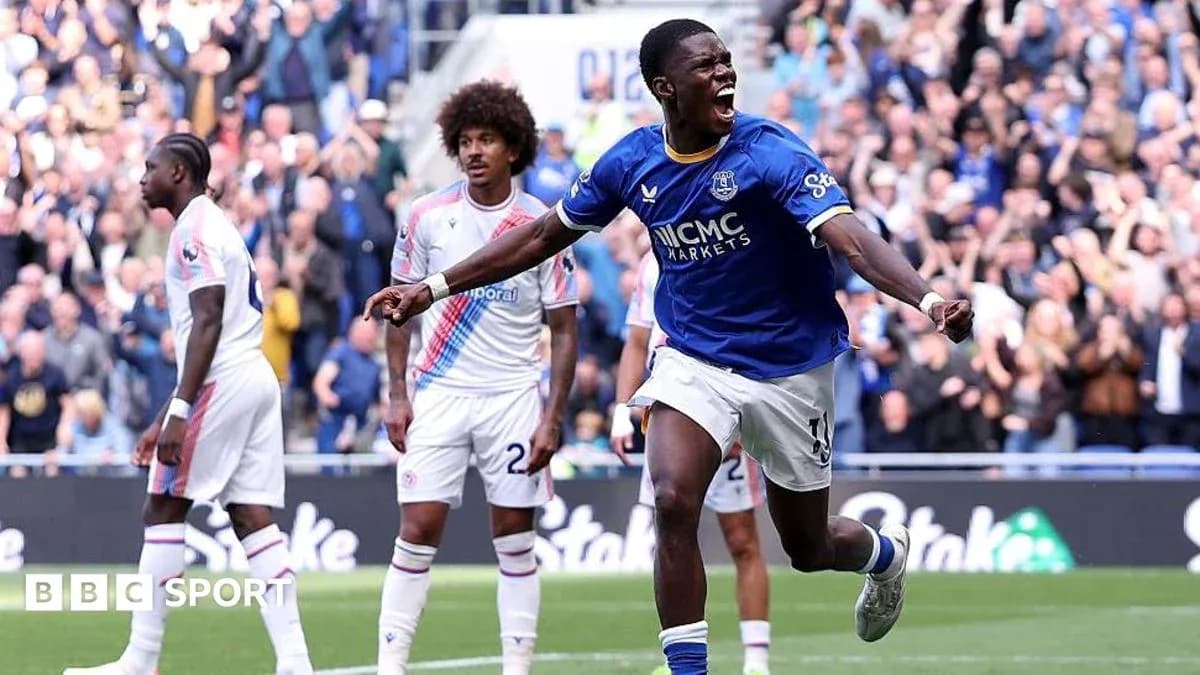
Barry’s moment came early in the second half. Everton were already in front when Iliman Ndiaye, drifting into space on the flank, shaped his body and whipped in a teasing cross. Barry had gambled, attacked the right area, and met it with a firm header to double the lead and all but kill Palace’s resistance.
The celebration told its own story. Arms wide, face lit up, he wheeled away towards the home fans who had waited a long time to see this version of him. It felt a long way from last winter, when the same player looked weighed down by the price tag that brought him from Villarreal for £27m.
Back then, the numbers were brutal. A 14-game goal drought. One goal in his first 18 Premier League appearances. For a striker billed as a key piece of Everton’s rebuild, patience was fraying.
David Moyes, though, kept his line. The Scot has lived this before. He knows what a young forward looks like when he is still learning the league, still learning the club, still learning himself.
“Look, strikers will probably be judged on their goals, so he can walk away and be really happy with it,” Moyes said after the Palace win. He made sure to share the praise. “I thought it would be wrong not to mention the quality of the cross from Ndiaye. Thierno getting in the right spot was huge and scoring with a header was really big for us because it was an important time in the game.”
Important, and symbolic. After a year of adaptation, Barry suddenly looks like a man ready to lead the line.
A rebuild, not a quick fix
When Barry arrived last summer, Everton were not shopping for a superstar. They were trying to build a future.
The club had lurched through managers, each one dragged into relegation fights. Off the pitch, a points deduction for breaching the Premier League’s Profit and Sustainability Rules underlined the financial reality. This was not a club that could simply buy a finished product and hope for the best.
Moyes and his recruitment team knew it. If they were going to invest in a striker, it would be in someone they could shape. Barry, fresh from an 11-goal season in La Liga, fit that profile. Talent, yes. Experience at the very top level, not yet.
So there was always an understanding that his development would take time. That understanding, though, was tested as autumn turned to winter and the goals refused to come. The price tag loomed. The groans grew louder.
Then January changed everything.
Barry’s season finally caught fire in the second half of the campaign. He finished his debut Premier League season with eight goals in 38 appearances – not headline-grabbing, but quietly impressive in context. Half of those goals came after Jack Grealish, Everton’s creative heartbeat, suffered a season-ending injury in January.
When others faded under the strain of a late push for Europe, Barry’s form climbed. He became the forward who still carried a threat when the team around him began to tire.
The underlying numbers backed it up. Eight goals from an expected goals figure of 8.1. A shot conversion rate of 21.1%, brushing shoulders with Erling Haaland’s 21.4%. No one inside Hill Dickinson Stadium on Saturday needed an algorithm to see the difference, but the data underlined what the eyes were already telling them: this was a striker growing into his role.
Moyes’ demands don’t stop
If Moyes enjoyed what he saw against Palace, he did not let it show for long. Down in the bowels of the stadium, the Everton manager was determined not to let the occasion run away from him, or from Barry.
There were still rough edges. Moments that irritated him. Times when Barry drifted needlessly wide, leaving the box empty. Breaks that broke down because his first touch deserted him.
“I need his build-up play to be better,” Moyes said. “I need him to be able to retain the ball for us so we can play into him more often.
“I want him to get in the right spaces, which he did today for the cross. He had a couple where the ball got played to him and he didn’t quite deal with it with his feet.
“Sometimes he is out linking up when he doesn’t need to be linking up. I think there is a lot to his game.”
This is familiar territory for Moyes. Two decades ago, he was the man guiding Wayne Rooney through his first explosive steps in the Premier League. Different player, different era, same challenge: turn raw promise into a reliable, ruthless forward.
The manager sees the same foundations in Barry – and, crucially, a different mentality this summer.
“I said last year that when you’re a young striker coming in, it’s not always easy. I think he’s come in with a really, really positive attitude this year.
“I think he’s come back with something that has stirred him up a little bit more, as if he’s got something to prove.”
From applause to expectation
That is the shift now. Twelve months ago, Barry was the expensive experiment. In January, he was the pleasant surprise. On the opening weekend of this season, he looked like something else entirely: the focal point of Everton’s attack.
The applause that followed him as he left the pitch against Palace was not just for a goal and a win. It was for the sense that this might be the year he stops being a project and starts being the man this team is built around.
Moyes will keep pushing, keep demanding more hold-up play, more composure, more presence in the right areas. Barry will have to keep answering.
If this is how he begins the season, how far can he take Everton by the time it ends?