Todd Boehly's Exit Marks a New Era at Chelsea
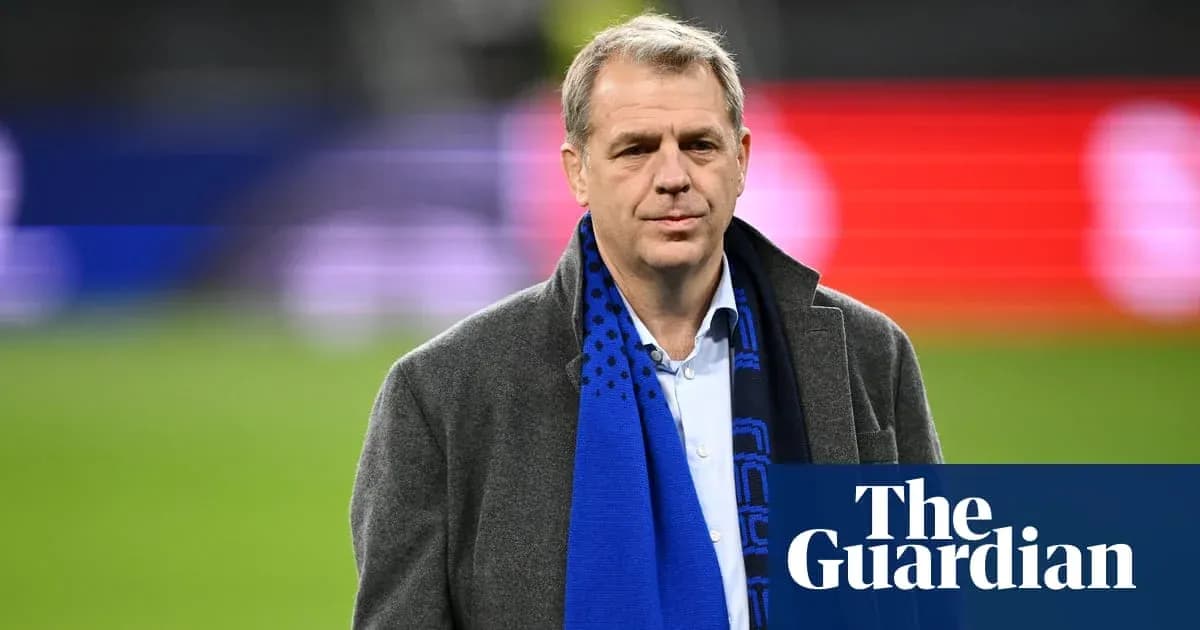
Todd Boehly arrived at Chelsea as the face of a new era. He leaves as a footnote.
Four years on from fronting the £2.5bn BlueCo takeover from Roman Abramovich, the American and his fellow investor Mark Walter have been bought out. The exit feels dramatic on paper – the man who once styled himself as interim sporting director walking away – but in reality, the power had already moved elsewhere.
Clearlake Capital, the US private equity firm founded by Behdad Eghbali and José E Feliciano, has long been running the club. It was the majority owner from day one and, over time, the only voice that really mattered. Boehly, Walter and the Swiss billionaire Hansjörg Wyss held an equal share of a combined 38.5% stake, but their relevance faded almost as quickly as the confetti from the takeover photos.
Wednesday night’s confirmation that Clearlake now has full control only formalised what had become obvious. Eghbali was already calling the shots.
Cracks in the consortium
The split did not come out of nowhere. Tension inside the ownership group surfaced two years ago, when the early glow of the takeover gave way to sharp disagreements over how Chelsea should be run.
Boehly was said to have grown disillusioned with his relationship with Clearlake. He wanted clarity, or control, or both. People close to him briefed that he had investors lined up, ready to fund a full buyout of Clearlake’s stake. Inside Clearlake, that talk was met with eye‑rolling rather than fear.
Their counter was simple: if someone was going to leave, it could be Boehly. One option on the table was to buy him out entirely. Another was to push him aside – remove him as chair, alter the governance structure, and leave him in a largely ceremonial role.
No surprise that relations cooled. But nothing moved quickly. A truce of sorts followed, with Clearlake pushing on with its own vision and Boehly fading into the background.
Eghbali stepped into the vacuum. He became the visible force behind Chelsea’s direction, while Feliciano worked more quietly. The mood among supporters shifted with results. As the club stumbled through the post‑Abramovich years, anger increasingly turned towards Clearlake, and specifically towards Eghbali. This year he found himself the target of abusive chants from the stands.
From frontman to fall guy
It was not always like this. At the start, Boehly was everywhere.
He fronted the takeover, spoke for the consortium and, when key football executives departed after Abramovich’s exit, he simply appointed himself interim sporting director. It looked bold. It turned out to be reckless.
Agents liked him personally but doubted his feel for the game. They were right to be sceptical. That first transfer window became a warning from the school of hard knocks. Chelsea spent around £300m and ended up with a squad full of ill‑fitting pieces.
The Raheem Sterling deal – a marquee name on a £325,000‑a‑week contract – quickly turned into a cautionary tale about wages and structure. The sporting chaos deepened when Thomas Tuchel was sacked early in the 2022‑23 season and replaced by Graham Potter, a gamble that never settled.
Boehly later admitted he signed Marc Cucurella from Brighton after hearing that Manchester City were interested. It sounded like a strategy borrowed from the school playground: copy the clever kid’s homework and hope for the best. Chelsea paid heavily for that kind of thinking.
As the missteps piled up, Boehly’s image curdled. He became the symbol of excess and naivety – the owner who floated the idea of a Premier League All-Star game at a business conference and blithely predicted Chelsea would beat Real Madrid 3-0 before a Champions League quarter-final in 2023. That boast aged badly.
Clearlake’s model takes over
Inside the club, the rhetoric shifted. Boehly’s camp insisted he had never planned to be so hands-on and always intended to step away once specialists were in place. Whatever the original intention, the structure around him changed radically.
Chelsea moved from one interim sporting director to a sprawling, multi-headed recruitment department. Paul Winstanley, Laurence Stewart, Sam Jewell, Joe Shields and Dave Fallows were all brought in to build a new football operation. The club pivoted towards younger players on long, incentivised contracts, a model clearly aligned with Clearlake’s thinking.
Eghbali drove that strategy. The ride has been rough. Under this ownership, Chelsea have qualified for the Champions League only once. Managers have come and gone, each trying to make sense of an ever-changing squad.
Inside Clearlake, there is talk of lessons learned. Last summer’s window is held up as proof: fewer scattergun punts, more targeted business, and the arrival of a “serious manager” in Xabi Alonso, backed by signings with proven pedigree rather than pure potential.
Boehly, by then, was no longer the story. He had stepped back, watching from the edges as the club he once fronted evolved without him.
Exit signs and a stadium crossroads
Talk of a buyout resurfaced in the summer just gone. This time the spark came from Walter. He was understood to be liquidating assets to address financial issues in the US, a process underlined when he sold his stake in the LA Lakers.
The direction of travel was clear. With Walter looking to cash out, the prospect of Clearlake consolidating control hardened into reality. Boehly and Walter are said to have made a modest profit on their Chelsea investment. Jonathan Goldstein, a close ally of Boehly, has also departed the board. Wyss, though, remains in the picture, having invested in a Clearlake vehicle.
So what actually changes at Chelsea? On a daily level, not much. The same people will run the same departments. The leadership and strategy that have been shaping the club for the past year stay in place.
The real pivot point lies in bricks and mortar.
The stadium question has hovered over this ownership from the start. The Guardian reported in September 2024 that Chelsea were in talks over a potential move from Stamford Bridge to Earls Court. The Earls Court Development Committee’s own proposal for the site has stalled despite planning permission, and Chelsea’s interest has not gone away.
At the same time, the club has not ruled out the more complex route of redeveloping Stamford Bridge. Both options are alive, both expensive, both defining. The departure of Boehly and Walter may clear the way for a decisive move.
Whatever comes next – a rebuilt Bridge or a bold leap to Earls Court – it will happen without Todd Boehly in the room.
In their parting statement, Eghbali and Feliciano insisted Boehly “will always be a part of the Chelsea story and family”. Generous words, certainly.
History will decide whether he is remembered as the man who reshaped Chelsea’s future, or simply as the cautionary opening chapter of the Clearlake era.